Author name: Richard J. Harrison

Mineral Magnetism: Providing New Insights into Geoscience Processes

Magnetic minerals are ubiquitous in the natural environment, and they are also present in a wide range of biological organisms, from bacteria to human beings. The last ten years have seen a striking improvement in our ability to detect and image the magnetization of minerals in geological and biological samples. These minerals carry a wealth of information encoded in their magnetic properties. Mineral magnetism (together with the related disciplines of rock magnetism, paleomagnetism, environmental magnetism, and biomagnetism) decodes this information and applies it to an ever increasing range of geoscience problems, from the origin of magnetic anomalies on Mars to quantifying variations in Earth’s paleoclimate.

This content is for Registered members only. To subscribe, please
join one of our participating societies or contact the Editorial Team.

Login
Already a member? Log in here

Mineral Magnetism: Providing New Insights into Geoscience Processes Read More »
Attraction in the Dark: The Magnetism of Speleothems

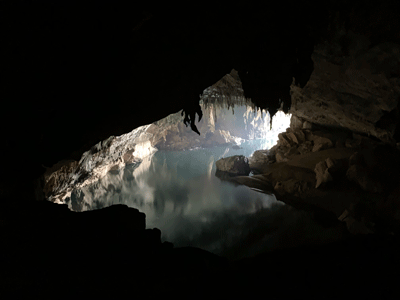
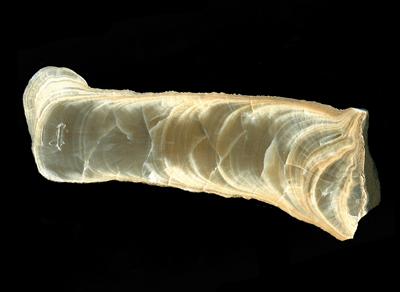
No matter how quiet and pristine a cave setting may appear, all speleothems contain assemblages of magnetic minerals. These iron oxide minerals are derived largely from overlying soils, though minor fractions may come from the residuum of dissolved bedrock, reworked sediment carried by episodic floods, geomicrobiological activity, and even windblown dust. Regardless of their origin, these minerals become aligned with Earth’s ambient magnetic field before they are fixed within a speleothem’s growing carbonate matrix. Here, we describe how the magnetism of stalagmites and flowstone can be used to chronicle high-resolution geomagnetic behavior and environmental change.

This content is for Registered members only. To subscribe, please
join one of our participating societies or contact the Editorial Team.

Login
Already a member? Log in here

Attraction in the Dark: The Magnetism of Speleothems Read More »

Cave and Speleothem Science: From Local to Planetary Scales

Caves occur everywhere on our planet, from the tropics to the high latitudes and from below sea level to alpine settings. Cave morphologies provide clues to their formation mechanisms, and their iconic mineralogical features—stalagmites and stalactites—carry a wealth of paleoenvironmental information encoded in their geochemistry and mineralogy. Recent work demonstrates a striking improvement in our ability to decode these paleoenvironmental proxies, and dramatic geochronological advances enable higher resolution records that extend further back in geologic time. Cave research addresses an ever-increasing range of geoscience problems, from establishing the timing and mechanisms of climate change to uncovering detailed records of geomagnetic field behavior.

This content is for Registered members only. To subscribe, please
join one of our participating societies or contact the Editorial Team.

Login
Already a member? Log in here

Cave and Speleothem Science: From Local to Planetary Scales Read More »

Scroll to Top

December 2025 --The Variscan Orogeny in Europe – Understanding Supercontinent Formation

The Variscan orogen formed between 380 and 300 million years ago through several accretionary and collisional cycles, culminating with the construction of the Pangea supercontinent. This process occurred via sequential opening and closure of oceanic basins, synchronous detachment of Gondwana derived continental ribbons, and their outboard amalgamation onto the Laurussia margin. The Variscan orogen is rather unique compared with other orogenic belts on Earth: its overthickened and dominantly magmatic crust in the central belt, surprisingly minor mantle involvement in the magmatic and geodynamic processes, coherent and pulsed magmatism along the collision suture, and its complex accretionary history. Because its final product, Pangea, is the youngest and best-understood supercontinent on Earth, the Variscan orogeny offers clues for understanding the mechanisms of supercontinent formation.