


Author name: J. Brendan Murphy

Assembling Pangaea – The Complex Morphology of the Laurussia – Gondwana Collision

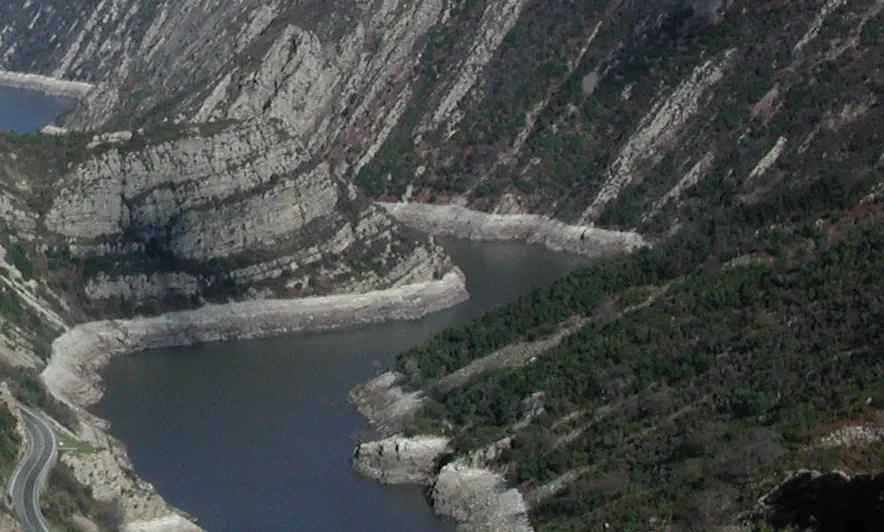
The Late Paleozoic convergence and collision between Gondwana and Laurentia resulted in along-strike variations in the Alleghanian–Mauritanide–Variscan orogeny during the assembly of the greater part of Pangaea. A series of ca. 380–290 Ma events segmented the orogen into two principal geodynamic domains with contrasting tectonic evolutions. In the northeast, the European Variscan belt records multiple subduction–collisional tectonic events, including indentation by Laurussian and later Gondwanan promontories and by Gondwana-derived terranes. Late-stage events (330–290 Ma) produced strongly curved deformation belts (oroclines), and late- to post-orogenic extension. In contrast, the southern Appalachians formed southwest of the promontory collisions where subduction of Rheic Ocean remnants produced a continuous Andean-style orogenic arc that preceded ca. 290 Ma terminal collision. We explain Pangaea amalgamation using a global model of mantle convection like that of modern Earth.

This content is for Registered members only. To subscribe, please
join one of our participating societies or contact the Editorial Team.

Login
Already a member? Log in here

Assembling Pangaea – The Complex Morphology of the Laurussia – Gondwana Collision Read More »
Crustal Melting and the Flow of Mountains

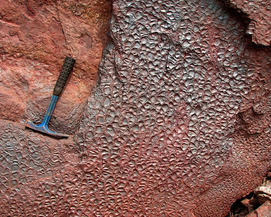
As the continental crust thickens during mountain building, it can become hot enough to start melting, leading to a profound reduction in its strength. Melt-weakened crust can flow outward or upward in response to the pressure gradients associated with mountain building, and may be transported hundreds of kilometres laterally as mid-crustal channels. In the Himalayan–Tibetan system, melting began about 30 million years ago, and widespread granite intrusion began at 20–23 Ma. Geophysical data indicate that melt is present beneath the Tibetan plateau today, and deeply eroded mountain belts preserve evidence for melt-enhanced ductile flow in the past. Flow of partially molten crust may limit the thickness and elevation of mountain belts and has influenced the deep structure of continents.

This content is for Registered members only. To subscribe, please
join one of our participating societies or contact the Editorial Team.

Login
Already a member? Log in here

Crustal Melting and the Flow of Mountains Read More »

Scroll to Top

December 2025 --The Variscan Orogeny in Europe – Understanding Supercontinent Formation

The Variscan orogen formed between 380 and 300 million years ago through several accretionary and collisional cycles, culminating with the construction of the Pangea supercontinent. This process occurred via sequential opening and closure of oceanic basins, synchronous detachment of Gondwana derived continental ribbons, and their outboard amalgamation onto the Laurussia margin. The Variscan orogen is rather unique compared with other orogenic belts on Earth: its overthickened and dominantly magmatic crust in the central belt, surprisingly minor mantle involvement in the magmatic and geodynamic processes, coherent and pulsed magmatism along the collision suture, and its complex accretionary history. Because its final product, Pangea, is the youngest and best-understood supercontinent on Earth, the Variscan orogeny offers clues for understanding the mechanisms of supercontinent formation.