


Author name: Keith D. Putirka

Down the Crater: Where Magmas are Stored and Why They Erupt

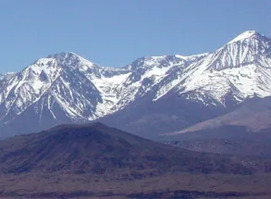
Magmas are erupted from a wide range of depths. Olivine compositions, for example, indicate magma storage in the lower crust and upper mantle, while clinopyroxene and amphibole record middle to upper crust storage. Pre-eruptive magmas also often cool by 100–300 °C, frequently at middle–upper crust depths, indicating clogged, ephemeral volcanic pathways. These coolings imply that mafic recharge is not a sufficient cause for eruption and that crystallization-induced vapor saturation is a more proximal eruption trigger. But an improved understanding of eruption mechanisms require precise identifications of what are herein termed “ultimate”, “proximal,” and “immediate” causes of eruption.

This content is for Registered members only. To subscribe, please
join one of our participating societies or contact the Editorial Team.

Login
Already a member? Log in here

Down the Crater: Where Magmas are Stored and Why They Erupt Read More »
Compositional Diversity of Rocky Exoplanets

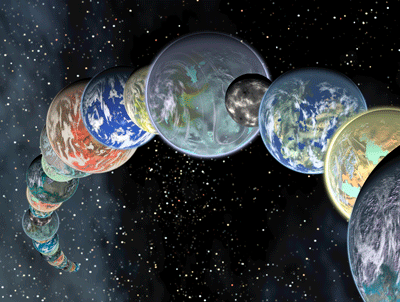
To test whether exoplanets are similar to Earth, knowledge of their host star composition is essential. Stellar elemental abundances and planetary orbital data show that of the ~5,000 known minerals, exoplanetary silicate mantles contain mostly olivine, orthopyroxene, and clinopyroxene, ± quartz and magnesiowüstite at the extremes, while wholly exotic mineralogies are unlikely. Understanding the geology of exoplanets requires a better marriage of geological insights to astronomical data. The study of exoplanets is like a mirror: it reflects our incomplete understanding of Earth and neighboring planets. New geological/planetary experiments, informed by exoplanet studies, are needed for effective progress.

This content is for Registered members only. To subscribe, please
join one of our participating societies or contact the Editorial Team.

Login
Already a member? Log in here

Compositional Diversity of Rocky Exoplanets Read More »

Scroll to Top

December 2025 --The Variscan Orogeny in Europe – Understanding Supercontinent Formation

The Variscan orogen formed between 380 and 300 million years ago through several accretionary and collisional cycles, culminating with the construction of the Pangea supercontinent. This process occurred via sequential opening and closure of oceanic basins, synchronous detachment of Gondwana derived continental ribbons, and their outboard amalgamation onto the Laurussia margin. The Variscan orogen is rather unique compared with other orogenic belts on Earth: its overthickened and dominantly magmatic crust in the central belt, surprisingly minor mantle involvement in the magmatic and geodynamic processes, coherent and pulsed magmatism along the collision suture, and its complex accretionary history. Because its final product, Pangea, is the youngest and best-understood supercontinent on Earth, the Variscan orogeny offers clues for understanding the mechanisms of supercontinent formation.