


Author name: Kurt O. Konhauser

IRON IN MICROBIAL METABOLISMS

Microbes are intimately involved in the iron cycle. First, acquisition of iron by microorganisms for biochemical requirements is a key process in the iron cycle in oxygenated, circumneutral pH environments, where the solubility of Fe (III) (oxyhydr)oxides is extremely low. Second, a number of aerobic (using O2) and anaerobic (living in the absence of O2) autotrophic bacteria gain energy for growth from the oxidation of dissolved and solid-phase Fe(II) compounds to Fe(III) (oxyhydr)oxides. Third, heterotrophic Fe (III)-reducing bacteria close the chemical loop by reducing solid-phase Fe (III) minerals back to dissolved and solid-phase Fe(II). Together these metabolic processes control the partitioning of the Earth’s fourth most abundant crustal element, and they are additionally tied to the cycling of several major nutrients (e.g. carbon, oxygen, nitrogen, sulfur) and trace elements (e.g. phosphorus, nickel) in modern and ancient environments.

This content is for Registered members only. To subscribe, please
join one of our participating societies or contact the Editorial Team.

Login
Already a member? Log in here

IRON IN MICROBIAL METABOLISMS Read More »
Iron in Earth Surface Systems: A Major Player in Chemical and Biological Processes

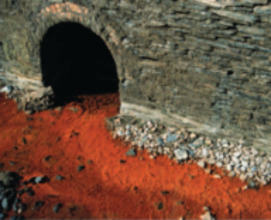
As an essential nutrient and energy source for the growth of microbial organisms, iron is metabolically cycled between reduced and oxidized chemical forms. The resulting flow of electrons is invariably tied to reactions with other redox-sensitive elements, including oxygen, carbon, nitrogen, and sulfur. Therefore, iron is intimately involved in the geochemistry, mineralogy, and petrology of modern aquatic systems and their associated sediments, particulates, and porewaters. In the geological past, iron played an even greater role in marine geochemistry, as evidenced by the vast deposits of Precambrian iron-rich sediments, the “banded iron formations.” These deposits are now being used as proxies for understanding the chemical composition of the ancient oceans and atmosphere.

This content is for Registered members only. To subscribe, please
join one of our participating societies or contact the Editorial Team.

Login
Already a member? Log in here

Iron in Earth Surface Systems: A Major Player in Chemical and Biological Processes Read More »

Scroll to Top

December 2025 --The Variscan Orogeny in Europe – Understanding Supercontinent Formation

The Variscan orogen formed between 380 and 300 million years ago through several accretionary and collisional cycles, culminating with the construction of the Pangea supercontinent. This process occurred via sequential opening and closure of oceanic basins, synchronous detachment of Gondwana derived continental ribbons, and their outboard amalgamation onto the Laurussia margin. The Variscan orogen is rather unique compared with other orogenic belts on Earth: its overthickened and dominantly magmatic crust in the central belt, surprisingly minor mantle involvement in the magmatic and geodynamic processes, coherent and pulsed magmatism along the collision suture, and its complex accretionary history. Because its final product, Pangea, is the youngest and best-understood supercontinent on Earth, the Variscan orogeny offers clues for understanding the mechanisms of supercontinent formation.