
Author name: Laurence Galoisy

Garnet: From Stone to Star

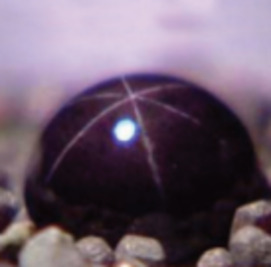
Garnet often occurs as naturally multifaceted, brightly colored, transparent, single crystals. These crystals represent chemically diverse solid solutions with a remarkable range of colors, which are largely controlled by the crystal chemistry of transition elements such as Fe, Mn, Ti, Cr, and V. These same optical properties have given garnet important cultural and historical relevance as a sought-after gemstone, from biblical times to the present day.

This content is for Registered members only. To subscribe, please
join one of our participating societies or contact the Editorial Team.

Login
Already a member? Log in here

Garnet: From Stone to Star Read More »
Structure–Property Relationships in Industrial and Natural Glasses

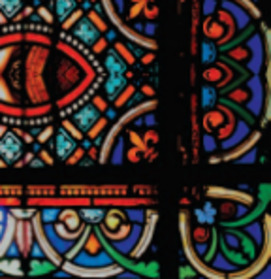
The structure and properties of both natural and industrial glasses are influenced by the presence of small amounts of specific elements. Selected examples illustrate the roles of various elements in controlling properties such as coloration, stability, and optical and thermal properties, as well as the effect of redox state of multivalent elements (Ni, Fe, Zn, Zr, Mo) on chemical properties.

This content is for Registered members only. To subscribe, please
join one of our participating societies or contact the Editorial Team.

Login
Already a member? Log in here

Structure–Property Relationships in Industrial and Natural Glasses Read More »

Scroll to Top

December 2025 --The Variscan Orogeny in Europe – Understanding Supercontinent Formation

The Variscan orogen formed between 380 and 300 million years ago through several accretionary and collisional cycles, culminating with the construction of the Pangea supercontinent. This process occurred via sequential opening and closure of oceanic basins, synchronous detachment of Gondwana derived continental ribbons, and their outboard amalgamation onto the Laurussia margin. The Variscan orogen is rather unique compared with other orogenic belts on Earth: its overthickened and dominantly magmatic crust in the central belt, surprisingly minor mantle involvement in the magmatic and geodynamic processes, coherent and pulsed magmatism along the collision suture, and its complex accretionary history. Because its final product, Pangea, is the youngest and best-understood supercontinent on Earth, the Variscan orogeny offers clues for understanding the mechanisms of supercontinent formation.