


Author name: Lluís Fontboté

Ore Deposits of the Central Andes

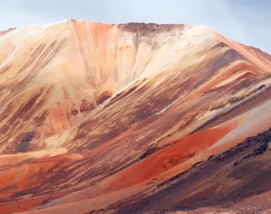
The Central Andes has one of the richest base metal endowments on Earth. In 2017, the Central Andes accounted for the mine production of around 39% of the world’s copper, 23% of its silver, 20% of its molybdenum, 14% of its zinc, and 12% of its tin as well as significant shares of other metals including gold and lead (USGS 2018). These metals are found in a variety of ore deposits of which by far the most important are those that occur as part of the “porphyry system” in the sense of Sillitoe (2010). However, important ore deposits of other mineralization styles also occur in the Central Andes. This info box presents characteristics of main and/or representative Mesozoic ore deposits that occur between latitudes 11°S and 30°S.

This content is for Registered members only. To subscribe, please
join one of our participating societies or contact the Editorial Team.

Login
Already a member? Log in here

Ore Deposits of the Central Andes Read More »
Sulfide Minerals in Hydrothermal Deposits

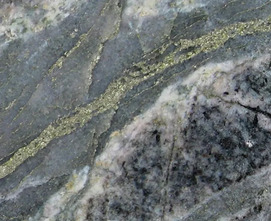
Hydrothermal ore deposits are large geochemical anomalies of sulfur and metals in the Earth’s crust that have formed at <1 to ~8 km depth. Sulfide minerals in hydrothermal deposits are the primary economic source of metals used by society, which occur as major, minor and trace elements. Sulfides also play a key role during magmatic crystallization in concentrating metals that subsequently may (or may not) be supplied to hydrothermal fluids. Precipitation of sulfides that themselves may have little economic value, like pyrite, may trigger the deposition of more valuable metals (e.g. Au) by destabilizing the metal-bearing sulfur complexes. We review why, where and how sulfide minerals in hydrothermal systems precipitate.

This content is for Registered members only. To subscribe, please
join one of our participating societies or contact the Editorial Team.

Login
Already a member? Log in here

Sulfide Minerals in Hydrothermal Deposits Read More »

Scroll to Top

December 2025 --The Variscan Orogeny in Europe – Understanding Supercontinent Formation

The Variscan orogen formed between 380 and 300 million years ago through several accretionary and collisional cycles, culminating with the construction of the Pangea supercontinent. This process occurred via sequential opening and closure of oceanic basins, synchronous detachment of Gondwana derived continental ribbons, and their outboard amalgamation onto the Laurussia margin. The Variscan orogen is rather unique compared with other orogenic belts on Earth: its overthickened and dominantly magmatic crust in the central belt, surprisingly minor mantle involvement in the magmatic and geodynamic processes, coherent and pulsed magmatism along the collision suture, and its complex accretionary history. Because its final product, Pangea, is the youngest and best-understood supercontinent on Earth, the Variscan orogeny offers clues for understanding the mechanisms of supercontinent formation.