


Author name: Lynda B. Williams

Kaolins and Health: From First Grade to First Aid

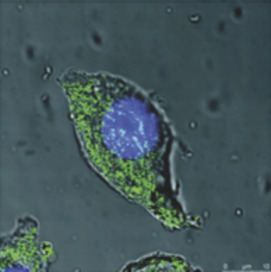
The use of kaolins in health has its origins in prehistoric times. Humans and other animals consume kaolin for gastrointestinal ailments, digestive enhancement, and possibly nutritional supplementation. Kaolins are effective as hemostatic wound dressings, because they can clot blood from traumatic injury, with little damage to tissue. Various forms of kaolin have been shown to be antibacterial, and increasingly kaolins are being utilized in drug delivery. While nanoparticles of kaolin can have deleterious effects on human tissues, modern understanding of the mineralogy of kaolins and their interactions with human cells allows many health applications, reaching far beyond the prehistoric “first aid” uses.

This content is for Registered members only. To subscribe, please
join one of our participating societies or contact the Editorial Team.

Login
Already a member? Log in here

Kaolins and Health: From First Grade to First Aid Read More »
Bentonite, Bandaids, and Borborygmi

The practice of eating clay for gastrointestinal ailments and applying clay topically as bandaids for skin infections is as old as mankind. Bentonites in particular have been used in traditional medicines, where their function has been established empirically. With modern techniques for nanoscale investigations, we are now exploring the interactions of clay minerals and human pathogens to learn the lessons that Mother Nature has used for healing. The vast surface area and chemical variability of hydrothermally altered bentonites may provide a natural pharmacy of antibacterial agents.

This content is for Registered members only. To subscribe, please
join one of our participating societies or contact the Editorial Team.

Login
Already a member? Log in here

Bentonite, Bandaids, and Borborygmi Read More »

Scroll to Top

December 2025 --The Variscan Orogeny in Europe – Understanding Supercontinent Formation

The Variscan orogen formed between 380 and 300 million years ago through several accretionary and collisional cycles, culminating with the construction of the Pangea supercontinent. This process occurred via sequential opening and closure of oceanic basins, synchronous detachment of Gondwana derived continental ribbons, and their outboard amalgamation onto the Laurussia margin. The Variscan orogen is rather unique compared with other orogenic belts on Earth: its overthickened and dominantly magmatic crust in the central belt, surprisingly minor mantle involvement in the magmatic and geodynamic processes, coherent and pulsed magmatism along the collision suture, and its complex accretionary history. Because its final product, Pangea, is the youngest and best-understood supercontinent on Earth, the Variscan orogeny offers clues for understanding the mechanisms of supercontinent formation.