

Author name: Nicole E. Moore

The Role of Subduction Zone Processes in the Cultural History of the Cascade Region

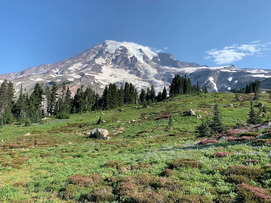
The Cascadia subduction zone continuously shapes the landscape of the Pacific Northwest of North America and the cultures of its inhabitants. The impacts of subduction processes on Pacific Northwest societies and cultures are varied, but Native Americans and European settler cultures alike have described geological processes through oral histories and have relied on resources provided by the subduction zone. Indigenous peoples focus many aspects of their religious practices and art around the geohazards of the Cascadia region, and our melded modern cultures continue to take part in storytelling related to subduction zone hazards through movies and other forms of narration.

This content is for Registered members only. To subscribe, please
join one of our participating societies or contact the Editorial Team.

Login
Already a member? Log in here

The Role of Subduction Zone Processes in the Cultural History of the Cascade Region Read More »
Recent Advances in our Understanding of Water and Aqueous Activity in Chondrites

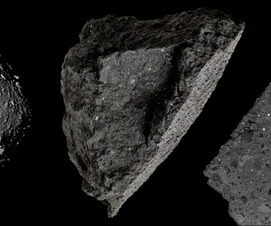
Water played a critical role in the evolution of rocky material and planetesimals in the early Solar System. Many primitive asteroids (the sources of chondrites) accreted a significant amount of water ice and were affected by aqueous alteration and/or fluid-assisted metamorphism. These secondary parent body processes have strongly modified the primary mineralogy of chondrites in favor of a wide diversity of secondary phases that formed by interaction with water. The mineralogical and isotopic character- ization of these secondary phases in chondrites and returned samples from hydrous asteroids Ryugu and Bennu can help us reconstruct the dynamical evolution of water in the early Solar System and understand the timing and mechanisms of aqueous alteration on hydrous asteroids.

This content is for Registered members only. To subscribe, please
join one of our participating societies or contact the Editorial Team.

Login
Already a member? Log in here

Recent Advances in our Understanding of Water and Aqueous Activity in Chondrites Read More »

Scroll to Top

December 2025 --The Variscan Orogeny in Europe – Understanding Supercontinent Formation

The Variscan orogen formed between 380 and 300 million years ago through several accretionary and collisional cycles, culminating with the construction of the Pangea supercontinent. This process occurred via sequential opening and closure of oceanic basins, synchronous detachment of Gondwana derived continental ribbons, and their outboard amalgamation onto the Laurussia margin. The Variscan orogen is rather unique compared with other orogenic belts on Earth: its overthickened and dominantly magmatic crust in the central belt, surprisingly minor mantle involvement in the magmatic and geodynamic processes, coherent and pulsed magmatism along the collision suture, and its complex accretionary history. Because its final product, Pangea, is the youngest and best-understood supercontinent on Earth, the Variscan orogeny offers clues for understanding the mechanisms of supercontinent formation.