
Author name: Mark J. Caddick

Garnet: Witness to the Evolution of Destructive Plate Boundaries

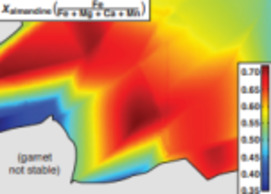
Thanks to its unique chemical and mechanical properties, garnet records evidence of rocks’ paths through the crust at tectonic plate boundaries. The compositions of garnet and coexisting mineral phases permit metamorphic pressure and temperature to be determined, while garnet’s compositional zoning allows the evolution of these parameters to be constrained. But careful study of garnet reveals far more, including the dehydration history of subducted oceanic crust, the depths reached during the earliest stages of continental collision, and the mechanisms driving heat and mass flow as orogens develop. Overall, chemical and textural characterization of garnet can be coupled with thermodynamic, thermoelastic, geochronologic, diffusion, and geodynamic models to constrain the evolution of rocks in a wide variety of settings.

This content is for Registered members only. To subscribe, please
join one of our participating societies or contact the Editorial Team.

Login
Already a member? Log in here

Garnet: Witness to the Evolution of Destructive Plate Boundaries Read More »
Garnet: Common Mineral, Uncommonly Useful

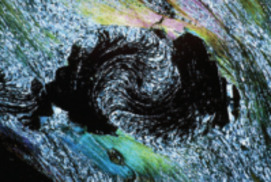
Garnet is a widespread mineral in crustal metamorphic rocks, a primary constituent of the mantle, a detrital mineral in clastic sediments, and an occasional guest in igneous rocks. Garnet occurs in ultramafic to felsic bulk-rock compositions, and its growth and stability span from

This content is for Registered members only. To subscribe, please
join one of our participating societies or contact the Editorial Team.

Login
Already a member? Log in here

Garnet: Common Mineral, Uncommonly Useful Read More »

Scroll to Top

December 2025 --The Variscan Orogeny in Europe – Understanding Supercontinent Formation

The Variscan orogen formed between 380 and 300 million years ago through several accretionary and collisional cycles, culminating with the construction of the Pangea supercontinent. This process occurred via sequential opening and closure of oceanic basins, synchronous detachment of Gondwana derived continental ribbons, and their outboard amalgamation onto the Laurussia margin. The Variscan orogen is rather unique compared with other orogenic belts on Earth: its overthickened and dominantly magmatic crust in the central belt, surprisingly minor mantle involvement in the magmatic and geodynamic processes, coherent and pulsed magmatism along the collision suture, and its complex accretionary history. Because its final product, Pangea, is the youngest and best-understood supercontinent on Earth, the Variscan orogeny offers clues for understanding the mechanisms of supercontinent formation.