


Author name: Cahit Helvaci

Origin and Distribution of Evaporite Borates: The Primary Economic Sources of Boron

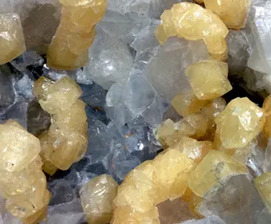
Naturally occurring borates are the major economic source of boron. Borates were first used over 4,000 years ago in precious-metal working and are now essential components of modern industry. Although borates have been exploited from other sources, three minerals from non-marine evaporites now form the major commercial sources of borate – borax, colemanite and ulexite. These major commercial deposits are associated with Neogene volcanism in tectonically active extensional regions at plate boundaries. The most important continental borate provinces are located in the USA, Argentina, Chile, Peru, and China, with the largest borate reserves in the world being found in western Anatolia (Turkey).

This content is for Registered members only. To subscribe, please
join one of our participating societies or contact the Editorial Team.

Login
Already a member? Log in here

Origin and Distribution of Evaporite Borates: The Primary Economic Sources of Boron Read More »
Boron Cycling in Subduction Zones

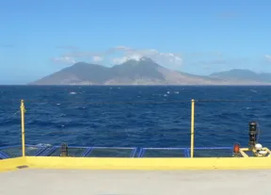
Subduction zones are geologically dramatic features, with much of the drama being driven by the movement of water. The “light and lively” nature of boron, coupled with its wide variations in isotopic composition shown by the different geo-players in this drama, make it an ideal tracer for the role and movement of water during subduction. The utility of boron ranges from monitoring how the fluids that are expelled from the accretionary prism influence seawater chemistry, to the subduction of crustal material deep into the mantle and its later recycling in ocean island basalts.

This content is for Registered members only. To subscribe, please
join one of our participating societies or contact the Editorial Team.

Login
Already a member? Log in here

Boron Cycling in Subduction Zones Read More »

Scroll to Top

December 2025 --The Variscan Orogeny in Europe – Understanding Supercontinent Formation

The Variscan orogen formed between 380 and 300 million years ago through several accretionary and collisional cycles, culminating with the construction of the Pangea supercontinent. This process occurred via sequential opening and closure of oceanic basins, synchronous detachment of Gondwana derived continental ribbons, and their outboard amalgamation onto the Laurussia margin. The Variscan orogen is rather unique compared with other orogenic belts on Earth: its overthickened and dominantly magmatic crust in the central belt, surprisingly minor mantle involvement in the magmatic and geodynamic processes, coherent and pulsed magmatism along the collision suture, and its complex accretionary history. Because its final product, Pangea, is the youngest and best-understood supercontinent on Earth, the Variscan orogeny offers clues for understanding the mechanisms of supercontinent formation.