


Author name: Juliet Biggs

Global Volcano Monitoring: What Does it Mean When Volcanoes Deform?

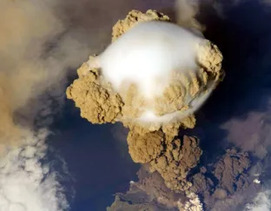
Currently, it is only possible to look inside an active volcano using indirect geophysical methods. One such method is to measure surface deformation, which results from subsurface magmatic or hydrothermal processes. Modern satellite data allows deformation to be measured at hundreds of volcanoes without relying on limited ground instrumentation. As a result, the number of known deforming volcanoes has increased from 44 in 1997 to over 220 in 2016. This article reviews the diverse ways by which volcanoes can deform, the typical rates and durations of such deformations, and the processes that drive deformation.

This content is for Registered members only. To subscribe, please
join one of our participating societies or contact the Editorial Team.

Login
Already a member? Log in here

Global Volcano Monitoring: What Does it Mean When Volcanoes Deform? Read More »
Geophysical Evidence for Silicic Crustal Melt in the Continents: Where, What Kind, and How Much?

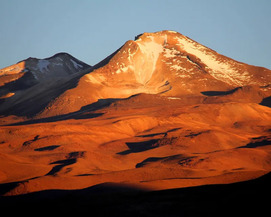
The accumulation of sizeable volumes of magma in the upper crust may produce plutons and/or result in supereruptions. Geophysical observations provide constraints on the rates, volumes, and melt distributions in magmatic systems, but they suffer from limited resolution and inherent nonuniqueness. Different, yet complementary, geophysical approaches must be combined with petrological, laboratory, and geochemical measurements. We summarize the results from such a combined approach from the central Andes. Taking a global perspective on large silicic systems reveals that several have >10% partial melt over large areas (10s of km2), and there may be localized zones with 50% or more.

This content is for Registered members only. To subscribe, please
join one of our participating societies or contact the Editorial Team.

Login
Already a member? Log in here

Geophysical Evidence for Silicic Crustal Melt in the Continents: Where, What Kind, and How Much? Read More »

Scroll to Top

December 2025 --The Variscan Orogeny in Europe – Understanding Supercontinent Formation

The Variscan orogen formed between 380 and 300 million years ago through several accretionary and collisional cycles, culminating with the construction of the Pangea supercontinent. This process occurred via sequential opening and closure of oceanic basins, synchronous detachment of Gondwana derived continental ribbons, and their outboard amalgamation onto the Laurussia margin. The Variscan orogen is rather unique compared with other orogenic belts on Earth: its overthickened and dominantly magmatic crust in the central belt, surprisingly minor mantle involvement in the magmatic and geodynamic processes, coherent and pulsed magmatism along the collision suture, and its complex accretionary history. Because its final product, Pangea, is the youngest and best-understood supercontinent on Earth, the Variscan orogeny offers clues for understanding the mechanisms of supercontinent formation.