


Author name: Matthew Fox

Lazed and Diffused: Untangling Noble Gas Thermochronometry Data for Exhumation Rates

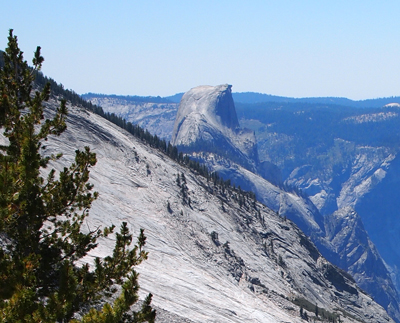
Thermochronometric data can record the thermal history of rocks as they cool from high temperatures at depth to lower temperatures at the surface. This provides a unique perspective on the tectonic processes that form topography and the erosional processes that destroy it. However, quantitatively interpreting such data is a challenge because multiple models can do an equally good job at reproducing the data. In this article, we describe how inverse modeling can be used to improve quantitative interpretations of noble gas thermochronometric data on a variety of scales, ranging from mountain belts to individual mineral grains.

This content is for Registered members only. To subscribe, please
join one of our participating societies or contact the Editorial Team.

Login
Already a member? Log in here

Lazed and Diffused: Untangling Noble Gas Thermochronometry Data for Exhumation Rates Read More »
How Climate, Uplift and Erosion Shaped the Alpine Topography

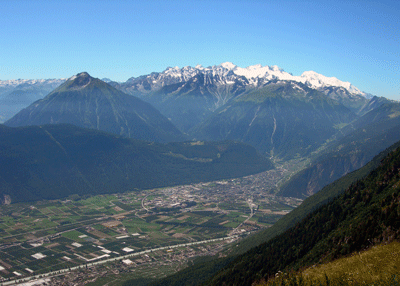
Decades of scientific research on the European Alps have helped quantify the vast array of processes that shape the Earth’s surface. Patterns in rock exhumation, surface erosion and topographic changes can be compared to sediment yields preserved in sedimentary basins or collected from modern rivers. Erosion-driven isostatic uplift explains up to ~50% of the modern geodetic rock uplift rates; the remaining uplift reveals the importance of internal processes (tectonics, deep-seated geodynamics) and external processes (glacial rebound, topographic changes). We highlight recent methodological and conceptual developments that have contributed to our present view of the European Alps, and we provide suggestions on how to fill the gaps in our understanding.

This content is for Registered members only. To subscribe, please
join one of our participating societies or contact the Editorial Team.

Login
Already a member? Log in here

How Climate, Uplift and Erosion Shaped the Alpine Topography Read More »

Scroll to Top

December 2025 --The Variscan Orogeny in Europe – Understanding Supercontinent Formation

The Variscan orogen formed between 380 and 300 million years ago through several accretionary and collisional cycles, culminating with the construction of the Pangea supercontinent. This process occurred via sequential opening and closure of oceanic basins, synchronous detachment of Gondwana derived continental ribbons, and their outboard amalgamation onto the Laurussia margin. The Variscan orogen is rather unique compared with other orogenic belts on Earth: its overthickened and dominantly magmatic crust in the central belt, surprisingly minor mantle involvement in the magmatic and geodynamic processes, coherent and pulsed magmatism along the collision suture, and its complex accretionary history. Because its final product, Pangea, is the youngest and best-understood supercontinent on Earth, the Variscan orogeny offers clues for understanding the mechanisms of supercontinent formation.