


Author name: Gordon E. Brown Jr.

Improving Mitigation of the Long-Term Legacy of Mining Activities: Nano- and Molecular-Level Concepts and Methods

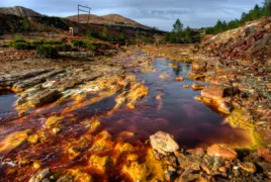
Mining activities over several millennia have resulted in a legacy of environmental contamination that must be mitigated to minimize ecosystem damage and human health impacts. Designing effective remediation strategies for mining and processing wastes requires knowledge of nano- and molecular-scale speciation of contaminants. Here, we discuss how modern nano- and molecular-level concepts and methods can be used to improve risk assessment and future management of contaminants that result from mining activities, and we illustrate this approach using relevant case studies.
This content is for Registered members only. To subscribe, please
join one of our participating societies or contact the Editorial Team.

Login
Already a member? Log in here

Improving Mitigation of the Long-Term Legacy of Mining Activities: Nano- and Molecular-Level Concepts and Methods Read More »

Nanogeoscience: From Origins to Cutting-Edge Applications

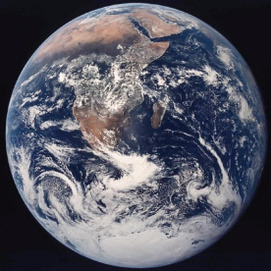
At first glance, nano and Earth seem about as far apart as one can imagine. Nanogeoscience seems to be a word connecting opposites. But to a growing number of Earth scientists, this term makes sense. Although relatively difficult to detect and study, natural nanomaterials are ubiquitous in nature. Their properties are often different (sometimes dramatically different) from those of the same material at a larger size. In many cases, larger equivalents do not even exist. By understanding natural nanomaterials, we can acquire another perspective from which to view Earth’s chemical and physical properties. Important insights into local, regional, and even global phenomena await our understanding of processes that are relevant at the smallest scales of Earth science research.

This content is for Registered members only. To subscribe, please
join one of our participating societies or contact the Editorial Team.

Login
Already a member? Log in here

Nanogeoscience: From Origins to Cutting-Edge Applications Read More »

Earth’s Nano-Compartment for Toxic Metals

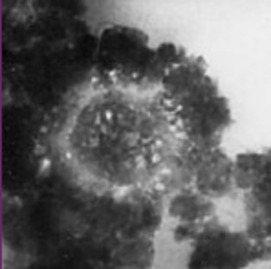
Nanoscale materials, both inorganic and organic, are ubiquitous in the environment. Recent investigations into the nanoscale chemistry and mineralogy of toxic metal distribution in nature have revealed novel and unexpected insights. Additionally, corresponding advances in the field of nanoscience have demonstrated that the physical properties and reactivity of nanomaterials vary dramatically as a function of material size. Geoscientists are uncovering a fascinating story of how the immense surface area, unusual properties, and widespread distribution of natural nanomaterials often affect the fate of toxic metals in surprising ways.

This content is for Registered members only. To subscribe, please
join one of our participating societies or contact the Editorial Team.

Login
Already a member? Log in here

Earth’s Nano-Compartment for Toxic Metals Read More »

Scroll to Top

December 2025 --The Variscan Orogeny in Europe – Understanding Supercontinent Formation

The Variscan orogen formed between 380 and 300 million years ago through several accretionary and collisional cycles, culminating with the construction of the Pangea supercontinent. This process occurred via sequential opening and closure of oceanic basins, synchronous detachment of Gondwana derived continental ribbons, and their outboard amalgamation onto the Laurussia margin. The Variscan orogen is rather unique compared with other orogenic belts on Earth: its overthickened and dominantly magmatic crust in the central belt, surprisingly minor mantle involvement in the magmatic and geodynamic processes, coherent and pulsed magmatism along the collision suture, and its complex accretionary history. Because its final product, Pangea, is the youngest and best-understood supercontinent on Earth, the Variscan orogeny offers clues for understanding the mechanisms of supercontinent formation.