
Author name: Monica M. Grady

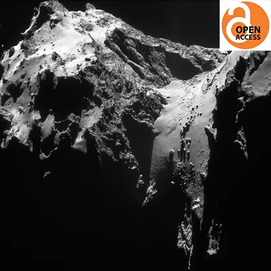
The Rosetta Mission and the Chemistry of Organic Species in Comet 67P/Churyumov-Gerasimenko

Comets are regarded as probably the most primitive of solar system objects, preserving a record of the materials from which the solar system aggregated. Key amongst their components are organic compounds – molecules that may trace their heritage to the interstellar medium from which the protosolar nebula eventually emerged. The most recent cometary space mission, Rosetta, carried instruments designed to characterize, in unprecedented detail, the organic species in comet 67P/Churyumov–Gerasimenko (67P). Rosetta was the first mission to match orbits with a comet and follow its evolution over time, and also the first mission to land scientific instruments on a comet surface. Results from the mission revealed a greater variety of molecules than previously identified and indicated that 67P contained both primitive and processed organic entities.
This content is for Registered members only. To subscribe, please
join one of our participating societies or contact the Editorial Team.

Login
Already a member? Log in here

The Rosetta Mission and the Chemistry of Organic Species in Comet 67P/Churyumov-Gerasimenko Read More »

Comets: Where We Are, How We Got Here, and Where We Want To Go Next

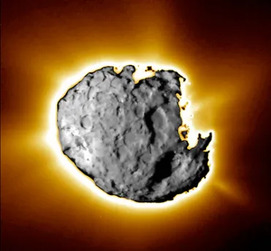
We introduce the principal mysteries surrounding comets; discuss the proposed importance of comets to the origin of water and organic compounds in the inner solar system; and summarize the history of cometary observation, study, and exploration over the past 22 centuries.

This content is for Registered members only. To subscribe, please
join one of our participating societies or contact the Editorial Team.

Login
Already a member? Log in here

Comets: Where We Are, How We Got Here, and Where We Want To Go Next Read More »

Scroll to Top

December 2025 --The Variscan Orogeny in Europe – Understanding Supercontinent Formation

The Variscan orogen formed between 380 and 300 million years ago through several accretionary and collisional cycles, culminating with the construction of the Pangea supercontinent. This process occurred via sequential opening and closure of oceanic basins, synchronous detachment of Gondwana derived continental ribbons, and their outboard amalgamation onto the Laurussia margin. The Variscan orogen is rather unique compared with other orogenic belts on Earth: its overthickened and dominantly magmatic crust in the central belt, surprisingly minor mantle involvement in the magmatic and geodynamic processes, coherent and pulsed magmatism along the collision suture, and its complex accretionary history. Because its final product, Pangea, is the youngest and best-understood supercontinent on Earth, the Variscan orogeny offers clues for understanding the mechanisms of supercontinent formation.