


Author name: Olivier Bachmann

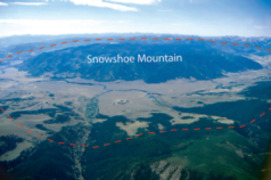
The Magma Reservoirs That Feed Supereruptions

The vigor and size of volcanic eruptions depend on what happens in magma reservoirs in the Earth’s crust. When magmatic activity occurs within continental areas, large reservoirs of viscous, gas-rich magma can be generated and cataclysmically discharged into the atmosphere during explosive supereruptions. As currently understood, large pools of explosive magma are produced by extracting interstitial liquid from long-lived “crystal mushes” (magmatic sponges containing >50 vol% of crystals) and collecting it in unstable liquid-dominated lenses.

This content is for Registered members only. To subscribe, please
join one of our participating societies or contact the Editorial Team.

Login
Already a member? Log in here

The Magma Reservoirs That Feed Supereruptions Read More »
The Kos–Nisyros–Yali Volcanic Field

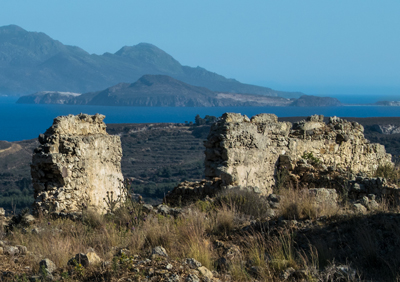
The Kos–Nisyros–Yali volcanic field has produced a range of volcanic products over the last 3 million years. Volumetrically, silicic magma dominates, and activity includes one of the largest known explosive eruptions of the Aegean arc, the >60 km3 (dense-rock equivalent), 161 ka rhyolitic Kos Plateau Tuff. The Kos–Nisyros–Yali volcanic field is situated within an area of active crustal extension, which has greatly influenced magmatic processes and landscape development in the region. Recent seismic unrest, surface deformation and intense geothermal activity indicate that the system remains active, particularly around the Nisyros and Yali edifices. These signs of magmatic activity, together with the fact that the most recent eruptions have become increasingly silicic, would justify detailed monitoring of the area.

This content is for Registered members only. To subscribe, please
join one of our participating societies or contact the Editorial Team.

Login
Already a member? Log in here

The Kos–Nisyros–Yali Volcanic Field Read More »

Scroll to Top

December 2025 --The Variscan Orogeny in Europe – Understanding Supercontinent Formation

The Variscan orogen formed between 380 and 300 million years ago through several accretionary and collisional cycles, culminating with the construction of the Pangea supercontinent. This process occurred via sequential opening and closure of oceanic basins, synchronous detachment of Gondwana derived continental ribbons, and their outboard amalgamation onto the Laurussia margin. The Variscan orogen is rather unique compared with other orogenic belts on Earth: its overthickened and dominantly magmatic crust in the central belt, surprisingly minor mantle involvement in the magmatic and geodynamic processes, coherent and pulsed magmatism along the collision suture, and its complex accretionary history. Because its final product, Pangea, is the youngest and best-understood supercontinent on Earth, the Variscan orogeny offers clues for understanding the mechanisms of supercontinent formation.