

Author name: Patrick J. Frings

Palaeoweathering: How Do Weathering Rates Vary with Climate?

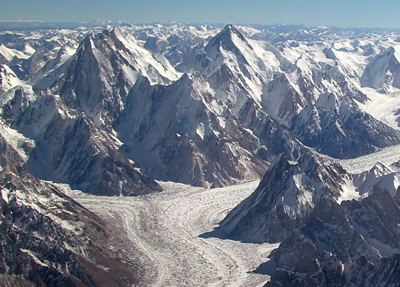
A feedback between Earth surface weathering and climate is thought to be fundamental in maintaining Earth’s habitability over long timescales, but investigating this control in the modern world is difficult. The geologic record of cycles between glacial and interglacial conditions of the last 2.6 million years allows us to study weathering feedback in action. A suite of mineral, element and isotope proxies have been applied to address how weathering rates have varied over glacial cycles. Despite evidence for substantial local changes, the emerging answer at a global scale seems to be, “not very much”.

This content is for Registered members only. To subscribe, please
join one of our participating societies or contact the Editorial Team.

Login
Already a member? Log in here

Palaeoweathering: How Do Weathering Rates Vary with Climate? Read More »
The Central Role of Weathering in the Geosciences

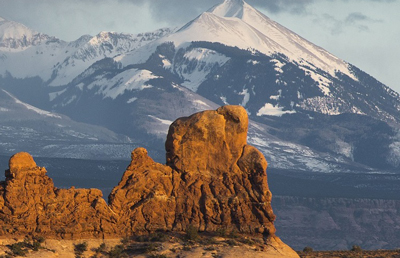
Weathering is the chemical and physical alteration of rock at the surface of the Earth, but its importance is felt well beyond the rock itself. The repercussions of weathering echo throughout the Earth sciences, from ecology to climatology, from geomorphology to geochemistry. This article outlines how weathering interacts with various geoscience disciplines across a huge range of scales, both spatial and temporal. It traces the evolution of scientific thinking about weathering and man’s impact on weathering itself—for better and for worse. Future computational, conceptual and methodological advances are set to cement weathering’s status as a central process in the Earth sciences.

This content is for Registered members only. To subscribe, please
join one of our participating societies or contact the Editorial Team.

Login
Already a member? Log in here

The Central Role of Weathering in the Geosciences Read More »

Scroll to Top

December 2025 --The Variscan Orogeny in Europe – Understanding Supercontinent Formation

The Variscan orogen formed between 380 and 300 million years ago through several accretionary and collisional cycles, culminating with the construction of the Pangea supercontinent. This process occurred via sequential opening and closure of oceanic basins, synchronous detachment of Gondwana derived continental ribbons, and their outboard amalgamation onto the Laurussia margin. The Variscan orogen is rather unique compared with other orogenic belts on Earth: its overthickened and dominantly magmatic crust in the central belt, surprisingly minor mantle involvement in the magmatic and geodynamic processes, coherent and pulsed magmatism along the collision suture, and its complex accretionary history. Because its final product, Pangea, is the youngest and best-understood supercontinent on Earth, the Variscan orogeny offers clues for understanding the mechanisms of supercontinent formation.