


Author name: Elisabetta Gliozzo

Microcrystalline and Amorphous Silica: Materials that Shaped Humanity

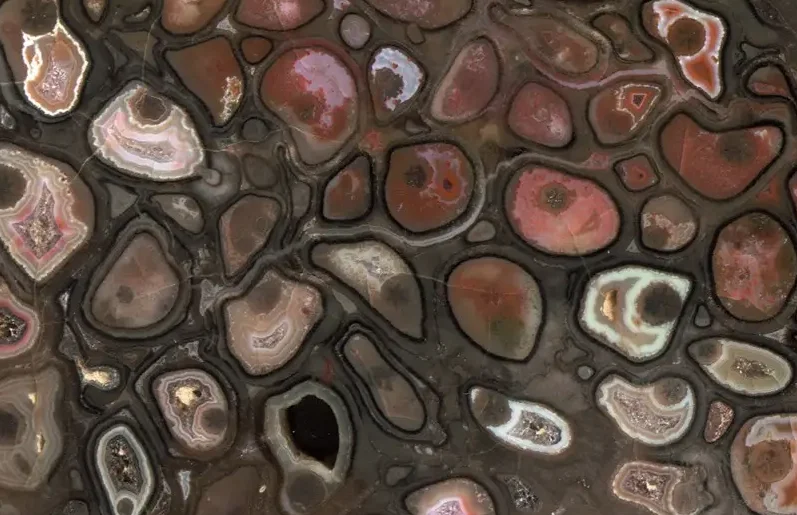
The use of microcrystalline silica has been documented among early hominins, with significant diversification over the last ~3 million years, from early toolmaking to applications in personal adornment and symbolic contexts. From the Oldowan onwards, both microcrystalline quartz and amorphous silica are consistently observed in the archaeological record, and they shaped aspects of human technological and behavioral evolution. This article offers insights into how mechanical, environmental, and cultural factors guided the selection of silica materials and their transformation to purposeful objects—from Pliocene hominins through to the Middle Ages. The crystal chemistry that imbues microcrystalline quartz varieties with their unique properties is reviewed, and the formation pathways for biogenic and abiogenic microcrystalline and amorphous silica are considered.

This content is for Registered members only. To subscribe, please
join one of our participating societies or contact the Editorial Team.

Login
Already a member? Log in here

Microcrystalline and Amorphous Silica: Materials that Shaped Humanity Read More »
Strange Diamonds: The Mysterious Origins of Carbonado and Framesite

Polycrystalline aggregates of diamond called carbonado and framesite have excited the attention of scientists because their crystallization histories are thought to depart markedly from established modes of diamond genesis. In contrast to kimberlitic diamonds, the geochemical signatures of carbonados are systematically crustal. Since the apparent age of carbonados is Archean (~3.2 Ga), a number of exotic formation theories have been invoked, including metamorphism of the earliest subducted lithosphere, radioactive transformation of mantle hydrocarbon, and mete- orite impact on concentrated biomass. Unlike carbonados, framesites are known to originate in the mantle. They appear to have crystallized very rapidly, shortly before the eruption of the kimberlites that brought them to Earth’s surface, suggesting that old cratonic materials can be remobilized after long-term storage in the lithosphere.

This content is for Registered members only. To subscribe, please
join one of our participating societies or contact the Editorial Team.

Login
Already a member? Log in here

Strange Diamonds: The Mysterious Origins of Carbonado and Framesite Read More »

Scroll to Top

December 2025 --The Variscan Orogeny in Europe – Understanding Supercontinent Formation

The Variscan orogen formed between 380 and 300 million years ago through several accretionary and collisional cycles, culminating with the construction of the Pangea supercontinent. This process occurred via sequential opening and closure of oceanic basins, synchronous detachment of Gondwana derived continental ribbons, and their outboard amalgamation onto the Laurussia margin. The Variscan orogen is rather unique compared with other orogenic belts on Earth: its overthickened and dominantly magmatic crust in the central belt, surprisingly minor mantle involvement in the magmatic and geodynamic processes, coherent and pulsed magmatism along the collision suture, and its complex accretionary history. Because its final product, Pangea, is the youngest and best-understood supercontinent on Earth, the Variscan orogeny offers clues for understanding the mechanisms of supercontinent formation.