


Author name: Peter R. Buseck

From Organic Matter to Graphite: Graphitization

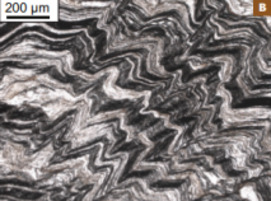
Organic compounds, which on Earth originate mainly through biological activity, are transformed under the physical conditions of Earth’s crust, with the end product being graphite. In this graphitization process, they pass progressively and irreversibly through a wide variety of intermediate macrostructures and nanostructures before finally attaining the stable graphite structure. Characterizing this rich array of carbon structures, which are also of industrial interest, provides valuable information on the geological processes affecting carbon-bearing rocks. These processes impact global energy supplies, the geophysical behavior of the crust, and the habitability of the surface environment.

This content is for Registered members only. To subscribe, please
join one of our participating societies or contact the Editorial Team.

Login
Already a member? Log in here

From Organic Matter to Graphite: Graphitization Read More »
Nanoparticles in the Atmosphere

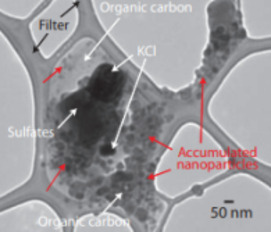
The most continuous and intimate contact the average person has with nanoparticles is almost surely through the air, which is replete with them. Nanoparticles are being generated continuously and in large numbers by vehicles and industries in urban areas and by vegetation and sea spray in rural areas. Volcanoes are sporadic sources of huge numbers. Nanoparticles have large surface area to volume ratios and react rapidly in the atmosphere, commonly growing into particles large enough to interact with radiation and to have serious consequences for visibility and local, regional, and global climate. They also have potentially significant health effects.

This content is for Registered members only. To subscribe, please
join one of our participating societies or contact the Editorial Team.

Login
Already a member? Log in here

Nanoparticles in the Atmosphere Read More »

Scroll to Top

December 2025 --The Variscan Orogeny in Europe – Understanding Supercontinent Formation

The Variscan orogen formed between 380 and 300 million years ago through several accretionary and collisional cycles, culminating with the construction of the Pangea supercontinent. This process occurred via sequential opening and closure of oceanic basins, synchronous detachment of Gondwana derived continental ribbons, and their outboard amalgamation onto the Laurussia margin. The Variscan orogen is rather unique compared with other orogenic belts on Earth: its overthickened and dominantly magmatic crust in the central belt, surprisingly minor mantle involvement in the magmatic and geodynamic processes, coherent and pulsed magmatism along the collision suture, and its complex accretionary history. Because its final product, Pangea, is the youngest and best-understood supercontinent on Earth, the Variscan orogeny offers clues for understanding the mechanisms of supercontinent formation.