
Author name: Roger Fu

Paleomagnetic Recording at the Grain Scale

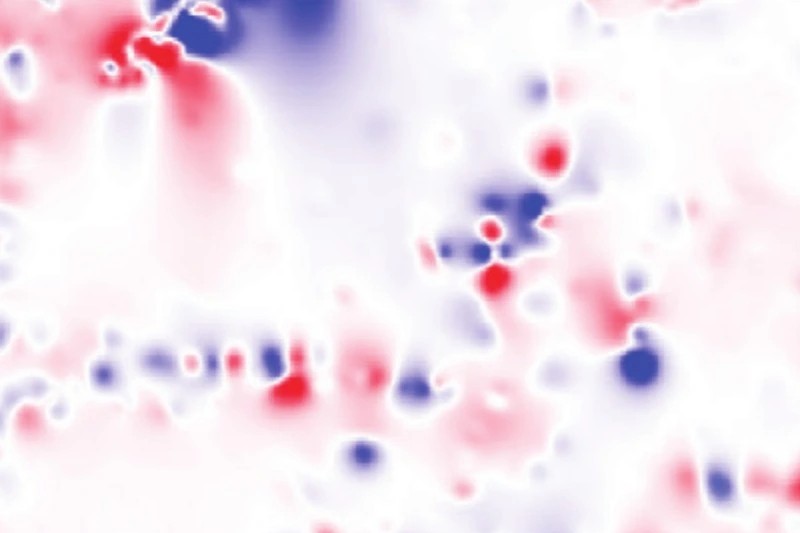
Natural rocks harbor diverse assemblages of magnetic mineral grains that record information about past dynamo activity and plate motions, among other processes. For much of its history, however, the field of paleomagnetism has counted on a thorough theoretical understanding of only very fine (≤100 nm) grains magnetized during heating. Here we review experimental and computational advances to move beyond this limitation. Magnetic field microscopy allows us to physically identify mineral grains carrying specific paleomagnetic signals, while nanotomography coupled with micromagnetic simulations offers, for the first time, a quantitative picture of how most naturally occurring magnetic grains behave across geologic time. Together, these techniques open the door to retrieving records from less-than-ideal rocks with complex geological histories.

This content is for Registered members only. To subscribe, please
join one of our participating societies or contact the Editorial Team.

Login
Already a member? Log in here

Paleomagnetic Recording at the Grain Scale Read More »

Mineral Magnetism: Providing New Insights into Geoscience Processes

Magnetic minerals are ubiquitous in the natural environment, and they are also present in a wide range of biological organisms, from bacteria to human beings. The last ten years have seen a striking improvement in our ability to detect and image the magnetization of minerals in geological and biological samples. These minerals carry a wealth of information encoded in their magnetic properties. Mineral magnetism (together with the related disciplines of rock magnetism, paleomagnetism, environmental magnetism, and biomagnetism) decodes this information and applies it to an ever increasing range of geoscience problems, from the origin of magnetic anomalies on Mars to quantifying variations in Earth’s paleoclimate.

This content is for Registered members only. To subscribe, please
join one of our participating societies or contact the Editorial Team.

Login
Already a member? Log in here

Mineral Magnetism: Providing New Insights into Geoscience Processes Read More »

Scroll to Top

December 2025 --The Variscan Orogeny in Europe – Understanding Supercontinent Formation

The Variscan orogen formed between 380 and 300 million years ago through several accretionary and collisional cycles, culminating with the construction of the Pangea supercontinent. This process occurred via sequential opening and closure of oceanic basins, synchronous detachment of Gondwana derived continental ribbons, and their outboard amalgamation onto the Laurussia margin. The Variscan orogen is rather unique compared with other orogenic belts on Earth: its overthickened and dominantly magmatic crust in the central belt, surprisingly minor mantle involvement in the magmatic and geodynamic processes, coherent and pulsed magmatism along the collision suture, and its complex accretionary history. Because its final product, Pangea, is the youngest and best-understood supercontinent on Earth, the Variscan orogeny offers clues for understanding the mechanisms of supercontinent formation.