

Author name: Robert M. Hazen

Themes and Variations in Complex Systems

Complex systems display diversification in type, patterning, and behavior over time through varied selective mechanisms. Such systems are observed in numerous natural and cultural contexts, including nucleosynthesis, minerals, prebiotic organic synthesis, languages, material culture, and cellular life. These systems possess such qualitatively similar characteristics as diversification into new environments (radiation), episodic periods of innovation (punctuation), and loss of types (extinction). Comparisons among these varied systems thus point to general principles of complexification.

This content is for Registered members only. To subscribe, please
join one of our participating societies or contact the Editorial Team.

Login
Already a member? Log in here

Themes and Variations in Complex Systems Read More »
Mineral Evolution: Mineralogy in the Fourth Dimension

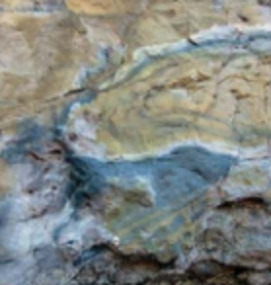
Mineral evolution, which frames mineralogy in a historical context, is based on the premise that the geosphere and biosphere have coevolved through a sequence of deterministic and stochastic events. Three eras of mineral evolution—planetary accretion, crust and mantle reworking, and biologically mediated mineralogy—each saw dramatic changes in the diversity and distribution of Earth’s near-surface minerals. An important implication of this model is that different terrestrial planets and moons achieve different stages of mineral evolution, depending on the geological, petrological, and biological evolution of the body.

This content is for Registered members only. To subscribe, please
join one of our participating societies or contact the Editorial Team.

Login
Already a member? Log in here

Mineral Evolution: Mineralogy in the Fourth Dimension Read More »

Genesis: Rocks, Minerals, and the Geochemical Origin of Life

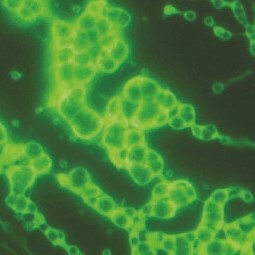
Life arose on the young Earth as a natural chemical process. More than half a century of experimental research has underscored the dynamic interactions of atmosphere, oceans, and rocks that fostered this ancient transition from geochemistry to biochemistry. Researchers on the origin of life now conclude that rocks and minerals must have played key roles in virtually every phase of life’s emergence—they catalyzed the synthesis of key biomolecules; they selected, protected, and concentrated those molecules; they jump-started metabolism; and they may even have acted as life’s first genetic system.

Download Article (PDF)

This content is for Registered members only. To subscribe, please
join one of our participating societies or contact the Editorial Team.

Login
Already a member? Log in here

Genesis: Rocks, Minerals, and the Geochemical Origin of Life Read More »

Scroll to Top

December 2025 --The Variscan Orogeny in Europe – Understanding Supercontinent Formation

The Variscan orogen formed between 380 and 300 million years ago through several accretionary and collisional cycles, culminating with the construction of the Pangea supercontinent. This process occurred via sequential opening and closure of oceanic basins, synchronous detachment of Gondwana derived continental ribbons, and their outboard amalgamation onto the Laurussia margin. The Variscan orogen is rather unique compared with other orogenic belts on Earth: its overthickened and dominantly magmatic crust in the central belt, surprisingly minor mantle involvement in the magmatic and geodynamic processes, coherent and pulsed magmatism along the collision suture, and its complex accretionary history. Because its final product, Pangea, is the youngest and best-understood supercontinent on Earth, the Variscan orogeny offers clues for understanding the mechanisms of supercontinent formation.