

Author name: Hikaru Yabuta

Organic Molecules and Volatiles in Comets

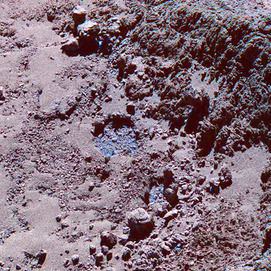
Organic molecules and volatiles (e.g. H2O, CO, CO2) are the major components of comets. The majority of the organic compounds found within comets were produced by ice irradiation in dense molecular clouds and in the protoplanetary disk prior to comet formation. Comets are essentially repositories of protocometary material. As a result, comets do not show the clear trends in chemical and isotopic compositions that would be expected from our understanding of their formation locations. Rather, comets record chemical evolution in the protoplanetary disk and allow us to unveil the formation history of the organics and volatiles.

This content is for Registered members only. To subscribe, please
join one of our participating societies or contact the Editorial Team.

Login
Already a member? Log in here

Organic Molecules and Volatiles in Comets Read More »
Organic Matter in Cosmic Dust

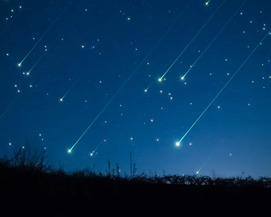
Organics are a significant component of most cosmic dust, as revealed from actual samples of extraterrestrial dust in the Earth’s stratosphere, in Antarctic ice and snow, in near-Earth orbit, and in asteroids and comets. Cosmic dust contains a diverse population of organic materials that owe their origins to a variety of chemical processes occurring in many different environments. The presence of isotopic enrichments of D and 15N suggests that many of these organic materials have an interstellar or protosolar heritage. The study of these samples is of considerable importance because they are the best preserved materials of the early Solar System available.

This content is for Registered members only. To subscribe, please
join one of our participating societies or contact the Editorial Team.

Login
Already a member? Log in here

Organic Matter in Cosmic Dust Read More »

Scroll to Top

December 2025 --The Variscan Orogeny in Europe – Understanding Supercontinent Formation

The Variscan orogen formed between 380 and 300 million years ago through several accretionary and collisional cycles, culminating with the construction of the Pangea supercontinent. This process occurred via sequential opening and closure of oceanic basins, synchronous detachment of Gondwana derived continental ribbons, and their outboard amalgamation onto the Laurussia margin. The Variscan orogen is rather unique compared with other orogenic belts on Earth: its overthickened and dominantly magmatic crust in the central belt, surprisingly minor mantle involvement in the magmatic and geodynamic processes, coherent and pulsed magmatism along the collision suture, and its complex accretionary history. Because its final product, Pangea, is the youngest and best-understood supercontinent on Earth, the Variscan orogeny offers clues for understanding the mechanisms of supercontinent formation.