


Author name: Greg Hirth

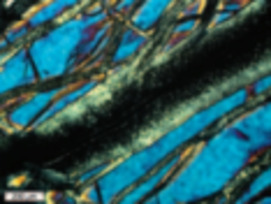
Rheology and Tectonic Significance of Serpentinite

Serpentinites occur in many active geologic settings and control the rheology of the lithosphere where aqueous fluids interact with ultramafic rocks. The crystal structure of serpentine-group minerals results in diagnostic physical properties that are important for interpreting a wide range of geophysical data and impart unique rheological behaviors. Serpentinites play an important role during continental rifting and oceanic spreading, in strain localization along lithospheric strike-slip faults, and in subduction zone processes. The rheology of serpentine is key for understanding the nucleation and propagation of earthquakes, and the relative weakness of serpentinite can significantly affect geodynamic processes at tectonic plate boundaries.

This content is for Registered members only. To subscribe, please
join one of our participating societies or contact the Editorial Team.

Login
Already a member? Log in here

Rheology and Tectonic Significance of Serpentinite Read More »
Serpentinites: Essential Roles in Geodynamics, Arc Volcanism, Sustainable Development, and the Origin of Life

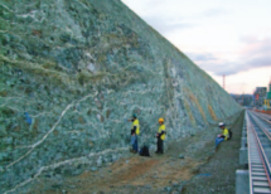
Serpentinites are rocks consisting mostly of the serpentine-group minerals chrysotile, lizardite and antigorite. They are formed by the hydration of olivine-rich ultramafi c rocks and they contain up to ~13 wt% H2O. They have long been used by many cultures as building and carving stones. Serpentinites play essential roles in numerous geological settings. They act as a lubricant along plate boundaries during aseismic creep and contribute to the geochemical cycle of subduction zones. In the mantle, they are a reservoir of water and fluid-mobile elements. Serpentinites can produce nickel ore where weathered, and they can sequester CO2 where carbonated. They may have provided an environment for the abiotic generation of amino acids on the early Earth and other planets, potentially leading to the development of life.

This content is for Registered members only. To subscribe, please
join one of our participating societies or contact the Editorial Team.

Login
Already a member? Log in here

Serpentinites: Essential Roles in Geodynamics, Arc Volcanism, Sustainable Development, and the Origin of Life Read More »

Scroll to Top

December 2025 --The Variscan Orogeny in Europe – Understanding Supercontinent Formation

The Variscan orogen formed between 380 and 300 million years ago through several accretionary and collisional cycles, culminating with the construction of the Pangea supercontinent. This process occurred via sequential opening and closure of oceanic basins, synchronous detachment of Gondwana derived continental ribbons, and their outboard amalgamation onto the Laurussia margin. The Variscan orogen is rather unique compared with other orogenic belts on Earth: its overthickened and dominantly magmatic crust in the central belt, surprisingly minor mantle involvement in the magmatic and geodynamic processes, coherent and pulsed magmatism along the collision suture, and its complex accretionary history. Because its final product, Pangea, is the youngest and best-understood supercontinent on Earth, the Variscan orogeny offers clues for understanding the mechanisms of supercontinent formation.