


Author name: Takamoto Okudaira

Inside the Ryoke Magmatic Arc: Crustal Deformation, High-T Metamorphism, and Magmatic Pulses

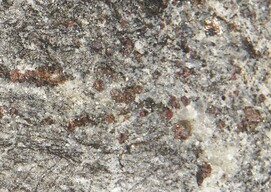
The Ryoke belt represents the root of a volcanic arc exposed across SW Japan. It records successive deformation phases, high-temperature metamorphism, and several magmatic pulses that occurred during the Late Cretaceous. Successive magma intrusions at different crustal levels raised the overall geothermal gradient of the arc crust, and their thermal influence was contrastingly recorded in metamorphic zircon and monazite. Despite a broadly similar duration of magmatic activity (20–30 My) along the belt, the timing and periodicity of magma pulses varied. An along-arc variation in lower crustal magma generation together with a fluctuating crustal stress regime likely controlled the formation and evolution of this magmatic arc section.
This content is for Registered members only. To subscribe, please
join one of our participating societies or contact the Editorial Team.

Login
Already a member? Log in here

Inside the Ryoke Magmatic Arc: Crustal Deformation, High-T Metamorphism, and Magmatic Pulses Read More »

Paired Metamorphism of SW Japan and Implications for Tectonics of Convergent Margins

The Sanbagawa-Ryoke pair of geological units in southwest Japan is the classic example of paired metamorphism originally identified by Akiho Miyashiro. Together these belts represent an important study area for developing and testing ideas about how convergent margins behave over geological time based on studies of the rock record including petrology, geochemistry, deformation, and geochronology. The two sides of the pair represent ancient examples of a subduction zone in the Sanbagawa belt and an associated volcanic arc in the Ryoke belt. This issue of Elements brings together the results of a wide range of different approaches summarizing the current state of knowledge about the Sanbagawa-Ryoke pair and how this informs our understanding of convergent margins in general.

This content is for Registered members only. To subscribe, please
join one of our participating societies or contact the Editorial Team.

Login
Already a member? Log in here

Paired Metamorphism of SW Japan and Implications for Tectonics of Convergent Margins Read More »

Scroll to Top

December 2025 --The Variscan Orogeny in Europe – Understanding Supercontinent Formation

The Variscan orogen formed between 380 and 300 million years ago through several accretionary and collisional cycles, culminating with the construction of the Pangea supercontinent. This process occurred via sequential opening and closure of oceanic basins, synchronous detachment of Gondwana derived continental ribbons, and their outboard amalgamation onto the Laurussia margin. The Variscan orogen is rather unique compared with other orogenic belts on Earth: its overthickened and dominantly magmatic crust in the central belt, surprisingly minor mantle involvement in the magmatic and geodynamic processes, coherent and pulsed magmatism along the collision suture, and its complex accretionary history. Because its final product, Pangea, is the youngest and best-understood supercontinent on Earth, the Variscan orogeny offers clues for understanding the mechanisms of supercontinent formation.