
Author name: Wolfgang Bach

The Role of Seawater Interaction with the Ocean Floor in the Carbon Cycle

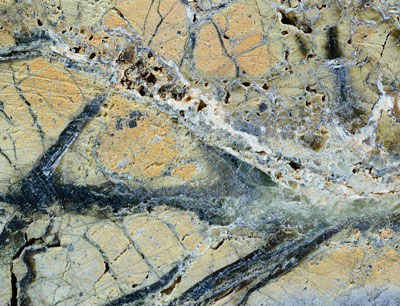
Seawater circulation through oceanic crust acts as an essential sink for CO2 and affects the alkalinity budget of the ocean. Seafloor weathering and ridge flank hydrothermal activity contribute to modern carbon sequestration by taking up carbon at a rate < 0.5 Tmol y−1. In addition, these processes release < 1 Tmol y−1 alkalinity to the ocean. During warmer eras in Earth history, the carbon uptake rates were considerably higher. Estimates range between 2.1 and 3.4 Tmol y−1 during the Cretaceous and Jurassic. The more intense carbonation of the seafloor in the Mesozoic is due to higher temperatures and less pelagic sedimentation in the deep ocean. Accelerated rates of reaction between seawater and basalt and prolonged durations of exposure of igneous crust to seawater led to more intense basalt alteration and carbonate formation within the crust. The interactions between oceanic crust and seawater hence profoundly influence global carbon cycling on long time scales.

This content is for Registered members only. To subscribe, please
join one of our participating societies or contact the Editorial Team.

Login
Already a member? Log in here

The Role of Seawater Interaction with the Ocean Floor in the Carbon Cycle Read More »
Alteration of the Oceanic Lithosphere and Implications for Seafloor Processes

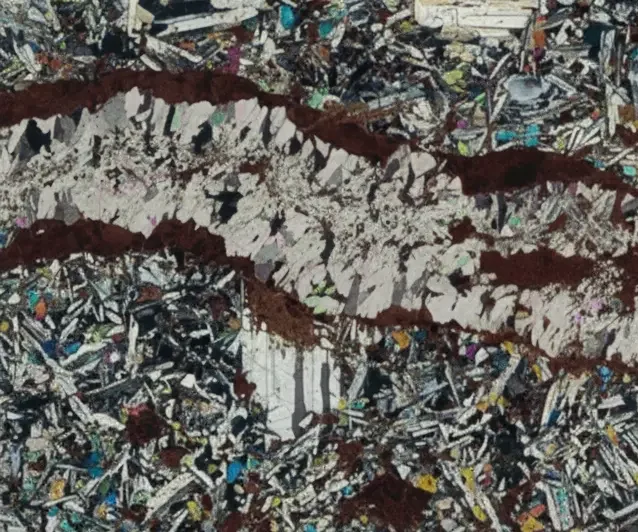
Three-quarters of global magmatism and one-quarter of global heat loss are associated with tectonomagmatic and hydrothermal processes governing oceanic lithosphere accretion and the aging of the lithosphere from ridge to trench. Hydrothermal reactions between seawater and oceanic lithosphere under zeolite to granulite facies conditions are linked with magmatic and deformation processes, but they differ in nature depending on spreading rates. Fast-spreading ridges with frequent eruptions have telescoped metamorphic gradients and short-lived hydrothermal systems. Less magmatically robust, slow-spreading ridges are commonly cut by normal faults that expose ultramafic rocks on the seafloor and sustain long-lived hydrothermal systems with distinct vent fauna and fluid compositions.

This content is for Registered members only. To subscribe, please
join one of our participating societies or contact the Editorial Team.

Login
Already a member? Log in here

Alteration of the Oceanic Lithosphere and Implications for Seafloor Processes Read More »

Abiotic Sources of Molecular Hydrogen on Earth

The capacity for molecular hydrogen (H2) to hydrogenate oxygen and carbon is critical to the origin of life and represents the basis for all known life-forms. Major sources of H2 that strictly involve nonbiological processes and inorganic reactants include (1) the reduction of water during the oxidation of iron in minerals, (2) water splitting due to radioactive decay, (3) degassing of magma at low pressures, and (4) the reaction of water with surface radicals during mechanical breaking of silicate rocks. None of these processes seem to significantly affect the current global atmospheric budget of H2, yet there is substantial H2 cycling in a wide range of Earth’s subsurface environments, with multifaceted implications for microbial ecosystems.

This content is for Registered members only. To subscribe, please
join one of our participating societies or contact the Editorial Team.

Login
Already a member? Log in here

Abiotic Sources of Molecular Hydrogen on Earth Read More »

Scroll to Top

December 2025 --The Variscan Orogeny in Europe – Understanding Supercontinent Formation

The Variscan orogen formed between 380 and 300 million years ago through several accretionary and collisional cycles, culminating with the construction of the Pangea supercontinent. This process occurred via sequential opening and closure of oceanic basins, synchronous detachment of Gondwana derived continental ribbons, and their outboard amalgamation onto the Laurussia margin. The Variscan orogen is rather unique compared with other orogenic belts on Earth: its overthickened and dominantly magmatic crust in the central belt, surprisingly minor mantle involvement in the magmatic and geodynamic processes, coherent and pulsed magmatism along the collision suture, and its complex accretionary history. Because its final product, Pangea, is the youngest and best-understood supercontinent on Earth, the Variscan orogeny offers clues for understanding the mechanisms of supercontinent formation.