

The Invisible Ocean: Hydrogen in the Deep Earth

The Geological History of Water: From Earth’s Accretion to the Modern Deep Water Cycle

The abundance of water on Earth and its distribution between surficial and deep reservoirs are the outcome of 4.6 billion years of geological history involving various mechanisms of water in and outgassing. Here, we use the metaphor of a pipeline connecting Earth’s deep and surface water reservoirs. The net flux through this pipeline has changed over time due to contrasting Hadean, Archean, and modern geodynamic regimes. Most water was dissolved in the primordial magma ocean, entrapped in the solidifying mantle, and massively released by volcanism during the Hadean and Archaean. As Earth cooled, plate tectonics enabled water ingassing into the mantle, which appears to exceed outgassing under the modern tectonic regime, implying that Earth’s surface has been drying out and will continue to do so.

The Geological History of Water: From Earth’s Accretion to the Modern Deep Water Cycle Read More »
Probing Deep Hydrogen Using Electrical Conductivity

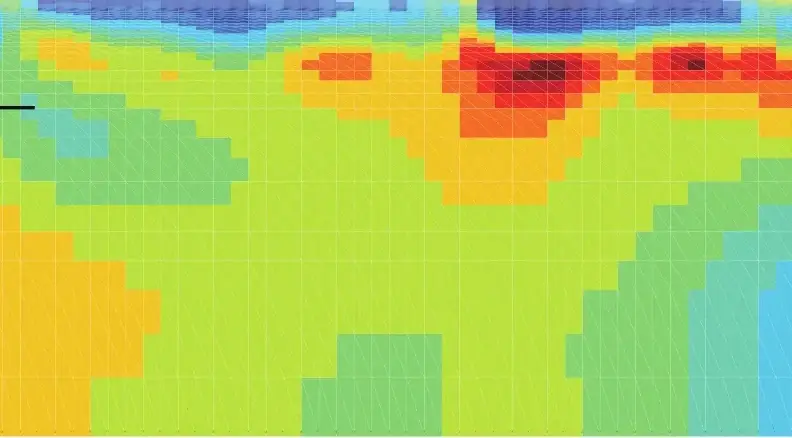
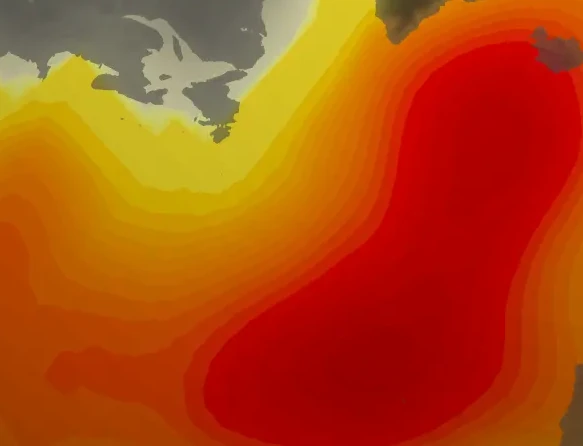
Electrical conductivity is perhaps the physical property of rocks that is most sensitive to the presence of hydrogen. Hydrogen enhances conductivity via proton conduction in minerals or by stabilizing highly conductive phases, such as hydrous silicate melts or aqueous fluids. Hydrogen might also be stored in the metallic core. Electrical conductivity measurements in the laboratory can be used to interpret magnetotelluric maps of the mantle in terms of hydrogen content and distribution. In active tectonic settings like subduction zones, anomalously high conductivities have revealed the distribution and migration pathways of H-bearing melts and fluids, illuminating the transport of hydrogen in our planet’s interior.

This content is for Registered members only. To subscribe, please
join one of our participating societies or contact the Editorial Team.

Login
Already a member? Log in here

Probing Deep Hydrogen Using Electrical Conductivity Read More »

Hydrous Melting and its Seismic Signature

Hydrogen is known to affect elastic and anelastic properties of mantle rocks and minerals. Hydrogen dissolution in minerals notably alters the properties of transition zone phases, which may accommodate very high water contents. Moreover, even small amounts of water can induce partial melting in certain mantle regions and modify seismic wave velocities and attenuation. Progress in seismic imaging of the mantle—particularly the mapping of seismic attenuation and velocities—has improved constraints on local hydrous melt content in the upper mantle, and evidence exists for partial melt–bearing layers above and below the transition zone owing to dehydration reactions induced by upward or downward flow of mantle material. Further observational and modeling studies are needed to more fully understand the influence of hydrous melting on the global water cycle, mantle viscosity, and large-scale geodynamics.

This content is for Registered members only. To subscribe, please
join one of our participating societies or contact the Editorial Team.

Login
Already a member? Log in here

Hydrous Melting and its Seismic Signature Read More »

Deep Hydrogen Reservoirs and Longevity

The oceans are voluminous H2O reservoirs that regulate climate and life on Earth. Yet much larger H2O reservoirs, potentially accounting for several oceans, may exist in the Earth’s mantle and core in the form of H atoms trapped into the structure of nominally anhydrous minerals (NAMs). H atoms trapped into the structure of nominally anhydrous minerals (NAMs) and metallic alloys. Determining the size of these ‘hidden oceans’ is key to understanding planetary evolution and surface dynamics and can be done by combining data from rare natural samples with experimental and theoretical models. The longevity of these deep H reservoirs is controlled by H transport rates over geological times, which are dominated by percolation rates, once H partitions into melts, or by plate mobility, if H remains locked in NAMs.

This content is for Registered members only. To subscribe, please
join one of our participating societies or contact the Editorial Team.

Login
Already a member? Log in here

Deep Hydrogen Reservoirs and Longevity Read More »

The Subduction of Hydrogen: Deep Water Cycling, Induced Seismicity, and Plate Tectonics

The dynamic equilibrium between mantle degassing and water recycling in subduction zones controls the variation of sea level in deep geologic time, as well as the size of Earth’s interior hydrogen reservoir. While the principles of water transport and water release by common hydrous minerals in the subducted crust are relatively well understood, the importance of deep serpentinization of the slab, the contribution of nominally anhydrous minerals and dense hydrous magnesium silicates to water transport, and the mechanisms of water subduction into the lower mantle are still subjects of active research. A quantitative understanding of these processes is required to constrain the evolution of Earth’s deep water cycle through geologic time and the role of water in stabilizing plate tectonics.

This content is for Registered members only. To subscribe, please
join one of our participating societies or contact the Editorial Team.

Login
Already a member? Log in here

The Subduction of Hydrogen: Deep Water Cycling, Induced Seismicity, and Plate Tectonics Read More »

Hydrogen in the Deep Earth

Hydrogen is one of the most difficult elements to characterize in geological materials. Even at trace levels, hydrogen has a major impact on the properties of minerals, silicate melts, and fluids, and thus on the physical state of the mantle and crust. The investigation of H-bearing species in deep minerals, melts, and fluids is challenging because these phases can be strongly modified during transport to Earth’s surface. Furthermore, interpretation of experimental studies can be clouded by kinetic inhibitions and other artifacts. Nevertheless, recent improvements in analytical, experimental, and modeling methodologies have enabled advances in our understanding of how hydrogen is incorporated in the deep Earth, which is essential for constraining hydrogen cycling and storage through geologic time.

This content is for Registered members only. To subscribe, please
join one of our participating societies or contact the Editorial Team.

Login
Already a member? Log in here

Hydrogen in the Deep Earth Read More »

Scroll to Top

December 2025 --The Variscan Orogeny in Europe – Understanding Supercontinent Formation

The Variscan orogen formed between 380 and 300 million years ago through several accretionary and collisional cycles, culminating with the construction of the Pangea supercontinent. This process occurred via sequential opening and closure of oceanic basins, synchronous detachment of Gondwana derived continental ribbons, and their outboard amalgamation onto the Laurussia margin. The Variscan orogen is rather unique compared with other orogenic belts on Earth: its overthickened and dominantly magmatic crust in the central belt, surprisingly minor mantle involvement in the magmatic and geodynamic processes, coherent and pulsed magmatism along the collision suture, and its complex accretionary history. Because its final product, Pangea, is the youngest and best-understood supercontinent on Earth, the Variscan orogeny offers clues for understanding the mechanisms of supercontinent formation.