Thematic Articles

High-Precision Geochronology

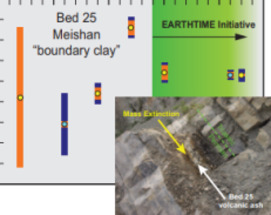
High-precision geochronology is integral to testing hypotheses regarding the correlation, causes, and rates of events and processes in Earth history. Recent studies have sought to reconcile very precise, but apparently conflicting, ages for the same geological samples and events using different chronometers. Both systematic (decay constants, ages of standard materials) and geological (daughter-nuclide loss, inheritance) complexities contribute to the challenges of rock-clock calibration. Community-wide efforts to improve radioisotope geochronology have successfully mitigated many of these factors, and have brought high-precision geochronology to a threshold of unprecedented integration with stratigraphic and geochemical proxies of Earth systems dynamics.

This content is for Registered members only. To subscribe, please
join one of our participating societies or contact the Editorial Team.

Login
Already a member? Log in here

High-Precision Geochronology Read More »
Precision and Accuracy in Geochronology

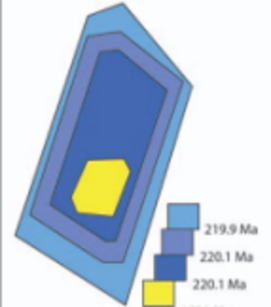
Geochronology in Earth and Solar System science is increasingly in demand, and this demand is not only for more results, but for more precise, more accurate, and more easily interpreted temporal constraints. Because modern research often requires multiple dating methods, scrupulous inter- and intramethod calibration in absolute time is required. However, improved precision has highlighted systematic analytical biases and uncovered geologic complexity that affects mineral dates. At the same time, both enhanced spatial resolution through microbeam geochronology and creative uses of disparate data sets to inform age interpretations have helped explain complexities in age data. Quantifying random and systematic sources of instrumental and geological uncertainty is vital, and requires transparency in methodology, data reduction, and reporting. Community efforts toward inter- and intracalibration of chronometers will continue to help achieve the highest possible resolving power for integrative geochronology.

This content is for Registered members only. To subscribe, please
join one of our participating societies or contact the Editorial Team.

Login
Already a member? Log in here

Precision and Accuracy in Geochronology Read More »

One Hundred Years of Isotope Geochronology, and Counting

In 1913, Frederick Soddy’s research on the fundamentals of radioactivity led to the discovery of “isotopes.” Later that same year, Arthur Holmes published his now famous book The Age of the Earth, in which he applied this new science of radioactivity to the quantification of geologic time. Combined, these two landmark events did much to establish the field of “isotope geochronology” – the science that underpins our knowledge of the absolute age of most Earth (and extraterrestrial) materials. In celebrating the centenary, this issue brings together modern perspectives on the continually evolving fi eld of isotope geochronology – a discipline that reflects and responds to the demands of studies ranging from the early evolution of the Solar System to our understanding of Quaternary climate change, and the 4.5 billion years in between.

This content is for Registered members only. To subscribe, please
join one of our participating societies or contact the Editorial Team.

Login
Already a member? Log in here

One Hundred Years of Isotope Geochronology, and Counting Read More »

Metal Stable Isotopes in the Human Body: A Tribute of Geochemistry to Medicine

Metalloproteins play essential roles in biology and medicine. Calcium is a major component of bones, while electron and oxygen transport in the body relies on iron and copper. Isotope fractionation of metal stable elements uniquely reflects specific biochemical pathways. Variations in these isotope ratios from normal levels in body fluids can be used as reliable markers of pathological conditions. Metal stable isotope fractionation reflects the energetics of bonding, is amenable to theoretical calculations and is fast becoming a powerful medical diagnostic tool. Examples include how calcium isotopes can be used to monitor bone loss, how iron isotopes can react to genetic disorders, and how copper isotopes can help track cancer progression.

This content is for Registered members only. To subscribe, please
join one of our participating societies or contact the Editorial Team.

Login
Already a member? Log in here

Metal Stable Isotopes in the Human Body: A Tribute of Geochemistry to Medicine Read More »

Stable Isotopes Trace the Truth: From Adulterated Foods to Crime Scenes

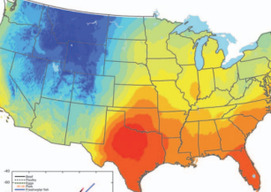
Stable isotopes are valuable biogeochemical markers for solving problems faced by society today, such as distinguishing authentic from adulterated foods and beverages or tracing the origins of illicit drugs. Hydrogen and oxygen isotopes in water exhibit distinct continental patterns (isoscapes), which provide useful region-of-origin information. We ourselves reflect the stable isotope ratios of the water we drink and the food we eat: our hair records any isotopic changes to our diets, which can often be related to location. This latter aspect can be of interest to law enforcement in determining the origins and travel histories of unidentified murder victims.

This content is for Registered members only. To subscribe, please
join one of our participating societies or contact the Editorial Team.

Login
Already a member? Log in here

Stable Isotopes Trace the Truth: From Adulterated Foods to Crime Scenes Read More »

Geochemically Based Solutions for Urban Society: London, A Case Study

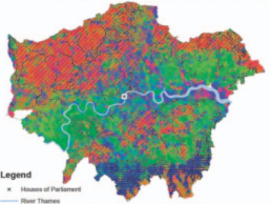
Geochemical data and models can provide a baseline by which to compare changes in the composition of surface waters, groundwater, the atmosphere, soils, and sediments in the coastal megacity of London. The usefulness of geochemical data is dependent on effective communication, which can be challenging. Geochemical tools and approaches can provide evidence to underpin decision making as well as solutions to environmental problems in cities. Geochemists must move beyond simple provision of evidence to describing a solution and then convincing politicians to put this solution into practice.

This content is for Registered members only. To subscribe, please
join one of our participating societies or contact the Editorial Team.

Login
Already a member? Log in here

Geochemically Based Solutions for Urban Society: London, A Case Study Read More »

Environmental Mineralogy: New Challenges, New Materials

The close links between mineralogy and materials science are leading to major developments in how society deals more effectively with energy and environmental challenges. The fast expanding field of “environmental mineralogy” helps mitigate major environmental issues related to the impact of anthropic activities on the global ecosystem. Focusing on energy related materials and environmental cleanup, this article shows how minerals inspire us to design new materials for advanced technologies needed for energy production, managing contaminated areas, and disposing of nuclear waste. We illustrate the environmental importance of nanomaterials, non and poorly crystalline phases, and the interactions between minerals and ubiquitous microbial activity.

This content is for Registered members only. To subscribe, please
join one of our participating societies or contact the Editorial Team.

Login
Already a member? Log in here

Environmental Mineralogy: New Challenges, New Materials Read More »

Applied Geochemistry in Mineral Exploration and Mining

The prosperity of our societies and our standards of living are directly related to our ability to find, exploit, and manage our metal and mineral resources. Metal and mineral deposits are, in fact, geochemical anomalies and, as such, applied geochemistry plays a critical role throughout the mineral resources value chain, from early stage exploration to mine closure. The fundamentals of element mobility (i.e. transport and fixation) in the near-surface environment are used by geochemists to detect mineral deposits at depth, reveal element distributions in and around deposits, assess the total geochemical environment, and refine effective and benign extraction and waste disposal techniques. Both pure- and applied-research ventures play fundamental roles in providing the techniques to manage metal resources and thereby benefit society.

This content is for Registered members only. To subscribe, please
join one of our participating societies or contact the Editorial Team.

Login
Already a member? Log in here

Applied Geochemistry in Mineral Exploration and Mining Read More »

The Impact of Geochemistry

As geochemists and mineralogists, we are well aware of the impact of our science. We can often reel off examples of how our discoveries have influenced industry and improved humankind’s knowledge about how the Earth works, as well as how natural and anthropogenic processes have led to its present state. Moreover, because of a century of analytical developments and conceptual breakthroughs, geochemists are now versatile and can now work across the entire spectrum of the Earth sciences. However, we are not so good at promoting the social and economic impacts of geochemistry.

This content is for Registered members only. To subscribe, please
join one of our participating societies or contact the Editorial Team.

Login
Already a member? Log in here

The Impact of Geochemistry Read More »

Environmental and Medical Geochemistry in Urban Disaster Response and Preparedness

History abounds with accounts of cities that were destroyed or significantly damaged by natural or anthropogenic disasters, such as volcanic eruptions, earthquakes, wildland–urban wildfires, hurricanes, tsunamis, floods, urban firestorms, terrorist attacks, and armed conflicts. Burgeoning megacities place ever more people in the way of harm from future disasters. In addition to the physical damage, casualties, and injuries they cause, sudden urban disasters can also release into the environment large volumes of potentially hazardous materials. Environmental and medical geochemistry investigations help us to (1) understand the sources and environmental behavior of disaster materials, (2) assess potential threats the materials pose to the urban environment and health of urban populations, (3) develop strategies for their cleanup/disposal, and (4) anticipate and mitigate potential environmental and health effects from future urban disasters.

This content is for Registered members only. To subscribe, please
join one of our participating societies or contact the Editorial Team.

Login
Already a member? Log in here

Environmental and Medical Geochemistry in Urban Disaster Response and Preparedness Read More »

Scroll to Top

December 2025 --The Variscan Orogeny in Europe – Understanding Supercontinent Formation

The Variscan orogen formed between 380 and 300 million years ago through several accretionary and collisional cycles, culminating with the construction of the Pangea supercontinent. This process occurred via sequential opening and closure of oceanic basins, synchronous detachment of Gondwana derived continental ribbons, and their outboard amalgamation onto the Laurussia margin. The Variscan orogen is rather unique compared with other orogenic belts on Earth: its overthickened and dominantly magmatic crust in the central belt, surprisingly minor mantle involvement in the magmatic and geodynamic processes, coherent and pulsed magmatism along the collision suture, and its complex accretionary history. Because its final product, Pangea, is the youngest and best-understood supercontinent on Earth, the Variscan orogeny offers clues for understanding the mechanisms of supercontinent formation.