Thematic Articles

Ferruginous Conditions: A Dominant Feature of the Ocean through Earth’s History

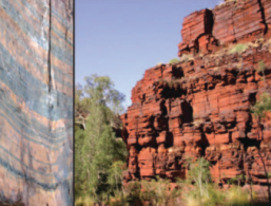
The reconstruction of oceanic paleoredox conditions on Earth is essential for investigating links between biospheric oxygenation and major periods of biological innovation and extinction, and for unravelling feedback mechanisms associated with paleoenvironmental change. The occurrence of anoxic, iron-rich (ferruginous) oceanic conditions often goes unrecognized, but refined techniques are currently providing evidence to suggest that ferruginous deep-ocean conditions were likely dominant throughout much of Earth’s history. The prevalence of this redox state suggests that a detailed appraisal of the influence of ferruginous conditions on the evolution of biogeochemical cycles, climate, and the biosphere is increasingly required.

This content is for Registered members only. To subscribe, please
join one of our participating societies or contact the Editorial Team.

Login
Already a member? Log in here

Ferruginous Conditions: A Dominant Feature of the Ocean through Earth’s History Read More »
Iron Transport from the Continents to the Open Ocean: The Aging–Rejuvenation Cycle

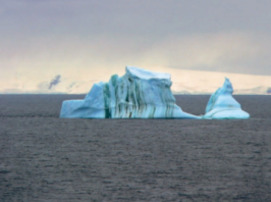
The biogeochemical cycle of iron plays a key role in the ocean by delivering bioavailable iron that controls plankton productivity. Transport through the iron cycle occurs mainly as nanoparticulate (oxyhydr)- oxides, which are physically and chemically intermediate between aqueous and particulate forms and can be directly or indirectly bioavailable. Iron nanoparticles transform with time to more stable forms by increased crystallinity, aggregation and growth, and they also alter to other nanominerals. These age transformations can be inhibited or reversed. The resulting aging– rejuvenation cycle first produces stability during long-distance transport and then reverses the process such that bioavailable and labile iron can be produced and delivered to the open ocean.

This content is for Registered members only. To subscribe, please
join one of our participating societies or contact the Editorial Team.

Login
Already a member? Log in here

Iron Transport from the Continents to the Open Ocean: The Aging–Rejuvenation Cycle Read More »

Geomicrobiology of Iron in Extreme Environments

The rapid redox cycling of iron is one of the most pervasive geochemical processes catalyzed by microbial organisms. Numerous microbial metabolisms rely on transferring electrons to and from iron, even in “extreme” environments considered challenging for life due to high acidity, high alkalinity, high temperature, low organic content, or low water abundance. Recent efforts to explore the iron biogeochemistry of extreme systems, such as hydrothermal vents, seafloor basalts, serpentinizing systems, and acid mine drainage, have significantly expanded our expectations regarding the distribution and activity of iron-dependent life on Earth, and potentially other iron-rich silicate planets, such as Mars.

This content is for Registered members only. To subscribe, please
join one of our participating societies or contact the Editorial Team.

Login
Already a member? Log in here

Geomicrobiology of Iron in Extreme Environments Read More »

IRON IN MICROBIAL METABOLISMS

Microbes are intimately involved in the iron cycle. First, acquisition of iron by microorganisms for biochemical requirements is a key process in the iron cycle in oxygenated, circumneutral pH environments, where the solubility of Fe (III) (oxyhydr)oxides is extremely low. Second, a number of aerobic (using O2) and anaerobic (living in the absence of O2) autotrophic bacteria gain energy for growth from the oxidation of dissolved and solid-phase Fe(II) compounds to Fe(III) (oxyhydr)oxides. Third, heterotrophic Fe (III)-reducing bacteria close the chemical loop by reducing solid-phase Fe (III) minerals back to dissolved and solid-phase Fe(II). Together these metabolic processes control the partitioning of the Earth’s fourth most abundant crustal element, and they are additionally tied to the cycling of several major nutrients (e.g. carbon, oxygen, nitrogen, sulfur) and trace elements (e.g. phosphorus, nickel) in modern and ancient environments.

This content is for Registered members only. To subscribe, please
join one of our participating societies or contact the Editorial Team.

Login
Already a member? Log in here

IRON IN MICROBIAL METABOLISMS Read More »

Iron in Earth Surface Systems: A Major Player in Chemical and Biological Processes

As an essential nutrient and energy source for the growth of microbial organisms, iron is metabolically cycled between reduced and oxidized chemical forms. The resulting flow of electrons is invariably tied to reactions with other redox-sensitive elements, including oxygen, carbon, nitrogen, and sulfur. Therefore, iron is intimately involved in the geochemistry, mineralogy, and petrology of modern aquatic systems and their associated sediments, particulates, and porewaters. In the geological past, iron played an even greater role in marine geochemistry, as evidenced by the vast deposits of Precambrian iron-rich sediments, the “banded iron formations.” These deposits are now being used as proxies for understanding the chemical composition of the ancient oceans and atmosphere.

This content is for Registered members only. To subscribe, please
join one of our participating societies or contact the Editorial Team.

Login
Already a member? Log in here

Iron in Earth Surface Systems: A Major Player in Chemical and Biological Processes Read More »

Meteorites: An Overview

Meteorites come from numerous parent bodies with a wide variety of geological histories. A few (~0.5%) come from Mars or the Moon; the rest are impact debris from collisions between asteroids orbiting between Mars and Jupiter. Unlike terrestrial, Martian, and lunar rocks, the asteroidal meteorites contain minerals that formed before the Sun and the Solar System, during the growth of planetesimals and planets from the disk of dust and gas around the Sun (“the solar nebula”), and during the first half-billion years of Solar System evolution.

This content is for Registered members only. To subscribe, please
join one of our participating societies or contact the Editorial Team.

Login
Already a member? Log in here

Meteorites: An Overview Read More »

Chronometry of Meteorites and the Formation of the Earth and Moon

The planets of the Solar System grew by collisions, starting with the aggregation of tiny dust particles within the solar nebula and culminating in giant collisions between large planetary bodies. These giant impacts occasionally caused the formation of satellites such as the Earth’s Moon. Our understanding of planet formation is based on information from various sources, including meteorites – leftovers from the earliest stages of planet formation – and samples from the Earth and Moon. By combining results from isotopic dating of these materials with dynamic modelling of the solar nebula and planet formation, researchers can reconstruct the accretion and early evolution of planetary bodies during the first ~100 million years of Solar System history.

This content is for Registered members only. To subscribe, please
join one of our participating societies or contact the Editorial Team.

Login
Already a member? Log in here

Chronometry of Meteorites and the Formation of the Earth and Moon Read More »

Organic Chemistry of Carbonaceous Meteorites

The early Solar System contained a wide range of abiotic organic compounds. As the Solar System evolved, these organic molecules were incorporated into planetesimals and eventually planetary bodies, such as the parent bodies of meteorites. One particular class of meteorites, the carbonaceous meteorites, contains a large variety of extraterrestrial organic compounds. These compounds represent a record of the chemical reactions and conditions in the early Solar System. Different formation mechanisms and sources (interstellar, nebular or parent body) contributed to the inventory of meteoritic organic molecules. Their subsequent delivery to the early Earth may have contributed the first prebiotic building blocks of life.

This content is for Registered members only. To subscribe, please
join one of our participating societies or contact the Editorial Team.

Login
Already a member? Log in here

Organic Chemistry of Carbonaceous Meteorites Read More »

The Asteroid–Comet Continuum: In Search of Lost Primitivity

Recent results from the Stardust comet sample-return mission have confirmed the idea that there is a continuum between primitive small bodies in the outer main asteroid belt and comets. Indeed, the mineralogy as well as the chemical and oxygen isotope compositions of the dust from comet Wild 2 are very similar to those of carbonaceous chondrites, a class of meteorites allegedly derived from primitive, dark asteroids. Comets no longer represent extremely primitive samples of the early Solar System that are radically different from dark asteroids. We enter a new era in which comets and their siblings, the dark asteroids, are seen as a collection of individual objects whose geology can be studied. The most primitive of these objects, i.e. the ones that escaped thermal metamorphism or hydrothermal alteration, can help us decipher physicochemical processes in the interstellar medium and in the protoplanetary disk from which our Solar System formed.

This content is for Registered members only. To subscribe, please
join one of our participating societies or contact the Editorial Team.

Login
Already a member? Log in here

The Asteroid–Comet Continuum: In Search of Lost Primitivity Read More »

Stable Isotope Cosmochemistry and the Evolution of Planetary Systems

Stable isotopes record the evolution of planetary systems, beginning with stars coalescing from molecular clouds, followed by the nucleosynthesis of elements in stars, and proceeding to the accretion and differentiation of planets. Current stable isotope measurements range in scale from isotopic mapping of the Milky Way Galaxy with spectrographs on telescopes to the analysis of stardust with ion probes

This content is for Registered members only. To subscribe, please
join one of our participating societies or contact the Editorial Team.

Login
Already a member? Log in here

Stable Isotope Cosmochemistry and the Evolution of Planetary Systems Read More »

Scroll to Top

December 2025 --The Variscan Orogeny in Europe – Understanding Supercontinent Formation

The Variscan orogen formed between 380 and 300 million years ago through several accretionary and collisional cycles, culminating with the construction of the Pangea supercontinent. This process occurred via sequential opening and closure of oceanic basins, synchronous detachment of Gondwana derived continental ribbons, and their outboard amalgamation onto the Laurussia margin. The Variscan orogen is rather unique compared with other orogenic belts on Earth: its overthickened and dominantly magmatic crust in the central belt, surprisingly minor mantle involvement in the magmatic and geodynamic processes, coherent and pulsed magmatism along the collision suture, and its complex accretionary history. Because its final product, Pangea, is the youngest and best-understood supercontinent on Earth, the Variscan orogeny offers clues for understanding the mechanisms of supercontinent formation.