Thematic Articles

Solid Particulate Matter in the Atmosphere

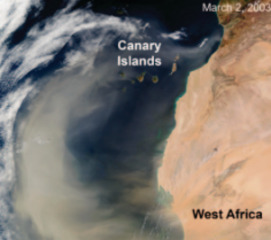
Atmospheric particulates—tiny particles in the air—represent an exciting new research area for mineralogists and geochemists. Emitted directly into or formed within the atmosphere, these particles are generated by both natural processes and human activity. Although derived mostly from sources that are spatially and temporally confined, the particles are ubiquitous globally due to atmospheric circulation. Depending on their physical and chemical properties, these small particles have local- to planetary-scale environmental impacts, influencing the radiative properties of the atmosphere and the cryosphere, the nucleation of both warm and ice clouds, and the nutrient contents of oceans and soils. Because airborne particles can affect human health and transportation, mainly aviation, they have become a focus of government attention and regulation.

This content is for Registered members only. To subscribe, please
join one of our participating societies or contact the Editorial Team.

Login
Already a member? Log in here

Solid Particulate Matter in the Atmosphere Read More »
Metamorphic Fluids and Global Environmental Changes

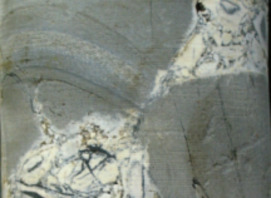
Carbon dioxide is produced by metamorphic reactions in orogenic belts and high-heat-flow systems. Part of this carbon is ultimately released to the atmosphere, but the long timescale of regional metamorphism implies that the short-term effects on the environment are minor. However, contact metamorphism around igneous sill intrusions in organic-rich sedimentary basins has the potential to generate huge volumes of CH4 and CO2, and these gases are rapidly released to the atmosphere through vertical pipe structures. The high flux and volume of greenhouse gases produced in this way suggest that contact metamorphic processes could have a first-order influence on global warming and mass extinctions.

This content is for Registered members only. To subscribe, please
join one of our participating societies or contact the Editorial Team.

Login
Already a member? Log in here

Metamorphic Fluids and Global Environmental Changes Read More »

Alteration of the Oceanic Lithosphere and Implications for Seafloor Processes

Three-quarters of global magmatism and one-quarter of global heat loss are associated with tectonomagmatic and hydrothermal processes governing oceanic lithosphere accretion and the aging of the lithosphere from ridge to trench. Hydrothermal reactions between seawater and oceanic lithosphere under zeolite to granulite facies conditions are linked with magmatic and deformation processes, but they differ in nature depending on spreading rates. Fast-spreading ridges with frequent eruptions have telescoped metamorphic gradients and short-lived hydrothermal systems. Less magmatically robust, slow-spreading ridges are commonly cut by normal faults that expose ultramafic rocks on the seafloor and sustain long-lived hydrothermal systems with distinct vent fauna and fluid compositions.

This content is for Registered members only. To subscribe, please
join one of our participating societies or contact the Editorial Team.

Login
Already a member? Log in here

Alteration of the Oceanic Lithosphere and Implications for Seafloor Processes Read More »

The Mechanics of Metamorphic Fluid Expulsion

Metamorphic devolatilization generates fluid and grain-scale porosity. Evidence for high fluid pressure indicates that devolatilization occurs under poorly drained conditions. Under such conditions, fluid expulsion is limited by the capacity of the reacted rocks to resist compaction or by the rate at which deformation modifies the permeability of the overlying rocks. In the former case, the compaction timescale must be greater than the metamorphic timescale, and flow patterns are dictated by details of rock permeability. The alternative is that compaction processes are fast relative to metamorphism. In this case, flow is compaction driven and accomplished by waves of fluid-filled porosity.

This content is for Registered members only. To subscribe, please
join one of our participating societies or contact the Editorial Team.

Login
Already a member? Log in here

The Mechanics of Metamorphic Fluid Expulsion Read More »

Replacement Processes in the Earth’s Crust

A fundamental question in metamorphism is: What is the mechanism that converts one mineral assemblage into another in response to a change in the physical and/or chemical environment? The fact that aqueous fluids must be involved in such large-scale re-equilibration has been demonstrated by petrological, mineralogical, micro-structural and isotopic data. Fluid–mineral reactions take place by dissolution–precipitation processes, but converting one rock into another requires pervasive transport of reactive fluid through the entire rock. The generation of reaction-induced porosity and the spatial and temporal coupling of dissolution and precipitation can account for fluid and element transport through rocks and the replacement of one mineral assemblage by another.

This content is for Registered members only. To subscribe, please
join one of our participating societies or contact the Editorial Team.

Login
Already a member? Log in here

Replacement Processes in the Earth’s Crust Read More »

Metamorphism: The Role of Fluids

The evolution of the Earth’s lithosphere is affected in a major way by metamorphic processes. Metamorphism affects the lithosphere’s chemical and mineralogical composition, as well as its physical properties on scales ranging from a nanometer to the size of tectonic plates. Studies of metamorphism during the last couple of decades have revealed that fluids are as important in a changing lithosphere as water is in the biosphere. History-dependent characteristics of metamorphic rocks, such as their microstructure, compositional variation, and deformation features, reflect the dynamics of fluid–rock interactions. Migration of the fluids produced during prograde metamorphic processes or consumed during retrogression links metamorphism at depth to the evolution of the hydrosphere, the atmosphere, and the biosphere.

This content is for Registered members only. To subscribe, please
join one of our participating societies or contact the Editorial Team.

Login
Already a member? Log in here

Metamorphism: The Role of Fluids Read More »

Metamorphism: From Patterns to Processes

Metamorphic rocks make up a substantial portion of the Earth’s evolving lithosphere. Understanding metamorphism is central to interpreting large-scale geodynamic processes and interactions among the geosphere, the hydrosphere, the atmosphere, and the biosphere. In this issue of Elements, we emphasize the critical role of fluids in controlling the rates and mechanisms of metamorphic processes. The patterns observed over a wide range of scales in metamorphic rocks are not just passive recorders of tectonic events. They also reveal that the complex coupling of chemical reactions, transport, and deformation processes that constitute metamorphism sometimes operates surprisingly far from equilibrium.

This content is for Registered members only. To subscribe, please
join one of our participating societies or contact the Editorial Team.

Login
Already a member? Log in here

Metamorphism: From Patterns to Processes Read More »

Interactions between Semiconducting Minerals and Bacteria under Light

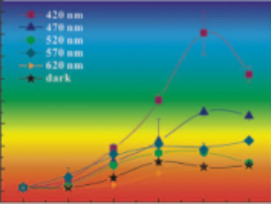
A synergistic reaction pathway has been identified between semiconducting minerals and bacteria. Such reactions sustain electron and energy flow from light to nonphototrophic bacteria via semiconducting minerals, which act as a catalytic shuttle. Understanding this pathway may shed light on a unique ecosystem that potentially carries out phototrophic metabolism without the involvement of phototrophic organisms. Four key natural elements of this system are sunlight, semiconducting minerals, nonphototrophic bacteria, and water. This pathway also suggests a “selfcleansing” mechanism that may exist in nature, whereby both oxidative and reductive degradation of contaminants can occur.

This content is for Registered members only. To subscribe, please
join one of our participating societies or contact the Editorial Team.

Login
Already a member? Log in here

Interactions between Semiconducting Minerals and Bacteria under Light Read More »

Microbial Oxidation of Sulfide Tailings and the Environmental Consequences

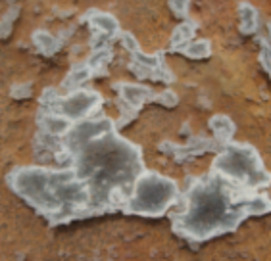
Mining activities have created great wealth, but they have also produced colossal quantities of tailings. An important source of heavy metal contamination, sulfide tailings are usually disposed of in open-air impoundments and thus are exposed to microbial oxidation. Microbial activities greatly enhance sulfide oxidation and result in the release of heavy metals and the precipitation of iron (oxy) hydroxides and sulfates. These secondary minerals in turn influence the mobility of dissolved metals and play important roles in the natural attenuation of heavy metals. Elucidating the microbe–mineral interactions in tailings will help us mitigate the environmental impacts of mining activities.

This content is for Registered members only. To subscribe, please
join one of our participating societies or contact the Editorial Team.

Login
Already a member? Log in here

Microbial Oxidation of Sulfide Tailings and the Environmental Consequences Read More »

Clay–Microbe Interactions and Implications for Environmental Mitigation

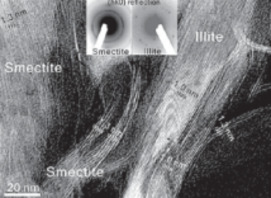
Clay minerals are ubiquitous in soils, sediments, and sedimentary rocks, and they play important roles in environmental processes. Microbes are also abundant in these geological media, and they interact with clays via a variety of mechanisms, such as reduction and oxidation of structural iron and mineral dissolution and precipitation through the production of siderophores and organic acids. These interactions greatly accelerate clay mineral reaction rates. While it is certain that microbes play important roles in clay mineral transformations, quantitative assessment of these roles is limited. This paper reviews some active areas of research on clay–microbe interactions and provides perspectives for future work.

This content is for Registered members only. To subscribe, please
join one of our participating societies or contact the Editorial Team.

Login
Already a member? Log in here

Clay–Microbe Interactions and Implications for Environmental Mitigation Read More »

Scroll to Top

December 2025 --The Variscan Orogeny in Europe – Understanding Supercontinent Formation

The Variscan orogen formed between 380 and 300 million years ago through several accretionary and collisional cycles, culminating with the construction of the Pangea supercontinent. This process occurred via sequential opening and closure of oceanic basins, synchronous detachment of Gondwana derived continental ribbons, and their outboard amalgamation onto the Laurussia margin. The Variscan orogen is rather unique compared with other orogenic belts on Earth: its overthickened and dominantly magmatic crust in the central belt, surprisingly minor mantle involvement in the magmatic and geodynamic processes, coherent and pulsed magmatism along the collision suture, and its complex accretionary history. Because its final product, Pangea, is the youngest and best-understood supercontinent on Earth, the Variscan orogeny offers clues for understanding the mechanisms of supercontinent formation.