Thematic Articles

Mineralogical Evolution of Meteorites

The approximately 250 mineral species found in meteorites record the earliest stages of the birth of our solar system. Refractory minerals that formed during the violent deaths of other stars and during condensation of our own solar nebula mixed with a wide range of silicates, sulfi des, and metals to form the most primitive chondritic meteorites. Subsequent aqueous alteration, thermal metamorphism, and shock metamorphism further diversified the minerals found in meteorites. Asteroidal melting at first increased and then dramatically decreased mineralogical diversity, before a new phase of igneous differentiation that presaged the processes that would occur in terrestrial planets.

This content is for Registered members only. To subscribe, please
join one of our participating societies or contact the Editorial Team.

Login
Already a member? Log in here

Mineralogical Evolution of Meteorites Read More »
The Evolution of Elements and Isotopes

The basic building blocks of all minerals are the approximately 290 stable or long-lived isotopes of 84 elements. Yet, when the universe began and nuclear reactions ceased after about 15 minutes, the only elements present were hydrogen, helium, and traces of lithium. After the groundbreaking work by Cameron and Burbidge and coworkers in the 1950s, it is now understood that all the other elements are made in stars in an ongoing cycle of nucleosynthesis. Stars form, create new elements via nuclear reactions, and finally disperse the new elements into space via winds and explosions, forming the seeds for new stars.

This content is for Registered members only. To subscribe, please
join one of our participating societies or contact the Editorial Team.

Login
Already a member? Log in here

The Evolution of Elements and Isotopes Read More »

Mineral Evolution: Mineralogy in the Fourth Dimension

Mineral evolution, which frames mineralogy in a historical context, is based on the premise that the geosphere and biosphere have coevolved through a sequence of deterministic and stochastic events. Three eras of mineral evolution—planetary accretion, crust and mantle reworking, and biologically mediated mineralogy—each saw dramatic changes in the diversity and distribution of Earth’s near-surface minerals. An important implication of this model is that different terrestrial planets and moons achieve different stages of mineral evolution, depending on the geological, petrological, and biological evolution of the body.

This content is for Registered members only. To subscribe, please
join one of our participating societies or contact the Editorial Team.

Login
Already a member? Log in here

Mineral Evolution: Mineralogy in the Fourth Dimension Read More »

Pathological Biomineralization of Kidney Stones

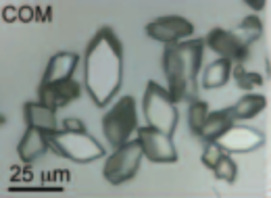
Kidney stones are aggregates of microcrystals, most commonly containing calcium oxalate monohydrate (COM) as the primary constituent. The formation of these aggregates in the renal tubules of the kidney and their attachment to epithelial cells lining the renal tubules are thought to involve adhesion events between COM crystal surfaces and urinary species that bind to these surfaces. The pathological behavior of COM is in stark contrast to calcium oxalate dihydrate (COD), a different mineral phase commonly found in voided urine but much less frequently in stones, and whose presence is thought to protect against stone formation. This observation suggests that the structure and composition of calcium oxalate crystal surfaces and the fundamental interactions of these surfaces with urinary species are crucial to unraveling the complex pathology of this debilitating disease.

This content is for Registered members only. To subscribe, please
join one of our participating societies or contact the Editorial Team.

Login
Already a member? Log in here

Pathological Biomineralization of Kidney Stones Read More »

Toxic Potential of Mineral Dusts

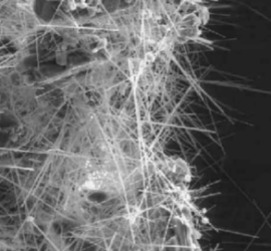
In this outline of the most prominent factors involved in particle toxicology, we highlight the differences in the toxic potential among airborne particles and describe what is known about the most notorious toxic agents, such as silica and asbestos. The various biological paths and, consequently, the different outcomes in the health risks associated with inhaled, micron-sized particle and fibers, as well as inhaled nanoparticles, are explained on the basis of form, size, and surface reactivity. The most relevant surface properties addressed here are the potential for free radical generation, the adsorption of endogenous molecules, and the degree of hydrophilicity or hydrophobicity of the various materials.

This content is for Registered members only. To subscribe, please
join one of our participating societies or contact the Editorial Team.

Login
Already a member? Log in here

Toxic Potential of Mineral Dusts Read More »

Interactions between Proteins and Soil Mineral Surfaces: Environmental and Health Consequences

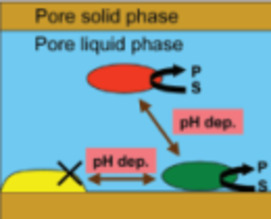
Proteins have long been recognized as important compounds in the biogeochemical cycles of terrestrial ecosystems. They can, for example, provide a source of nitrogen for plants and soil microorganisms following proteolysis and ammonification. Extracellular enzymes liberated in soil are essential catalysts in the mobilization of carbon, nitrogen, phosphorus and sulphur from macromolecular organic matter. Proteins are also implicated in new environmental topics, such as soil carbon storage, horizontal transmission of spongiform encephalopathies and potential negative effects of insecticidal toxins released from transgenic plants.

This content is for Registered members only. To subscribe, please
join one of our participating societies or contact the Editorial Team.

Login
Already a member? Log in here

Interactions between Proteins and Soil Mineral Surfaces: Environmental and Health Consequences Read More »

Bioactive Glass Scaffolds for Bone Regeneration

There is a need for new materials that can stimulate the body’s own regenerative mechanisms and heal tissues. Porous templates (scaffolds) are thought to be required for three-dimensional tissue growth. This article discusses bone regeneration and the specifications of an ideal scaffold and the materials that may be suitable. Bioactive glasses have high potential as scaffold materials as they stimulate bone cells to produce new bone, they are degradable in the body and they bond to bone. The two types of bioactive glasses, their mechanisms for bioactivity and their potential for scaffold production are reviewed. Examples of their current clinical use are highlighted.

This content is for Registered members only. To subscribe, please
join one of our participating societies or contact the Editorial Team.

Login
Already a member? Log in here

Bioactive Glass Scaffolds for Bone Regeneration Read More »

Mineralization of Bones and Teeth

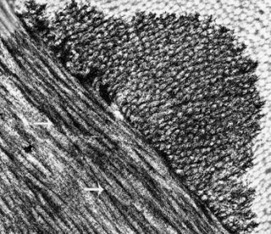
Bones and teeth consist of an inorganic calcium phosphate mineral approximated by hydroxylapatite and matrix proteins. The physical and chemical properties of these “bioapatite” crystals are different from those of geologic hydroxylapatite because of the way they are formed, and these unique properties are required for fulfilling the biological functions of bones and teeth. Recent biochemical studies provide insight into the factors controlling the formation and growth of bioapatite crystals and how alteration in the mineralization process can lead to diseases such as osteoporosis. New spectroscopic and microscopic techniques are enabling scientists to characterize changes in crystal properties in these diseases, providing potentially fruitful areas of collaboration among geochemists, mineralogists, and biological researchers and offering hope for the development of novel therapies.

This content is for Registered members only. To subscribe, please
join one of our participating societies or contact the Editorial Team.

Login
Already a member? Log in here

Mineralization of Bones and Teeth Read More »

Medical Mineralogy and Geochemistry: An Interfacial Science

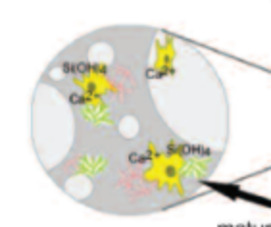
Medical mineralogy and geochemistry is a highly interdisciplinary area of research where the complexity of minerals and mineral surface reactivity in the human body is emphasized. Research in this field will lead to an understanding of the biogeochemical processes responsible for medical conditions, both normal and pathological that involve the interaction of dissolved inorganic species and bioorganic molecules with minerals. In this article, I highlight some fundamental concepts and challenges in this endeavor, and the subsequent articles provide overviews of specific topics.

This content is for Registered members only. To subscribe, please
join one of our participating societies or contact the Editorial Team.

Login
Already a member? Log in here

Medical Mineralogy and Geochemistry: An Interfacial Science Read More »

Contributions from Earth’s Atmosphere to Soil

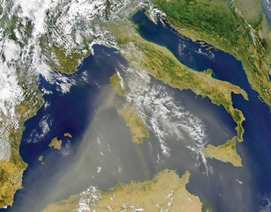
Soils are mixtures of material derived from substrate weathering, plant decomposition, and solute and particulate deposition from the atmosphere. The relative contribution from each source varies widely among soil types and environments. Atmospheric deposition of marine and mineral aerosols can have a major impact on the geochemistry and biogeochemistry of the Critical Zone. Some of the best-studied examples are from ocean islands because of the strong geochemical contrast between bedrock and atmospheric sources, but for the most part continental areas are more severely impacted by atmospheric deposition. With dust flux greater than 10% of the global river sediment flux, deposition from the atmosphere plays an important role in the biogeochemistry of soils worldwide.

This content is for Registered members only. To subscribe, please
join one of our participating societies or contact the Editorial Team.

Login
Already a member? Log in here

Contributions from Earth’s Atmosphere to Soil Read More »

Scroll to Top

December 2025 --The Variscan Orogeny in Europe – Understanding Supercontinent Formation

The Variscan orogen formed between 380 and 300 million years ago through several accretionary and collisional cycles, culminating with the construction of the Pangea supercontinent. This process occurred via sequential opening and closure of oceanic basins, synchronous detachment of Gondwana derived continental ribbons, and their outboard amalgamation onto the Laurussia margin. The Variscan orogen is rather unique compared with other orogenic belts on Earth: its overthickened and dominantly magmatic crust in the central belt, surprisingly minor mantle involvement in the magmatic and geodynamic processes, coherent and pulsed magmatism along the collision suture, and its complex accretionary history. Because its final product, Pangea, is the youngest and best-understood supercontinent on Earth, the Variscan orogeny offers clues for understanding the mechanisms of supercontinent formation.