Thematic Articles

Geological Aspects and Genesis of Bentonites

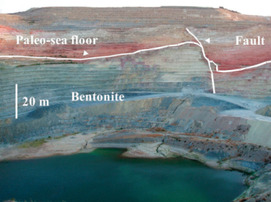
Bentonites are clay rocks consisting predominantly of smectite. They form mainly from alteration of pyroclastic and/or volcaniclastic rocks. Extensive deposits, linked to large eruptions, have formed repeatedly in the past. Bentonite layers are useful for stratigraphic correlation and for interpreting the geodynamic evolution of our planet. Bentonites generally form by diagenetic or hydrothermal alteration, favoured by fluids that leach alkali elements and by high Mg content. Smectite composition is partly controlled by parent rock chemistry. Recent studies have shown that bentonite deposits may display cryptic variations in layer charge – i.e. the variations are not visible at the macroscopic scale – and these correlate with physical properties.

This content is for Registered members only. To subscribe, please
join one of our participating societies or contact the Editorial Team.

Login
Already a member? Log in here

Geological Aspects and Genesis of Bentonites Read More »
Bentonites – Clays for Molecular Engineering

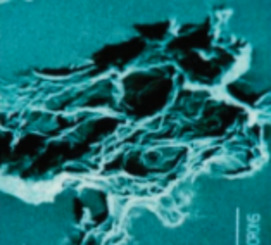
Smectites are the main components of bentonites; their characteristics define the remarkable range for their uses in industry and technology. Their application depends on their fundamental properties, namely, their atomic structure with a rather flexible crystal lattice, their variable chemical composition, their particle size, and their morphology. The interlayer region of smectites is a favorable target for molecular engineering to design organic and inorganic hybrid materials, including smectite–polymer nanocomposites and pillared complexes of smectite–metal oxides.

This content is for Registered members only. To subscribe, please
join one of our participating societies or contact the Editorial Team.

Login
Already a member? Log in here

Bentonites – Clays for Molecular Engineering Read More »

Bentonite and Its Impact on Modern Life

Although bentonite has been used for thousands of years, most of its current uses were developed after 1900. Today it is a key raw material in the production of energy and steel, and in numerous other common products and applications that are critical to the world economy. This article reviews several of these important bentonite uses and describes some basic principles of bentonite exploration, mining, and processing.

This content is for Registered members only. To subscribe, please
join one of our participating societies or contact the Editorial Team.

Login
Already a member? Log in here

Bentonite and Its Impact on Modern Life Read More »

The Poles of the Moon

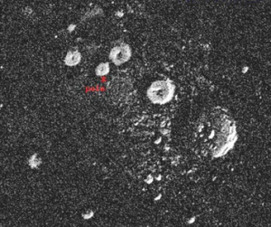
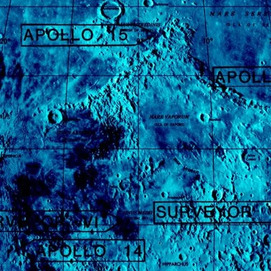
The lunar poles feature a microenvironment that is almost entirely unknown to planetary science. Because of the very small tilt of the Moon’s axis with respect to the Sun, craters and other depressions near the poles are permanently shaded from direct sunlight. As a consequence, these surfaces should have maintained extremely low temperatures, well under 100 K, for billions of years. There is some evidence that these surfaces act as cold traps, capturing and sequestering volatiles from the Moon and elsewhere. Most popular attention has focused on the possible presence of water ice that might be used by astronauts in the future, but the poles may offer a unique scientific resource. Possible sources for volatiles at the lunar poles range from the Sun to interstellar clouds, and if present, such volatile deposits may provide unique information about many aspects of planetary science.

This content is for Registered members only. To subscribe, please
join one of our participating societies or contact the Editorial Team.

Login
Already a member? Log in here

The Poles of the Moon Read More »

The Interior Structure of the Moon: What Does Geophysics Have to Say?

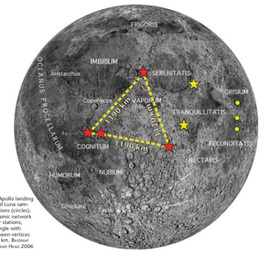
Geophysical data obtained from orbit and surface stations show that the Moon is a differentiated body possessing a crust, mantle, and core. The crust is on average about 40 km thick, and impact events with asteroids and comets have excavated materials to great depths within the crust. Moonquakes that are correlated in time with Earth-raised tides occur about halfway to the center of the Moon and suggest that the deepest portion of the mantle might be partially molten. The lunar core is relatively small in comparison with the cores of the terrestrial planets, with a size less than one-quarter of the Moon’s radius.

This content is for Registered members only. To subscribe, please
join one of our participating societies or contact the Editorial Team.

Login
Already a member? Log in here

The Interior Structure of the Moon: What Does Geophysics Have to Say? Read More »

Lunar Mare Volcanism: Where Did the Magmas Come From?

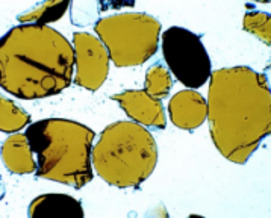
The first rocks to be returned from the Moon by the Apollo 11 astronauts were basalts from the mare basins. Analysis of these rocks led to the hypothesis that the mare lavas were remelts of a lunar interior that had experienced an early, profound chemical differentiation event produced by crystallization of a planet-wide lunar magma ocean. As Apollo missions continued to explore and sample the lunar surface, an increasingly diverse suite of mare volcanic rocks was discovered. Mare magmatism is concentrated in the time interval of 3.8 to 3.0 billion years before present. Among the samples were tiny, glassy spheres of ultramafic composition that formed during volcanic fire-fountain eruptions into the cold lunar vacuum. The results of high-pressure and high-temperature laboratory melting experiments on lunar mare basalts and volcanic glasses, along with geochemical evidence and physical modeling, affirm that remelting of the solidified products of a deep magma ocean still provides the best explanation for lunar maria magmas. However, the initial depth of the lunar magma ocean, the physical processes that accompanied solidification, and the heat source for remelting cumulates to form these late basaltic outpourings remain incompletely understood and present challenging problems for current researchers.

This content is for Registered members only. To subscribe, please
join one of our participating societies or contact the Editorial Team.

Login
Already a member? Log in here

Lunar Mare Volcanism: Where Did the Magmas Come From? Read More »

The Lunar Cataclysm: Reality or “Mythconception”?

The impact history of the Moon has significant implications that go far beyond simply excavating the surface of a dry and lifeless world. The age distribution of lunar impact breccias inspired the idea of a catastrophic influx of asteroids and comets about 4 billion years ago and motivated new models of planetary dynamics. A late bombardment may have regulated environmental conditions on the early Earth and Mars and influenced the course of biologic evolution. The cataclysm hypothesis is controversial, however, and far from proven. Lunar explorers face the difficult task of establishing absolute ages of ancient impact basins and the sources for the impactors.

This content is for Registered members only. To subscribe, please
join one of our participating societies or contact the Editorial Team.

Login
Already a member? Log in here

The Lunar Cataclysm: Reality or “Mythconception”? Read More »

Ancient Lunar Crust: Origin, Composition, and Implications

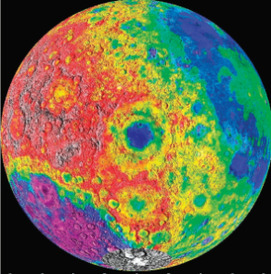
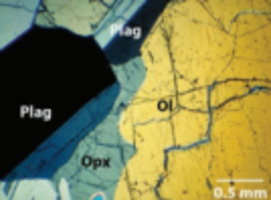
Samples from the Apollo (USA) and Luna (Soviet) missions and from lunar meteorites, coupled with remote sensing data, reveal that the ancient highlands of the Moon are compositionally diverse. The average surface material contains 80 vol% plagioclase. A major suite of rocks, the ferroan anorthosites, averages 96 vol% plagioclase. The feldspathic composition reflects plagioclase flotation in a magma ocean. Late-stage REE-rich magma pooled in the Procellarum region of the lunar nearside. The concentration of heat-producing elements in this region triggered mantle melting and overturn of the cumulate pile, forming two more suites of chemically distinct highland rocks, the magnesian and alkali suites.

This content is for Registered members only. To subscribe, please
join one of our participating societies or contact the Editorial Team.

Login
Already a member? Log in here

Ancient Lunar Crust: Origin, Composition, and Implications Read More »

Scientific Exploration of the Moon

The Moon is a geochemically differentiated object. It has a feldspathic crust (highlands regions) composed of three petrological suites. Underlying that crust is a compositionally heterogeneous upper mantle from which ferrobasalts and picrites (mare regions) were generated. Lunar samples retain a memory of the time-dependent flux of meteorites and comets, which has implications for the origin of sustainable life on Earth and the orbital evolution of the outer planets. Permanently shadowed regions at the lunar poles may contain reservoirs of volatile ices, which would have important resource potential for scientific bases. Geophysical data show that the Moon has a thick, seismically active lithosphere, a partially molten zone beneath that lithosphere, and a small metallic core. The pace of scientific exploration has quickened since 2003 with the successes of spacecraft from Europe, Japan, the People’s Republic of China, and India. Upcoming launches of spacecraft from these same nations and the United States herald a new era of lunar discoveries.

This content is for Registered members only. To subscribe, please
join one of our participating societies or contact the Editorial Team.

Login
Already a member? Log in here

Scientific Exploration of the Moon Read More »

Biogenic Uraninite Nanoparticles and Their Importance for Uranium Remediation

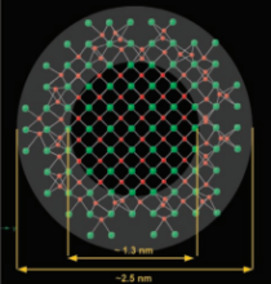
Biogenic uraninite is of interest to geoscientists for its importance to bioremediation strategies, remarkably small particle size, and biological origin. Recent studies have begun to illuminate the chemical/structural complexities of this important natural nanomaterial. Intriguingly, in spite of its incredibly diminutive size, the molecular-scale structure, energetics, and surfacearea-normalized dissolution rates of hydrated biogenic uraninite appear to be similar to those of coarser-particle, abiotic, stoichiometric UO2. These findings have important implications for the role of size as a moderator of nanoparticle aqueous reactivity and for the bioremediation of subsurface U (VI) contamination.

This content is for Registered members only. To subscribe, please
join one of our participating societies or contact the Editorial Team.

Login
Already a member? Log in here

Biogenic Uraninite Nanoparticles and Their Importance for Uranium Remediation Read More »

Scroll to Top

December 2025 --The Variscan Orogeny in Europe – Understanding Supercontinent Formation

The Variscan orogen formed between 380 and 300 million years ago through several accretionary and collisional cycles, culminating with the construction of the Pangea supercontinent. This process occurred via sequential opening and closure of oceanic basins, synchronous detachment of Gondwana derived continental ribbons, and their outboard amalgamation onto the Laurussia margin. The Variscan orogen is rather unique compared with other orogenic belts on Earth: its overthickened and dominantly magmatic crust in the central belt, surprisingly minor mantle involvement in the magmatic and geodynamic processes, coherent and pulsed magmatism along the collision suture, and its complex accretionary history. Because its final product, Pangea, is the youngest and best-understood supercontinent on Earth, the Variscan orogeny offers clues for understanding the mechanisms of supercontinent formation.