Thematic Articles

Iron Oxides as Geochemical Nanovectors for Metal Transport in Soil–River Systems

Topsoils are often contaminated by trace metals, and it is important to understand how different processes govern the transport of such metals to fresh and marine waters. This paper presents measurements of natural nanoparticles and colloidal organic matter in soil and river samples from Germany and Sweden. In our analytical approach, a nanoparticle separation technique is combined with multielement detection and applied to soil and river samples to link the macroscale field observations with detailed molecular studies in the laboratory. It was determined that lead is associated with iron oxide colloids, which are ubiquitous nanoparticles that can be efficiently transported. Eventually both iron oxides and lead are removed by flocculation under conditions of estuarine mixing. Iron-rich nanoparticles compete efficiently with natural organic matter (NOM) complexation for lead binding in both the soil and river systems studied.

This content is for Registered members only. To subscribe, please
join one of our participating societies or contact the Editorial Team.

Login
Already a member? Log in here

Iron Oxides as Geochemical Nanovectors for Metal Transport in Soil–River Systems Read More »

Nanoparticles in the Soil Environment

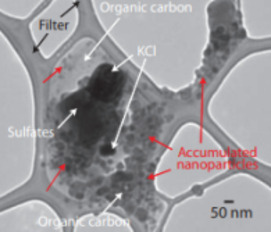
Soils contain many kinds of inorganic and organic particles with at least one dimension in the nanoscale or colloidal range (<100 nm). Well-known examples are clay minerals, metal (hydr)oxides, and humic substances, while allophane and imogolite are abundant in volcanic soils. Apparently, only a small proportion of nanoparticles in soil occur as discrete entities. Organic colloids in soil, for example, are largely associated with their inorganic counterparts or form coatings over mineral surfaces. For this reason, individual nanoparticles are difficult to separate and collect from the bulk soil, and extraction yields are generally low. By the same token, the characterization of soil nanoparticles often requires advanced analytical and spectroscopic techniques. Because of their large surface area and the presence of surface defects and dislocations, nanoparticles in soil are very reactive towards external solute molecules. The focus of research in recent years has been on the interactions of nanoparticles with environmental pollutants and on their impact on the movement, fate, and bioavailability of contaminants.><100 nm). Well-known examples are clay minerals, metal (hydr) oxides, and humic substances, while allophane and imogolite are abundant in volcanic soils. Apparently, only a small proportion of nanoparticles in soil occur as discrete entities. Organic colloids in soil, for example, are largely associated with their inorganic counterparts or form coatings over mineral surfaces. For this reason, individual nanoparticles are difficult to separate and collect from the bulk soil, and extraction yields are generally low. By the same token, the characterization of soil nanoparticles often requires advanced analytical and spectroscopic techniques. Because of their large surface area and the presence of surface defects and dislocations, nanoparticles in soil are very reactive towards external solute molecules. The focus of research in recent years has been on the interactions of nanoparticles with environmental pollutants and on their impact on the movement, fate, and bioavailability of contaminants.

This content is for Registered members only. To subscribe, please
join one of our participating societies or contact the Editorial Team.

Login
Already a member? Log in here

Nanoparticles in the Soil Environment Read More »

Nanoparticles in the Atmosphere

The most continuous and intimate contact the average person has with nanoparticles is almost surely through the air, which is replete with them. Nanoparticles are being generated continuously and in large numbers by vehicles and industries in urban areas and by vegetation and sea spray in rural areas. Volcanoes are sporadic sources of huge numbers. Nanoparticles have large surface area to volume ratios and react rapidly in the atmosphere, commonly growing into particles large enough to interact with radiation and to have serious consequences for visibility and local, regional, and global climate. They also have potentially significant health effects.

This content is for Registered members only. To subscribe, please
join one of our participating societies or contact the Editorial Team.

Login
Already a member? Log in here

Nanoparticles in the Atmosphere Read More »

Structure, Chemistry, and Properties of Mineral Nanoparticles

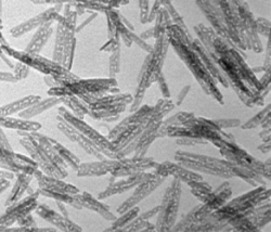
Nanoparticle properties can show marked departures from their bulk analog materials, including large differences in chemical reactivity, molecular and electronic structure, and mechanical behavior. The greatest changes are expected at the smallest sizes, e.g. 10 nanometers and less, where surface effects are likely to dominate bonding, shape, and energy considerations. The precise chemistry at nanoparticle interfaces can have a profound effect on structure, phase transformations, strain, and reactivity. Certain phases may exist only as nanoparticles, requiring transformations in chemistry, stoichiometry, and structure with evolution to larger sizes. In general, mineral nanoparticles have been little studied.

This content is for Registered members only. To subscribe, please
join one of our participating societies or contact the Editorial Team.

Login
Already a member? Log in here

Structure, Chemistry, and Properties of Mineral Nanoparticles Read More »

Nanogeoscience: From Origins to Cutting-Edge Applications

At first glance, nano and Earth seem about as far apart as one can imagine. Nanogeoscience seems to be a word connecting opposites. But to a growing number of Earth scientists, this term makes sense. Although relatively difficult to detect and study, natural nanomaterials are ubiquitous in nature. Their properties are often different (sometimes dramatically different) from those of the same material at a larger size. In many cases, larger equivalents do not even exist. By understanding natural nanomaterials, we can acquire another perspective from which to view Earth’s chemical and physical properties. Important insights into local, regional, and even global phenomena await our understanding of processes that are relevant at the smallest scales of Earth science research.

This content is for Registered members only. To subscribe, please
join one of our participating societies or contact the Editorial Team.

Login
Already a member? Log in here

Nanogeoscience: From Origins to Cutting-Edge Applications Read More »

Mineral Carbonation of CO2

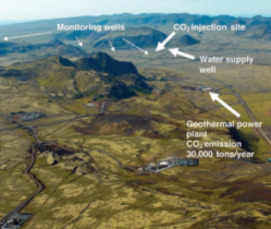
Asurvey of the global carbon reservoirs suggests that the most stable, long-term storage mechanism for atmospheric CO2 is the formation of carbonate minerals such as calcite, dolomite and magnesite. The feasibility is demonstrated by the proportion of terrestrial carbon bound in these minerals: at least 40,000 times more carbon is present in carbonate rocks than in the atmosphere. Atmospheric carbon can be transformed into carbonate minerals either ex situ, as part of an industrial process, or in situ, by injection into geological formations where the elements required for carbonate-mineral formation are present. Many challenges in mineral carbonation remain to be resolved. They include overcoming the slow kinetics of mineral–fluid reactions, dealing with the large volume of source material required and reducing the energy needed to hasten the carbonation process. To address these challenges, several pilot studies have been launched, including the CarbFix program in Iceland. The aim of CarbFix is to inject CO2 into permeable basaltic rocks in an attempt to form carbonate minerals directly through a coupled dissolution– precipitation process.

This content is for Registered members only. To subscribe, please
join one of our participating societies or contact the Editorial Team.

Login
Already a member? Log in here

Mineral Carbonation of CO2 Read More »

CO2 Sequestration in Deep Sedimentary Formations

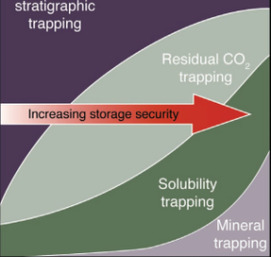
Carbon dioxide capture and sequestration (CCS) in deep geological formations has recently emerged as an important option for reducing greenhouse emissions. If CCS is implemented on the scale needed to make noticeable reductions in atmospheric CO2, a billion metric tons or more must be sequestered annually—a 250 fold increase over the amount sequestered today. Securing such a large volume will require a solid scientific foundation defining the coupled hydrologic–geochemical–geomechanical processes that govern the long-term fate of CO2 in the subsurface. Also needed are methods to characterize and select sequestration sites, subsurface engineering to optimize performance and cost, approaches to ensure safe operation, monitoring technology, remediation methods, regulatory overview, and an institutional approach for managing long-term liability.

This content is for Registered members only. To subscribe, please
join one of our participating societies or contact the Editorial Team.

Login
Already a member? Log in here

CO2 Sequestration in Deep Sedimentary Formations Read More »

Ocean Storage of CO2

One method for minimizing climate change is to capture CO2 from power plants and inject it into the deep ocean, thus reducing the magnitude and rate of change of CO2 concentration in the atmosphere and the surface ocean. Many discharge options are possible, with varied mixing and retention characteristics. The ocean’s capacity is vast, and mathematical models suggest that injected CO2 could remain sequestered for several hundred years. While theoretical and laboratory studies support the viability of ocean storage, field experiments are necessary to realistically evaluate the environmental impact.

This content is for Registered members only. To subscribe, please
join one of our participating societies or contact the Editorial Team.

Login
Already a member? Log in here

Ocean Storage of CO2 Read More »

CO2 Capture and Transport

International interest in CO2 capture and storage (CCS), as a method of reducing carbon dioxide emissions linked to global climate change, has been growing in recent years. CCS is particularly attractive for large industrial facilities, especially electric power plants, which contribute a large share of global CO2 emissions from combustion of coal and other fossil fuels. This paper describes the current status of technologies to capture CO2 and transport it to a storage site. The performance and cost of capture technologies are discussed, along with related environmental issues and the outlook for improved, lowercost strategies. The key need now is financing of full-scale demonstrations of CCS at the various types of large coal-based power plants.

This content is for Registered members only. To subscribe, please
join one of our participating societies or contact the Editorial Team.

Login
Already a member? Log in here

CO2 Capture and Transport Read More »

Carbon Dioxide Sequestration A Solution to a Global Problem

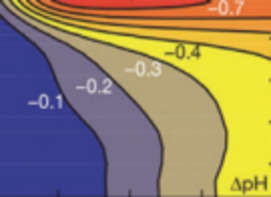
Human and industrial development over the past hundred years has led to a huge increase in fossil fuel consumption and CO2 emissions, causing a dramatic increase in atmospheric CO2 concentration. This increased CO2 is believed to be responsible for a significant rise in global temperature over the past several decades. Global-scale climate modeling suggests that the temperature increase will continue, at least over the next few hundred years, leading to glacial melting and rising sea levels. Increased atmospheric CO2 also leads to ocean acidification, which will have drastic consequences for marine ecosystems. In an attempt to solve these problems, many have proposed the large-scale sequestration of CO2 from our atmosphere. This introductory article presents a summary of some of the evidence linking increasing atmospheric CO2 concentration to global warming and ocean acidification and our efforts to stem this rise though CO2 sequestration.

This content is for Registered members only. To subscribe, please
join one of our participating societies or contact the Editorial Team.

Login
Already a member? Log in here

Carbon Dioxide Sequestration A Solution to a Global Problem Read More »

Scroll to Top

December 2025 --The Variscan Orogeny in Europe – Understanding Supercontinent Formation

The Variscan orogen formed between 380 and 300 million years ago through several accretionary and collisional cycles, culminating with the construction of the Pangea supercontinent. This process occurred via sequential opening and closure of oceanic basins, synchronous detachment of Gondwana derived continental ribbons, and their outboard amalgamation onto the Laurussia margin. The Variscan orogen is rather unique compared with other orogenic belts on Earth: its overthickened and dominantly magmatic crust in the central belt, surprisingly minor mantle involvement in the magmatic and geodynamic processes, coherent and pulsed magmatism along the collision suture, and its complex accretionary history. Because its final product, Pangea, is the youngest and best-understood supercontinent on Earth, the Variscan orogeny offers clues for understanding the mechanisms of supercontinent formation.