Thematic Articles

Hide and Seek— Trace Element Incorporation and Diffusion in Olivine

Olivine, once overlooked as a host of trace elements, is becoming increasingly important for our understanding of the kinetic and equilibrium behaviour of these elements. Much of our understanding of trace element substitution and diffusion in geological materials comes as a result of experimental and petrological studies of olivine. Here, we consider trace element concentrations and incorporation mechanisms, and how these relate to diffusive behaviour. If we understand trace element behaviour in olivine, we have a powerful tool kit that can be directly applied to address many problems in petrology and volcanology. Perhaps more importantly, what we have learned from olivine can be applied to other minerals and aid us in addressing other far-reaching questions from across the Earth sciences.

This content is for Registered members only. To subscribe, please
join one of our participating societies or contact the Editorial Team.

Login
Already a member? Log in here

Hide and Seek— Trace Element Incorporation and Diffusion in Olivine Read More »
Olivine—The Little Green Science Machine

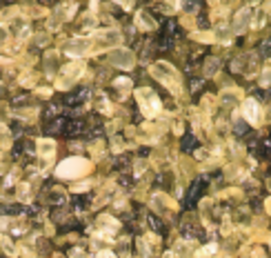
In some ways, olivine has driven the evolution of the Solar System and likely beyond. As one of the earliest-crystallizing silicate minerals, olivine controls the initial chemical evolution of planet-wide magma oceans and individual lava flows alike. In solid aggregate form, it controls and records deformation of the mantle and smaller-scale intrusive complexes. The components of its crystal structure are mobile at high temperatures and their migration can be used to explore the timing of magmatic events. During chemical weathering, these olivine crystals capture carbon dioxide from the atmosphere as secondary minerals are formed. All of these processes take place not only on Earth, but also on other planetary bodies, making olivine ideally suited to shed light on both primordial planet-building processes and current-day volcanism and surface processes.

This content is for Registered members only. To subscribe, please
join one of our participating societies or contact the Editorial Team.

Login
Already a member? Log in here

Olivine—The Little Green Science Machine Read More »

The First Billion Years: When Did Life Emerge?

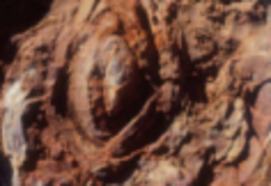
There are three principal lines of evidence from which we can infer the timing of the origin of life on Earth: stromatolites, microfossils, and carbon isotope data. All indicate that life emerged earlier than ~3500 million years ago, but the details and exact timing of life’s beginnings remain unknown.

This content is for Registered members only. To subscribe, please
join one of our participating societies or contact the Editorial Team.

Login
Already a member? Log in here

The First Billion Years: When Did Life Emerge? Read More »

Antiquity of the Oceans and Continents

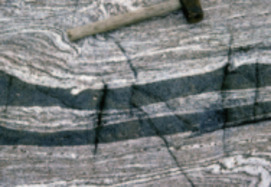
Tracing the origin of the oceans and the division of the crust into distinct oceanic and continental realms relies on incomplete information from tiny vestiges of surviving oldest crust (>3.6 billions years old). Billions of years of tectonism, melting and erosion have obliterated the rest of that crust. Oceans and continental crust already existed almost four billion years ago because water-laid sedimentary rocks of this age have been found and because tonalites dominate in gneissic sequences dating from this period. Tonalites are igneous rocks produced by partial melting of hydrated basaltic crust at convergent plate boundaries. Collisional orogenic systems produced granites by partial melting of tonalite crust 3.7–3.6 billion years ago. Thus the oldest rocks can be understood in terms of a plate tectonic regime. The chemistry of even older detrital zircons may argue for continental crust and oceans back to 4.4 and 4.2 billion years ago, respectively. Maybe only within the first 200 million years was Earth’s surface hot, dry and predominantly shaped by impacts.

This content is for Registered members only. To subscribe, please
join one of our participating societies or contact the Editorial Team.

Login
Already a member? Log in here

Antiquity of the Oceans and Continents Read More »

Earth’s Earliest Atmosphere

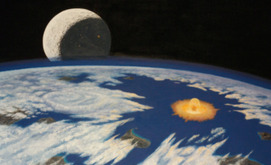
The aftermath of the Moon-forming impact left Earth with a hot, CO2-rich steam atmosphere. Water oceans condensed from the steam after 2 Myr, but for some 10–100 Myr the surface stayed warm (~500K), the length of time depending on how quickly the CO2 was removed into the mantle. Thereafter a lifeless Earth, heated only by the dim light of the young Sun, would have evolved into a bitterly cold ice world. The cooling trend was frequently interrupted by volcanic- or impact-induced thaws.

This content is for Registered members only. To subscribe, please
join one of our participating societies or contact the Editorial Team.

Login
Already a member? Log in here

Earth’s Earliest Atmosphere Read More »

Impact Processes on the Early Earth

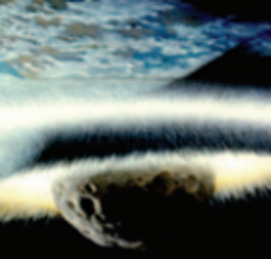
At the beginning of the solar system, impacts and collisions were dominant processes. After an early collision that may have led to the formation of the Moon, both Earth and Moon suffered intense post- accretionary bombardment between about 4.5 and 3.9 billion years before present. There is evidence from lunar rocks for an intense “Late Heavy Bom- bardment” at about 3.85–3.9 Ga, which must have had severe consequences for Earth as well, even though no terrestrial record has yet been found. Several 3.4 to 2.5 Ga old spherule layers in South Africa and Australia and two impact craters near 2 Ga represent the oldest terrestrial impact records found to date. Thus, the impact record for more than half of Earth’s geo- logical history is incomplete, and there is only indirect evidence for impact processes during the first 2.5 billion years of Earth history.

This content is for Registered members only. To subscribe, please
join one of our participating societies or contact the Editorial Team.

Login
Already a member? Log in here

Impact Processes on the Early Earth Read More »

The Origin of the Earth What’s New?

Progress in understanding the origin of the Earth has been dramatic in recent years, which is timely given the current search for other habitable solar systems. At the present time we do not know whether our solar system, with terrestrial planets located within a few astronomical units2 of a solar-mass star, is unusual or common. Neither do we understand where the water that made Earth habitable came from, nor whether life in the Universe is rare or plentiful. Perhaps something unusual happened here on Earth. However, the timescales over which the Sun and solar system formed, as well as the detailed mechanisms involved, have been the subjects of extensive recent studies. Discoveries have resulted mainly from improved mass spectro- metric measurements leading to a resolution of just 100,000 years in

This content is for Registered members only. To subscribe, please
join one of our participating societies or contact the Editorial Team.

Login
Already a member? Log in here

The Origin of the Earth What’s New? Read More »

Early Earth

The earliest Earth was a strange inhospitable world, yet transitions to a more familiar planet occurred within the first billion years. In spite of sparse preservation of an ambiguous rock record, recent studies refine the nature and timing of key events. This issue reviews current knowledge of the age of the Earth, massive early meteorite impacts, the early atmosphere and hydrosphere, the rock record, and the first life.

This content is for Registered members only. To subscribe, please
join one of our participating societies or contact the Editorial Team.

Login
Already a member? Log in here

Early Earth Read More »

Laboratory Studies of the Rheological Properties of Minerals under Deep-Mantle Conditions

Most large-scale geological processes, such as mantle convection and plate tectonics, involve plastic deformation of rocks. However, quantitative experimental studies of plastic properties under deepmantle conditions are challenging, and major progress in this area has often been associated with the development of new techniques. Until very recently, reliable studies have been conducted only at pressures less than ~0.5 GPa (~15 km depth in Earth). By combining novel techniques of synchrotron-based in situ stress–strain measurements with newly designed high-pressure apparatuses, a new generation of experimental studies of plastic deformation of minerals under deep-mantle conditions is emerging. These studies constrain the pressure dependence of deformation of minerals such as olivine and the slip systems in high-pressure minerals such as wadsleyite and perovskite. These results have important implications for the depth variation of mantle viscosity and the geodynamic interpretation of seismic anisotropy.

This content is for Registered members only. To subscribe, please
join one of our participating societies or contact the Editorial Team.

Login
Already a member? Log in here

Laboratory Studies of the Rheological Properties of Minerals under Deep-Mantle Conditions Read More »

Discovery of Post-Perovskite and New Views on the Core–Mantle Boundary Region

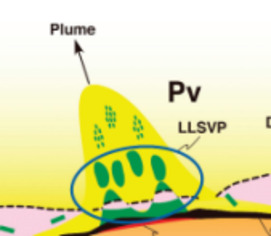
Aphase transition of MgSiO3 perovskite, the most abundant component of the lower mantle, to a higher-pressure form called post-perovskite was recently discovered for pressure and temperature conditions in the vicinity of the Earth’s core–mantle boundary. This discovery has profound implications for the chemical, thermal, and dynamical structure of the lowermost mantle called the D” region. Several major seismological characteristics of the D” region can now be explained by the presence of post-perovskite, and the specific properties of the phase transition provide the first direct constraints on absolute temperature and temperature gradients in the lowermost mantle. Here we discuss the current understanding of the core–mantle boundary region.

This content is for Registered members only. To subscribe, please
join one of our participating societies or contact the Editorial Team.

Login
Already a member? Log in here

Discovery of Post-Perovskite and New Views on the Core–Mantle Boundary Region Read More »

Scroll to Top

December 2025 --The Variscan Orogeny in Europe – Understanding Supercontinent Formation

The Variscan orogen formed between 380 and 300 million years ago through several accretionary and collisional cycles, culminating with the construction of the Pangea supercontinent. This process occurred via sequential opening and closure of oceanic basins, synchronous detachment of Gondwana derived continental ribbons, and their outboard amalgamation onto the Laurussia margin. The Variscan orogen is rather unique compared with other orogenic belts on Earth: its overthickened and dominantly magmatic crust in the central belt, surprisingly minor mantle involvement in the magmatic and geodynamic processes, coherent and pulsed magmatism along the collision suture, and its complex accretionary history. Because its final product, Pangea, is the youngest and best-understood supercontinent on Earth, the Variscan orogeny offers clues for understanding the mechanisms of supercontinent formation.