2025 Goldschmidt Conference
July 6 – 11 2025 Goldschmidt Conference, Prague, Czech Republic


July 6 – 11 2025 Goldschmidt Conference, Prague, Czech Republic
July 13 – 18 AIPEA International Clay Conference, Dublin, Ireland.
The theme of the conference is ‘Sustaining Clays’ to emphasise the myriad roles played by clays, clay minerals, and the closely allied layered double hydroxides and natural zeolites in sustainable development, the use and management of very many resources, and their bright future in tomorrow’s world. Our key aim with this conference is to integrate […]
July 14 – 18 88th Annual Meeting of the Meteoritical Society, Perth, Australia
July 18 - 23 75th American Crystallographic Association Annual Meeting, Lombard, IL USA
July 20 – 25 Materials Challenges in Alternative & Renewable Energy 2025 (MCARE 2025) combined with the 6th Annual Energy Harvesting Society Meeting (EHS 2025), Bellevue, WA USA
Spectrum Conferences invites you to prestigious event 2nd International Summit on Applied Science, Engineering and Technology. A premier conference focusing on the latest developments and modern trends in Applied Science, Engineering and Technology is going to be held in Frankfurt, Germany during July 21-23, 2025.
August 17 – 21 American Chemical Society Fall Meeting, Washington DC USA
October 19 – 22 Geological Society of American Annual Meeting, San Antonio, TX USA
November 7 – 9 45th New Mexico Mineral Symposium, Socorro, NM USA
March 22 – 26 American Chemical Society Spring Meeting, Atlanta GA USA
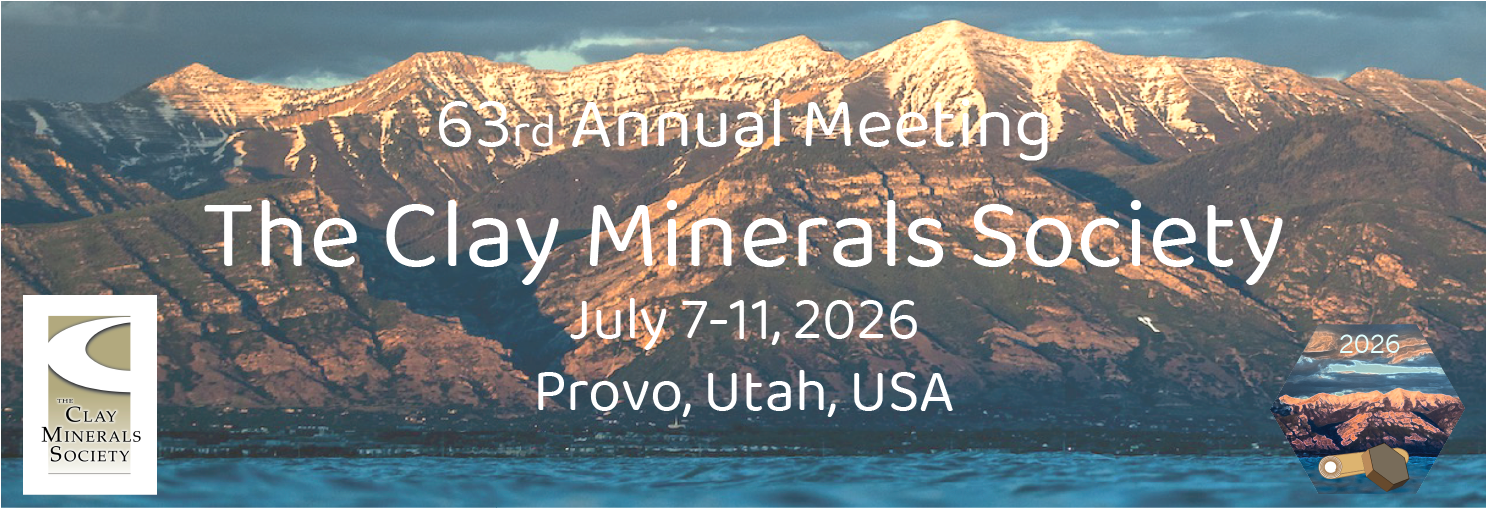
This conference covers everything to do with clay minerals--in geology, soil science, technology, and the origins of life. This particular meeting will have a particularly strong focus on natural nanotubes such as halloysite, and will include a field trip to some halloysite mines.