April 2026

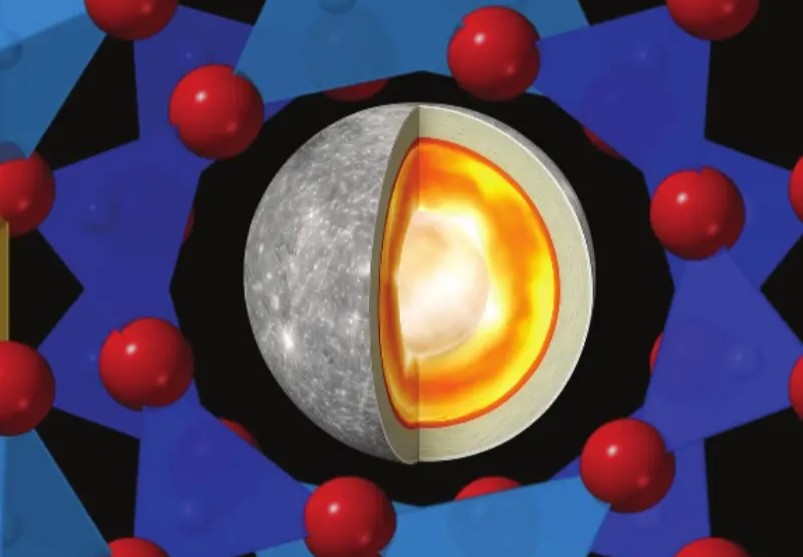
Plugged-in Planet: Accessing the Interior of the Earth and Other Terrestrial Bodies via Electrical Properties

Among the different methods used to probe the interior of planets and moons in the Solar System, the ones providing access to the electrical properties of rocks are particularly powerful. From field induction measurements to laboratory impedance spectroscopy experiments, several techniques explore the electrical response of geomaterials at different scales of observation, from planetary to atomic. Detailed snapshots of the Earth’s crust and mantle are obtained from the combination of magnetotelluric surveys with laboratory measurements. In space, induction observations complemented by electrical laboratory experiments have been key to defining the layered structure and thermal state of several terrestrial bodies. Future electrical investigations will continue to reveal the present structure of planetary deep interiors, which is necessary to decipher their evolution.

Plugged-in Planet: Accessing the Interior of the Earth and Other Terrestrial Bodies via Electrical Properties Read More »

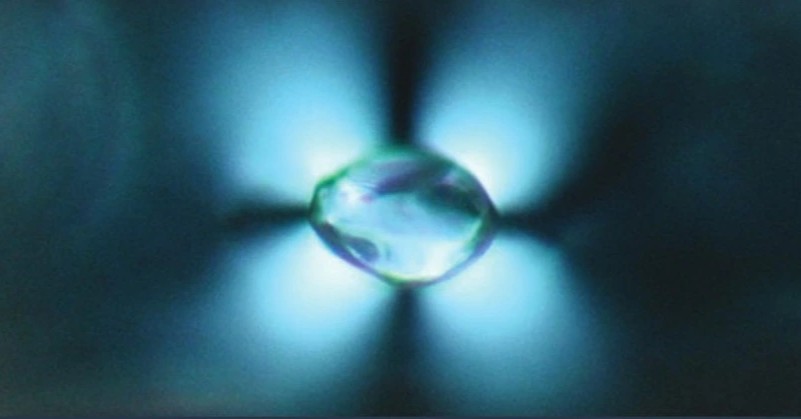
Paleomagnetic Recording at the Grain Scale

Natural rocks harbor diverse assemblages of magnetic mineral grains that record information about past dynamo activity and plate motions, among other processes. For much of its history, however, the field of paleomagnetism has counted on a thorough theoretical understanding of only very fine (≤100 nm) grains magnetized during heating. Here we review experimental and computational advances to move beyond this limitation. Magnetic field microscopy allows us to physically identify mineral grains carrying specific paleomagnetic signals, while nanotomography coupled with micromagnetic simulations offers, for the first time, a quantitative picture of how most naturally occurring magnetic grains behave across geologic time. Together, these techniques open the door to retrieving records from less-than-ideal rocks with complex geological histories.

Paleomagnetic Recording at the Grain Scale Read More »

Carrying the Planet on their Backs: How Minerals Respond to Stress

Far from being passive building blocks, minerals govern how Earth evolves and deforms, from seismic wave propagation to rock deformation and plate motion. This article explores how pressure builds within Earth and how minerals’ elastic response to compression and seismic waves reveals its internal structure. At higher stresses, beyond their elastic limit, deformation in minerals becomes permanent through crystal plasticity created by crystal defects and strongly enhanced by temperature. Over geological time scales, aggregates of crystals behave effectively as highly viscous fluids, enabling mantle convection and plate dynamics. Understanding Earth’s large-scale behavior therefore requires linking rock rheology to the mechanics of minerals down to crystal defects. By integrating observations, experiments, and models, we uncover the hidden rules connecting atomic interactions to planetary dynamics.

Carrying the Planet on their Backs: How Minerals Respond to Stress Read More »

The Heat is On: Thermal Transport and Melting

Heat is a fundamental driver of planetary evolution, shaping its interior, surface, and atmosphere. On Earth, the flow of heat powers dynamic systems that are essential to life. Thermochemical variations across the core–mantle boundary play an important role in regulating heat flow, which influences the dynamics of both the mantle and the core, including generation of the geodynamo. In this article, we focus on thermal transport and melting, including highlights of new technological developments in laboratory optics and synchrotron facilities. Here, we offer a perspective that highlights the spatial and temporal characteristics of these processes, where new developments expand our understanding of Earth’s thermochemical evolution, and hold promise for applications to other planetary bodies.

The Heat is On: Thermal Transport and Melting Read More »

Scroll to Top

December 2025 --The Variscan Orogeny in Europe – Understanding Supercontinent Formation

The Variscan orogen formed between 380 and 300 million years ago through several accretionary and collisional cycles, culminating with the construction of the Pangea supercontinent. This process occurred via sequential opening and closure of oceanic basins, synchronous detachment of Gondwana derived continental ribbons, and their outboard amalgamation onto the Laurussia margin. The Variscan orogen is rather unique compared with other orogenic belts on Earth: its overthickened and dominantly magmatic crust in the central belt, surprisingly minor mantle involvement in the magmatic and geodynamic processes, coherent and pulsed magmatism along the collision suture, and its complex accretionary history. Because its final product, Pangea, is the youngest and best-understood supercontinent on Earth, the Variscan orogeny offers clues for understanding the mechanisms of supercontinent formation.