August 2018

Ore Deposits of the Central Andes

The Central Andes has one of the richest base metal endowments on Earth. In 2017, the Central Andes accounted for the mine production of around 39% of the world’s copper, 23% of its silver, 20% of its molybdenum, 14% of its zinc, and 12% of its tin as well as significant shares of other metals including gold and lead (USGS 2018). These metals are found in a variety of ore deposits of which by far the most important are those that occur as part of the “porphyry system” in the sense of Sillitoe (2010). However, important ore deposits of other mineralization styles also occur in the Central Andes. This info box presents characteristics of main and/or representative Mesozoic ore deposits that occur between latitudes 11°S and 30°S.

This content is for Registered members only. To subscribe, please
join one of our participating societies or contact the Editorial Team.

Login
Already a member? Log in here

Ore Deposits of the Central Andes Read More »
Nitrate Deposits of the Atacama Desert: A Marker of Long-Term Hyperaridity

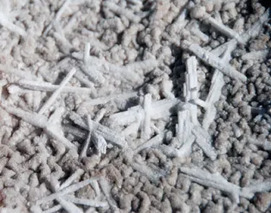
The nitrate deposits of the Atacama Desert are unique when one considers that in most surface environments nitrate is produced or consumed by biological processes and is easily washed away by rain. Nitrate deposits have puzzled geologists since Charles Darwin’s visit to the Atacama in 1835 and several hypotheses have been proposed to explain their origin. Here, we review our current understanding of the nitrate deposits in the Atacama Desert and show that nitrate’s primary origin is predominantly atmospheric. However, its massive accumulation and preservation specifically in Atacama is due to the serendipitous convergence of climatic, tectonic and hydrologic conditions that are unique to the Central Andes.

This content is for Registered members only. To subscribe, please
join one of our participating societies or contact the Editorial Team.

Login
Already a member? Log in here

Nitrate Deposits of the Atacama Desert: A Marker of Long-Term Hyperaridity Read More »

Turning up the Heat: High-Flux Magmatism in the Central Andes

The Neogene history of the Central Andes records one of Earth’s most productive periods of high-flux silicic magmatism. Subduction of an aseismic ridge, the Juan Fernández Ridge (JFR), led to changes in mantle melt productivity that initiated a transcrustal magmatic system culminating in massive caldera- and ignimbrite-forming eruptions. This volcanism is time transgressive, tracking the southward passage of the JFR beneath the Central Andes. The volcanic field is underlain by a composite, arc-long mid- and upper-crustal granodiorite batholith that represents extensive processing of the continental crust by mantle-derived magmas. This batholith stabilized the upper crust and contributed to the extreme elevations despite a net crustal loss beneath the Puna region.

This content is for Registered members only. To subscribe, please
join one of our participating societies or contact the Editorial Team.

Login
Already a member? Log in here

Turning up the Heat: High-Flux Magmatism in the Central Andes Read More »

Magmatism in the Central Andes

Active continental margins are shaped by subduction-related magmatism, and the Central Andes of South America are a prime example. The Central Andean orogen has evolved over the past 25 My via magmas ascending from the mantle and interacting with increasingly thickened continental crust. This process is reflected in the volumes and compositional variations of the magmas that erupt at the surface. These compositional variations can be traced in time and space, and, herein, we provide explanations for their cause and explore the nature of the Central Andes transcrustal magma systems that feed the iconic stratovolcanoes today.

This content is for Registered members only. To subscribe, please
join one of our participating societies or contact the Editorial Team.

Login
Already a member? Log in here

Magmatism in the Central Andes Read More »

The Topographic Evolution of the Central Andes

Changes in topography on Earth, particularly the growth of major mountain belts like the Central Andes, have a fundamental impact on regional and global atmospheric circulation patterns. These patterns, in turn, affect processes such as precipitation, erosion, and sedimentation. Over the last two decades, various geochemical, geomorphologic, and geologic approaches have helped identify when, where, and how quickly topography has risen in the past. The current spatio-temporal picture of Central Andean growth is now providing insight into which deep-Earth processes have left their imprint on the shape of the Earth’s surface.

This content is for Registered members only. To subscribe, please
join one of our participating societies or contact the Editorial Team.

Login
Already a member? Log in here

The Topographic Evolution of the Central Andes Read More »

The Central Andes: Elements of an Extreme Land

The Central Andes and the Atacama Desert represent a unique geological, climatic, and magmatic setting on our planet. It is the only place on Earth where subduction of an oceanic plate below an active continental margin has led to an extensive mountain chain and an orogenic plateau that is second in size only to the Tibetan Plateau, which resulted from continental collision. In this article, we introduce the history of the Central Andes and the evolution of its landscape. We also discuss links between tectonic forces, magmatism, and the extreme hyperarid climate of this land that, in turn, has led to rich deposits of precious ores and minerals.

This content is for Registered members only. To subscribe, please
join one of our participating societies or contact the Editorial Team.

Login
Already a member? Log in here

The Central Andes: Elements of an Extreme Land Read More »

Scroll to Top

December 2025 --The Variscan Orogeny in Europe – Understanding Supercontinent Formation

The Variscan orogen formed between 380 and 300 million years ago through several accretionary and collisional cycles, culminating with the construction of the Pangea supercontinent. This process occurred via sequential opening and closure of oceanic basins, synchronous detachment of Gondwana derived continental ribbons, and their outboard amalgamation onto the Laurussia margin. The Variscan orogen is rather unique compared with other orogenic belts on Earth: its overthickened and dominantly magmatic crust in the central belt, surprisingly minor mantle involvement in the magmatic and geodynamic processes, coherent and pulsed magmatism along the collision suture, and its complex accretionary history. Because its final product, Pangea, is the youngest and best-understood supercontinent on Earth, the Variscan orogeny offers clues for understanding the mechanisms of supercontinent formation.