December 2025

Assembling Pangaea – The Complex Morphology of the Laurussia – Gondwana Collision

The Late Paleozoic convergence and collision between Gondwana and Laurentia resulted in along-strike variations in the Alleghanian–Mauritanide–Variscan orogeny during the assembly of the greater part of Pangaea. A series of ca. 380–290 Ma events segmented the orogen into two principal geodynamic domains with contrasting tectonic evolutions. In the northeast, the European Variscan belt records multiple subduction–collisional tectonic events, including indentation by Laurussian and later Gondwanan promontories and by Gondwana-derived terranes. Late-stage events (330–290 Ma) produced strongly curved deformation belts (oroclines), and late- to post-orogenic extension. In contrast, the southern Appalachians formed southwest of the promontory collisions where subduction of Rheic Ocean remnants produced a continuous Andean-style orogenic arc that preceded ca. 290 Ma terminal collision. We explain Pangaea amalgamation using a global model of mantle convection like that of modern Earth.

This content is for Registered members only. To subscribe, please
join one of our participating societies or contact the Editorial Team.

Login
Already a member? Log in here

Assembling Pangaea – The Complex Morphology of the Laurussia – Gondwana Collision Read More »
Granites and the Nature of the Variscan Crust

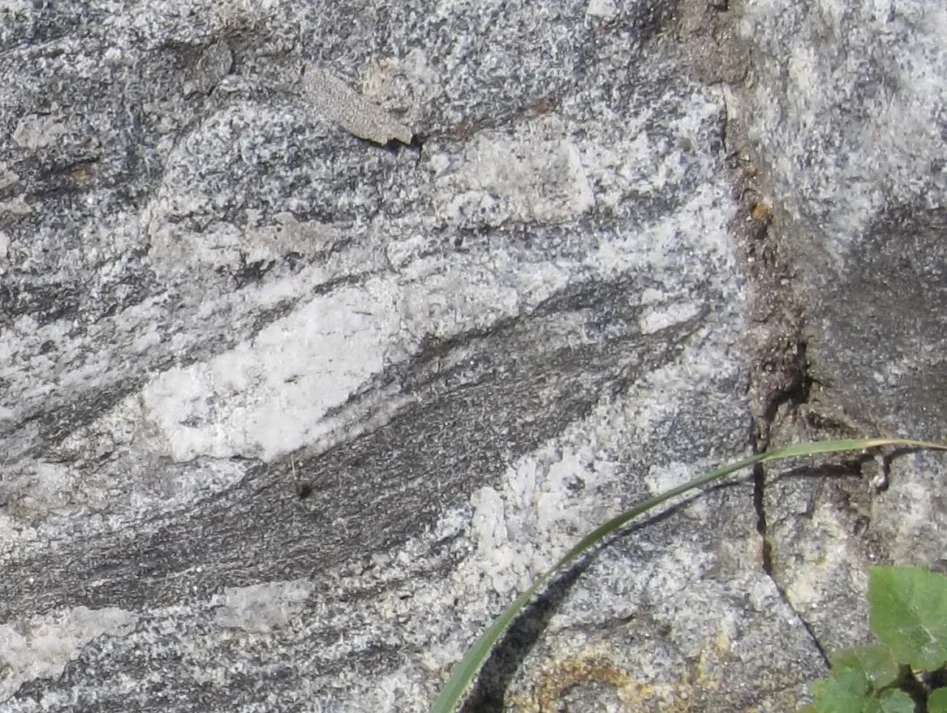
The orogenic crust of the European Variscan belt is granite-rich and only locally has a mafic lower layer. The core of the belt originated by massive melting of fertile quartzo–feldspathic sources (felsic meta-sedimentary or meta-igneous) derived from an Ediacaran–Ordovician accretionary system. An unusually felsic lower crust formed either by relamination of previously subducted continental crust or by melting of crustal rocks to produce a granitic upper crust and a laminated, restitic lower crust. This is in strong contrast to conventional models, developed mainly for magmatic arcs, that find or infer mafic lower crustal compositions. Thus, global estimates on the nature and evolution of the continental crust should consider the heterogeneity of the deep crust produced in various types of orogenies.

This content is for Registered members only. To subscribe, please
join one of our participating societies or contact the Editorial Team.

Login
Already a member? Log in here

Granites and the Nature of the Variscan Crust Read More »

Evolution and Structure of the European Variscan Lithospheric Mantle

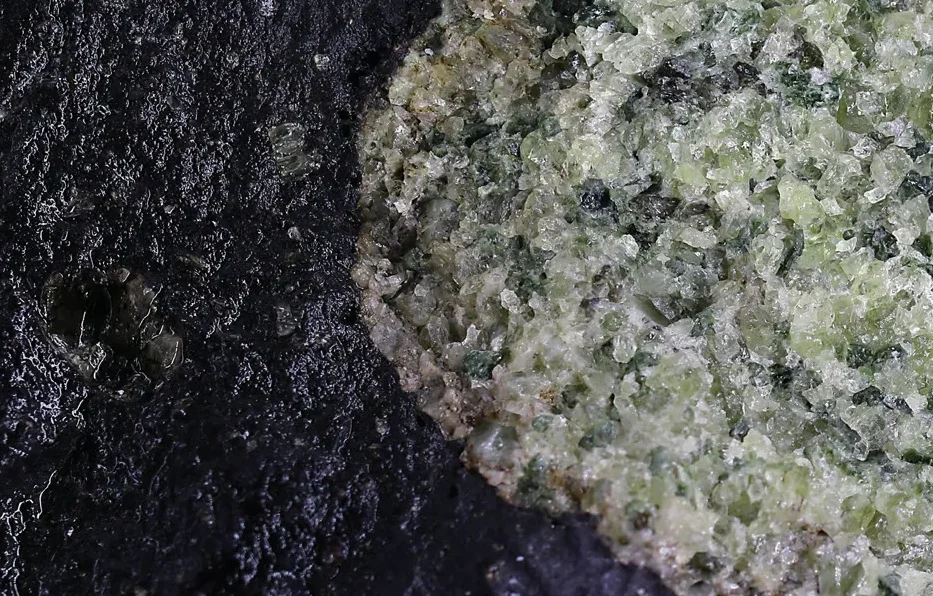
Tectonically emplaced peridotites and mantle xenoliths present complementary aspects of the evolution of the Variscan lithospheric mantle. The former have diverse origins and document complex histories of melt–rock reactions, exhumation along various pressure–temperature–time (P–T–t) paths, and emplacement into the crust, unravelling plate boundary evolution during Variscan subduction and collision. Mantle xenoliths exhumed by Cenozoic volcanism reveal ancient partial melting and mostly post-Variscan metasomatism episodes. Yet, their coarse-grained textures potentially record Variscan deformation. Dominantly belt-parallel fast seismic directions of the in situ Variscan lithospheric mantle may record flow normal to the convergence direction, but parallel to the boundaries of the Baltica and Avalonia blocks in central Europe, and to the main strike-slip faults and late extension in the Massif Central and Iberia.

This content is for Registered members only. To subscribe, please
join one of our participating societies or contact the Editorial Team.

Login
Already a member? Log in here

Evolution and Structure of the European Variscan Lithospheric Mantle Read More »

Extent and Role of Cratonic Lithosphere in the Variscan Orogeny

Thick and relatively cold cratonic lithosphere of Laurussia and Gondwana shaped the Variscan orogen as those continents collided diachronously to form Pangaea. Herein, we summarize and integrate geological and geophysical results that show how cratonic lithosphere of those composite continents created the Variscan geologic foundation of Europe and northwestern Africa. Our analysis focuses on the lithospheric architecture of Baltica, Avalonia, and Gondwana-derived terranes to distinguish preserved cratonic domains from reworked zones. Zircon provenance analysis further constrains terrane origins and accretion history. The European Variscan belt is distinguished by the large proportion of Gondwana-derived terranes compared with its orogenic core. Its tectonic system reflects inherited rift architecture and the influence of rigid lithospheric promontories, setting it apart from other collisional belts.

This content is for Registered members only. To subscribe, please
join one of our participating societies or contact the Editorial Team.

Login
Already a member? Log in here

Extent and Role of Cratonic Lithosphere in the Variscan Orogeny Read More »

Modeling the Variscan Orogeny

Numerical and analogue modeling provides insights into dynamic processes shaping convergent plate boundaries. In the case of the Variscan orogeny, efforts to explain observations using physics-based models started in the late 1990s with 2D numerical simulations and have evolved towards advanced 2D petrological–thermomechanical numerical simulations and limited analogue experiments. Here, we review and discuss advances in six key research directions: (1) pre-orogenic processes, (2) buoyancy-versus tectonics-driven exhumation of high-pressure–high-temperature rocks, (3) relamination and trans-lithospheric diapirism, (4) origin of complex pressure–temperature paths, (5) origin of crust–mantle rock associations, and (6) origin of ultra-potassic and alkaline magmatism. We conclude by outlining future research directions that require the continuation of joint cross-disciplinary efforts of “modelers” and “observers.”

This content is for Registered members only. To subscribe, please
join one of our participating societies or contact the Editorial Team.

Login
Already a member? Log in here

Modeling the Variscan Orogeny Read More »

Variscan Orogeny: A Three Oceans Problem

Deformed Variscan rocks crop out across much of Europe and northwestern Africa and tell the story of the Paleozoic welding of Gondwana and Laurussia to form Earth’s last supercontinent, Pangaea. Although mainly preserved as continental products, this event was driven by the opening and closing of three oceans: first the Rheic Ocean’s Late Silurian subduction northward beneath Laurussia, then also southward beneath northeastern Gondwana in the Mid-Devonian. Devonian slab rollback along Laurussia’s southern margin then opened the Rhenohercynian Ocean while the Rheic Ocean continued subducting beneath Gondwana’s northeastern edge. Early Carboniferous retreat of that trench then rifted eastern Gondwana, opening the wedge-shaped Paleotethys Ocean. The Rheic and Rhenohercynian oceans then closed, melding the continents, contemporaneous with subduction along northern Paleotethys, widespread intracontinental magmatism, and then orogenic collapse.

This content is for Registered members only. To subscribe, please
join one of our participating societies or contact the Editorial Team.

Login
Already a member? Log in here

Variscan Orogeny: A Three Oceans Problem Read More »

Scroll to Top

December 2025 --The Variscan Orogeny in Europe – Understanding Supercontinent Formation

The Variscan orogen formed between 380 and 300 million years ago through several accretionary and collisional cycles, culminating with the construction of the Pangea supercontinent. This process occurred via sequential opening and closure of oceanic basins, synchronous detachment of Gondwana derived continental ribbons, and their outboard amalgamation onto the Laurussia margin. The Variscan orogen is rather unique compared with other orogenic belts on Earth: its overthickened and dominantly magmatic crust in the central belt, surprisingly minor mantle involvement in the magmatic and geodynamic processes, coherent and pulsed magmatism along the collision suture, and its complex accretionary history. Because its final product, Pangea, is the youngest and best-understood supercontinent on Earth, the Variscan orogeny offers clues for understanding the mechanisms of supercontinent formation.