October 2025

Ice to Meet You: Sampling Cold Bodies

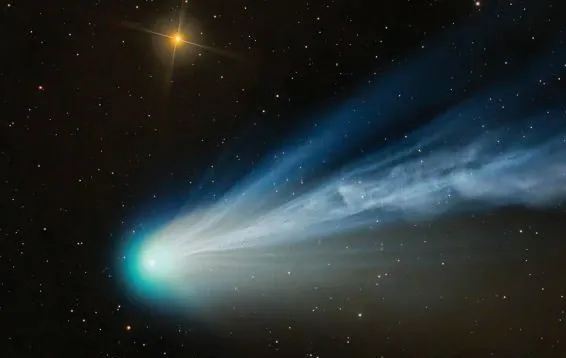
Icy materials are dispersed throughout the Solar System, from the planets, to their moons, and to asteroids and comets. The volatiles contained within these icy reservoirs could provide vital insights into the origin and evolution of their parent bodies, as well as details of conditions in the early Solar System. Development of the technologies needed for volatile sample return missions has therefore been given a high priority for the current decade. In this chapter, we describe volatile materials and ices in the Solar System, with a focus on comets. We summarize the history of cometary exploration, describe the results of NASA’s Stardust mission to comet 81P/Wild 2, and discuss the future of comet sample return.

This content is for Registered members only. To subscribe, please
join one of our participating societies or contact the Editorial Team.

Login
Already a member? Log in here

Ice to Meet You: Sampling Cold Bodies Read More »
Space Weathering: Clear with a Chance of Solar Wind and Micrometeoroid Showers

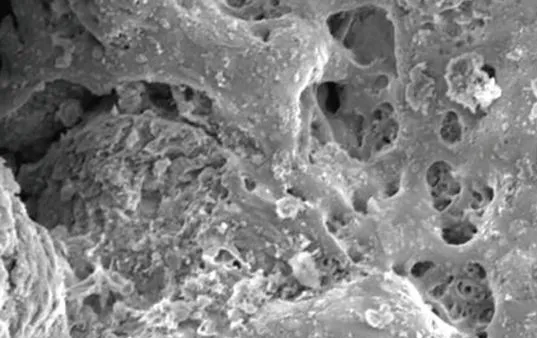
Airless planetary surfaces are continually modified by energetic solar wind ions and hypervelocity dust impacts, a phenomenon known as space weathering. Models for space weathering are built on the foundation of returned sample analysis, but understanding these changes to surface regolith is also key to interpreting spacecraft remote sensing observations. Lunar samples first revealed the myriad microstructural and chemical effects of space weathering, and Genesis then provided important context for the mechanism of solar wind modifying these surfaces. Sample return from near-Earth asteroids has further transformed our understanding of how diverse bodies experience space weathering. The analysis of samples from these mineralogically diverse sources has contributed to a model for space weathering and planetary surface evolution across the Solar System.

Space Weathering: Clear with a Chance of Solar Wind and Micrometeoroid Showers Read More »

One’s Trash is Another’s Treasure: Cosmic Rubble Piles

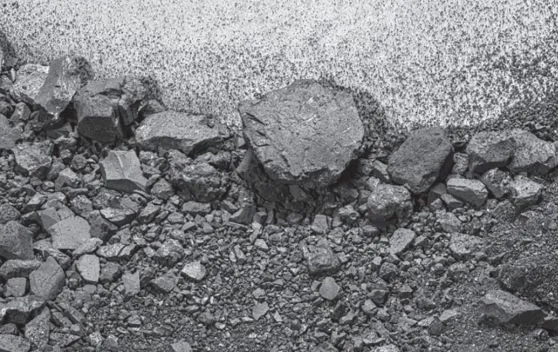
Until 15 years ago, meteorites and cosmic dust were the only extraterrestrial materials available for investigating the nature and chemical evolution of the early Solar System. Since then, three major sample return missions have significantly advanced our understanding of the material composing the small bodies that populate our Solar System. The asteroid sample return mission Hayabusa first proved the direct link between an asteroid type and the most common type of meteorites falling to Earth. The Hayabusa2 and OSIRIS-REx missions recently collected and returned material from two carbonaceous asteroids, Ryugu and Bennu, respectively. Together, the results from those samples are revealing information not gleaned from studies of meteorites and are revolutionizing our understanding of the formation and evolution of planetary bodies at the dawn of our Solar System.

This content is for Registered members only. To subscribe, please
join one of our participating societies or contact the Editorial Team.

Login
Already a member? Log in here

One’s Trash is Another’s Treasure: Cosmic Rubble Piles Read More »

Seeing Red: Retrieving Rocks from Mars and Phobos

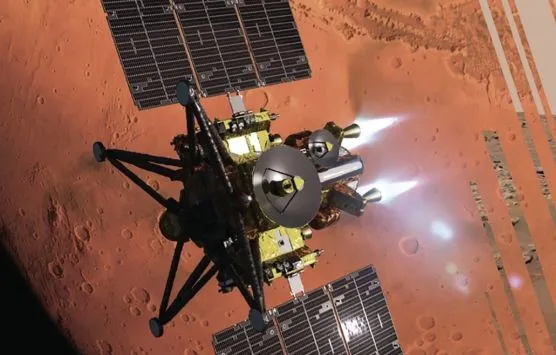
Mars Sample Return (MSR) missions have been a priority for the planetary community for decades. The NASA Perseverance rover mission is collecting diverse samples from Mars for potential return to Earth, whereas the JAXA Martian Moons eXploration (MMX) mission will bring back samples from Phobos, the largest of Mars’ two moons. High-resolution analyses of these samples in Earth-based laboratories will enable us to answer key questions that current martian data (meteorites, rovers, and orbiters) are unable to fully address. MSR results will better inform our understanding of the geological and planetary evolution of the red planet, the possibility of habitability and life on Mars, the potential for human exploration, and the formation of its moons and the martian system.

This content is for Registered members only. To subscribe, please
join one of our participating societies or contact the Editorial Team.

Login
Already a member? Log in here

Seeing Red: Retrieving Rocks from Mars and Phobos Read More »

It’s Not Just a Phase: Over 50 Years of Lunar Sample Science

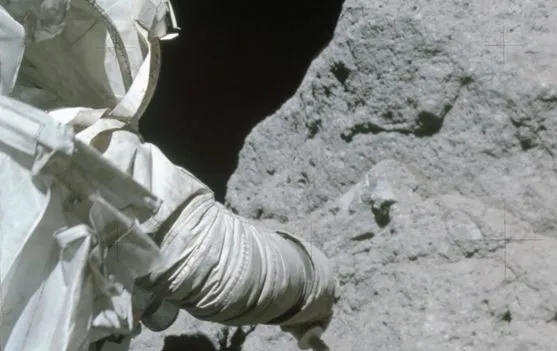
Landed robots, rovers, and orbital spacecraft provide regional-scale information about the nature of the Moon’s surface, but such data require ground truth information made accessible through lunar samples. Such samples include a range of material including hand-specimen-sized rocks, pieces of rocks chipped from boulders by astronauts wielding geologic hammers, to soil—scooped, trenched, and drilled from the upper few meters of the Moon’s surface by robots as well as humans. This chapter provides an overview of recent discoveries made using the lunar sample collection, highlights outstanding questions about the Moon’s origin and evolution, and discusses how these knowledge gaps will be addressed by future sample return missions.

This content is for Registered members only. To subscribe, please
join one of our participating societies or contact the Editorial Team.

Login
Already a member? Log in here

It’s Not Just a Phase: Over 50 Years of Lunar Sample Science Read More »

To See a World in a Grain of Sand

In the 1960s and 1970s, NASA’s Apollo and the Soviet Union’s Luna missions captured imaginations across the world and revolutionized our under-standing of Earth’s moon and the Solar System. Over 50 years on, the realm of space exploration has expanded significantly, both in terms of the celestial bodies that have been explored and the nations working on these endeavors. In the coming decades, we will return samples from Mars and one of its moons, and humans will return to the Moon. This article sets the scene for this Elements issue, which will explore what we have learned about the formation and evolution of planetary bodies, including Earth, from analysis of returned samples, the links with orbital datasets, and priorities for the future.

To See a World in a Grain of Sand Read More »

Scroll to Top

December 2025 --The Variscan Orogeny in Europe – Understanding Supercontinent Formation

The Variscan orogen formed between 380 and 300 million years ago through several accretionary and collisional cycles, culminating with the construction of the Pangea supercontinent. This process occurred via sequential opening and closure of oceanic basins, synchronous detachment of Gondwana derived continental ribbons, and their outboard amalgamation onto the Laurussia margin. The Variscan orogen is rather unique compared with other orogenic belts on Earth: its overthickened and dominantly magmatic crust in the central belt, surprisingly minor mantle involvement in the magmatic and geodynamic processes, coherent and pulsed magmatism along the collision suture, and its complex accretionary history. Because its final product, Pangea, is the youngest and best-understood supercontinent on Earth, the Variscan orogeny offers clues for understanding the mechanisms of supercontinent formation.