

Author name: Henrik H. Svensen

Large Igneous Provinces and the Release of Thermogenic Volatiles from Sedimentary Basins

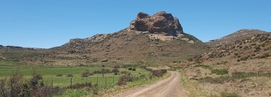
Large igneous provinces (LIPs) are characterized by flood basalts and extensive magmatic plumbing systems. When sills and dykes are emplaced in sedimentary basins, the heat released can result in extensive contact metamorphism and gas generation. During the past 20 years, this process has been highlighted as potentially playing a key role in terms of proposed links between LIPs and global environmental changes. The geochemistry of the sedimentary rocks that the magma intrudes, and their potential to generate thermogenic gases such as CO2 and CH4 during heating, are critical controlling factors.

Large Igneous Provinces and the Release of Thermogenic Volatiles from Sedimentary Basins Read More »
Driving Global Change One LIP at a Time

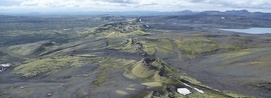
Earth’s history has been punctuated by extraordinary magmatic events that produced large igneous provinces (LIPs). Many LIPs induced global changes, including millennial-scale warming, terrestrial and oceanic mass extinctions, oceanic anoxic events, and even glaciations. Research over the past 20 years has shown that shallow crustal degassing is an important factor contributing to the environmental impact of LIPs. Contact metamorphism in sedimentary basins can generate huge gas volumes, and operates as a function of magma volume and the architecture of LIP plumbing systems. Numerous open questions remain concerning the role of LIPs in triggering rapid and lasting changes, whose answers require collaboration across geoscientific disciplines. In this issue, we present the status of five key research themes and discuss potential ways forward to better understanding these large-scale phenomena.

Driving Global Change One LIP at a Time Read More »

Scroll to Top

December 2025 --The Variscan Orogeny in Europe – Understanding Supercontinent Formation

The Variscan orogen formed between 380 and 300 million years ago through several accretionary and collisional cycles, culminating with the construction of the Pangea supercontinent. This process occurred via sequential opening and closure of oceanic basins, synchronous detachment of Gondwana derived continental ribbons, and their outboard amalgamation onto the Laurussia margin. The Variscan orogen is rather unique compared with other orogenic belts on Earth: its overthickened and dominantly magmatic crust in the central belt, surprisingly minor mantle involvement in the magmatic and geodynamic processes, coherent and pulsed magmatism along the collision suture, and its complex accretionary history. Because its final product, Pangea, is the youngest and best-understood supercontinent on Earth, the Variscan orogeny offers clues for understanding the mechanisms of supercontinent formation.