


Author name: George J. Flynn

Composition of Cosmic Dust: Sources and Implications for the Early Solar System

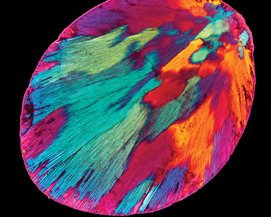
Many cosmic dust particles have escaped the aqueous and thermal processing, the gravitational compaction, and the impact shocks that often overprint the record, in most larger samples, of how Solar System materials formed. The least-altered types of cosmic dust can, therefore, act as probes into the conditions of the solar protoplanetary disk when the first solids formed. Analyses of these “primitive” particles indicate that the protoplanetary disk was well mixed, that it contained submicron grains formed in a diversity of environments, that these grains were aerodynamically transported prior to aggregation, which was likely aided by organic grain coatings, and that some minerals that condensed directly from the disk are not found in other materials. These protoplanetary aggregates are not represented in any type of meteorite or terrestrial rock. They can only be studied from cosmic dust.

This content is for Registered members only. To subscribe, please
join one of our participating societies or contact the Editorial Team.

Login
Already a member? Log in here

Composition of Cosmic Dust: Sources and Implications for the Early Solar System Read More »
The Surface Composition of Mercury

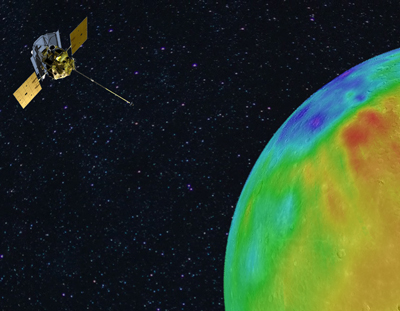
Geochemical data from MESSENGER have revealed details of Mercury’s surface composition, showing that it differs from the other rocky planets in the inner solar system. For example, the planet’s surface is enriched in S and C, and depleted in Fe, indicating that Mercury formed under much more reducing conditions than other planets. The surface is also enriched in Mg and depleted in Al and Ca. Observed elemental heterogeneities and percent levels of graphite suggest that Mercury underwent a magma ocean phase early in its history. These findings have important implications for understanding Mercury’s origin and evolution.

This content is for Registered members only. To subscribe, please
join one of our participating societies or contact the Editorial Team.

Login
Already a member? Log in here

The Surface Composition of Mercury Read More »

Scroll to Top

December 2025 --The Variscan Orogeny in Europe – Understanding Supercontinent Formation

The Variscan orogen formed between 380 and 300 million years ago through several accretionary and collisional cycles, culminating with the construction of the Pangea supercontinent. This process occurred via sequential opening and closure of oceanic basins, synchronous detachment of Gondwana derived continental ribbons, and their outboard amalgamation onto the Laurussia margin. The Variscan orogen is rather unique compared with other orogenic belts on Earth: its overthickened and dominantly magmatic crust in the central belt, surprisingly minor mantle involvement in the magmatic and geodynamic processes, coherent and pulsed magmatism along the collision suture, and its complex accretionary history. Because its final product, Pangea, is the youngest and best-understood supercontinent on Earth, the Variscan orogeny offers clues for understanding the mechanisms of supercontinent formation.