


Author name: Sylvie Bruggmann

Stromatolites as Recorders of Major Oxygenation Events and Biogeochemical Metal Cycling through Earth’s History

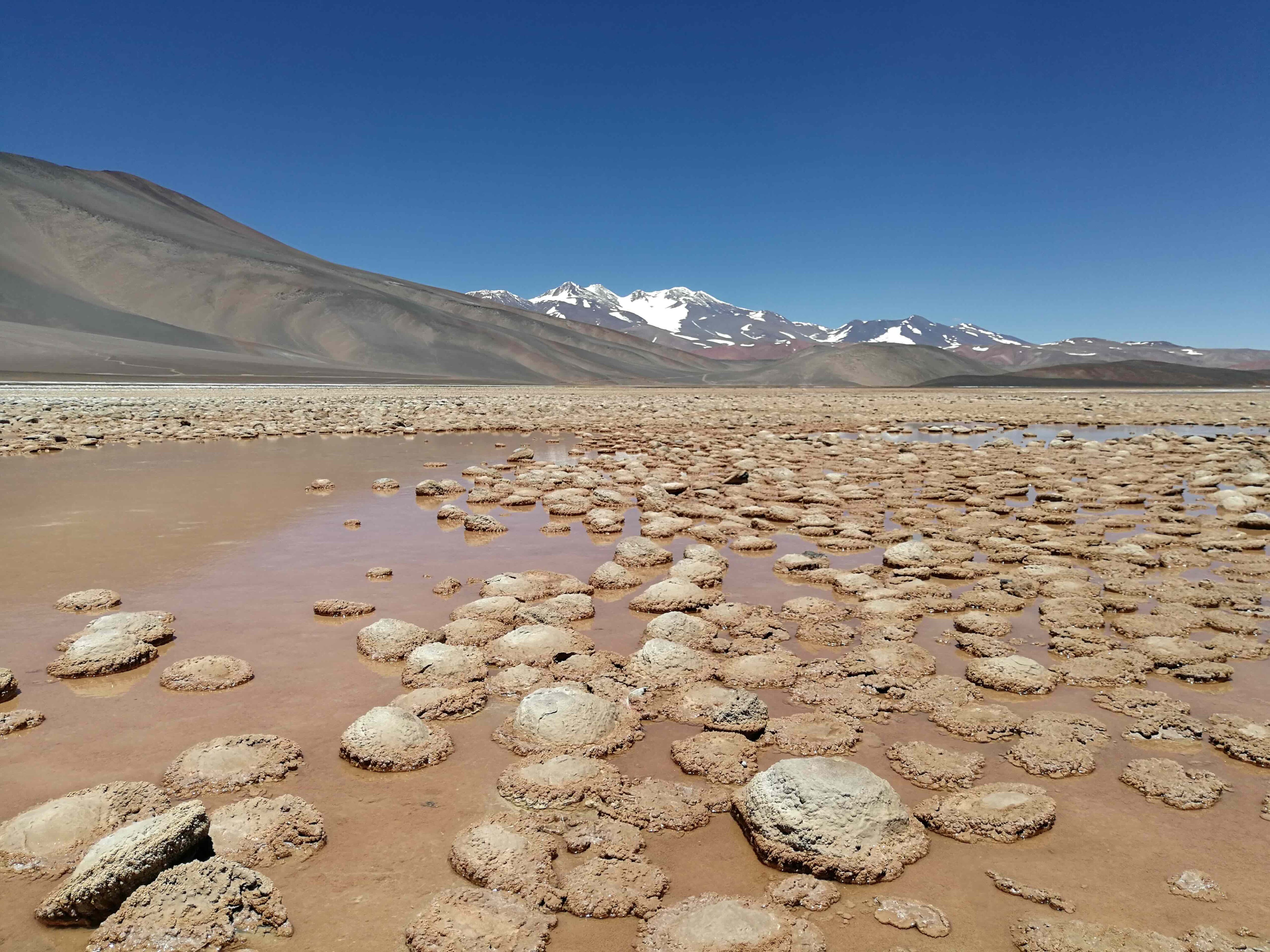
Microbial carbonates are found throughout most of the geological record and have formed under varying atmospheric and hydrospheric conditions. Recent advancements in analytical techniques have enabled the use of novel, highly promising geochemical proxies, such as metals and their isotopes, to reconstruct ancient microbial habitats. Here, we review recent discoveries and the benefits of applying redox-sensitive and bioessential metal proxies in microbialites, aiming to reconstruct Earth’s oxygenation and determine the availability of dissolved metals in past microbial habitats. These findings contribute to a better understanding of the evolution of microbial life and its ecological niches on Earth through time. Moreover, they offer a potential blueprint for the search for extra-terrestrial life, thereby informing ongoing and future planetary studies.
Stromatolites as Recorders of Major Oxygenation Events and Biogeochemical Metal Cycling through Earth’s History Read More »

The Story of Stromatolites – Mineralising Ecosystems and Geo-Biological Archives

Stromatolites represent some of the oldest and most persistent records of life on Earth. These organo-sedimentary structures have formed through complex interactions between microorganisms and their environment for nearly 3.5 billion years. Here, we trace the evolving scientific narrative surrounding these structures, from their early 19th-century descriptions to their integration into the broader concept of microbialites. This journey reflects a profound conceptual shift: once classified as distinct fossil species, stromato- lites are now understood as mineralising ecosystems and dynamic biogeochem- ical archives. This modern perspective allows for the reconstruction of early life and its environment while highlighting key scientific challenges, such as disentangling microbial from environmental controls and interpreting bioge- nicity in ancient terrestrial and extra-terrestrial rocks.

The Story of Stromatolites – Mineralising Ecosystems and Geo-Biological Archives Read More »

Scroll to Top

December 2025 --The Variscan Orogeny in Europe – Understanding Supercontinent Formation

The Variscan orogen formed between 380 and 300 million years ago through several accretionary and collisional cycles, culminating with the construction of the Pangea supercontinent. This process occurred via sequential opening and closure of oceanic basins, synchronous detachment of Gondwana derived continental ribbons, and their outboard amalgamation onto the Laurussia margin. The Variscan orogen is rather unique compared with other orogenic belts on Earth: its overthickened and dominantly magmatic crust in the central belt, surprisingly minor mantle involvement in the magmatic and geodynamic processes, coherent and pulsed magmatism along the collision suture, and its complex accretionary history. Because its final product, Pangea, is the youngest and best-understood supercontinent on Earth, the Variscan orogeny offers clues for understanding the mechanisms of supercontinent formation.