Thematic Articles

Boron Isotopes: A “Paleo-pH Meter” for Tracking Ancient Atmospheric CO2

The boron isotope composition of calcium carbonate shells of marine organisms has the unique potential to record surface ocean pH, allowing the calculation of atmospheric pCO2 due to the established relationship between pH and the partial pressure of (atmospheric) CO2 (pCO2). This “paleo-pH meter” allows scientists to produce a record of the natural fluctuations of atmospheric pCO2 over geologic time, which will help us better understand the impacts of the recent anthropogenic addition of CO2 to Earth’s atmosphere. Towards this end, a tremendous effort to understand the systematics of boron uptake in marine carbonates is underway. Here, we review the potential of boron isotopes to constrain ocean pH and, thus, atmospheric pCO2.

This content is for Registered members only. To subscribe, please
join one of our participating societies or contact the Editorial Team.

Login
Already a member? Log in here

Boron Isotopes: A “Paleo-pH Meter” for Tracking Ancient Atmospheric CO2 Read More »
Boron Cycling in Subduction Zones

Subduction zones are geologically dramatic features, with much of the drama being driven by the movement of water. The “light and lively” nature of boron, coupled with its wide variations in isotopic composition shown by the different geo-players in this drama, make it an ideal tracer for the role and movement of water during subduction. The utility of boron ranges from monitoring how the fluids that are expelled from the accretionary prism influence seawater chemistry, to the subduction of crustal material deep into the mantle and its later recycling in ocean island basalts.

This content is for Registered members only. To subscribe, please
join one of our participating societies or contact the Editorial Team.

Login
Already a member? Log in here

Boron Cycling in Subduction Zones Read More »

Boron Behavior During the Evolution of the Early Solar System: The First 180 Million Years

The behavior of boron during the early evolution of the Solar System provides the foundation for how boron reservoirs become established in terrestrial planets. The abundance of boron in the Sun is depleted relative to adjacent light elements, a result of thermal nuclear reactions that destroy boron atoms. Extant boron was primarily generated by spallation reactions. In the initial materials condensing from the solar nebula, boron was predominantly incorporated into plagioclase. Boron abundances in the terrestrial planets exhibit variability, as illustrated by B/Be. During planetary formation and differentiation, boron is redistributed by fluids at low temperature and during crystallization of magma oceans at high temperature.

This content is for Registered members only. To subscribe, please
join one of our participating societies or contact the Editorial Team.

Login
Already a member? Log in here

Boron Behavior During the Evolution of the Early Solar System: The First 180 Million Years Read More »

Boron: From Cosmic Scarcity to 300 Minerals

Boron is rare in the cosmos because its nucleus is “fragile.” So, how does one get from the interstellar medium, where boron was first produced, to Earth’s upper continental crust where boron is concentrated in deposits containing remarkably diverse suites of boron minerals? Processes that led to the formation of continental crust also concentrated boron, which is preferentially incorporated into melts and aqueous fluids. Deposits with high boron-mineral diversity include granitic pegmatites, peralkaline intrusions, boron-enriched skarns, and evaporite deposits. Despite the loss of boron minerals from the geologic record due to their ready solubility in water and breakdown at low temperatures, the increase in boron-mineral diversity with time is real, and is accelerated during supercontinent assembly.

This content is for Registered members only. To subscribe, please
join one of our participating societies or contact the Editorial Team.

Login
Already a member? Log in here

Boron: From Cosmic Scarcity to 300 Minerals Read More »

Rock Coatings and the Potential for Life on Mars

Rock coatings observed on the surface of Mars since the Viking landers of the mid-1970s continue to generate considerable interest in the field of astrobiology. Terrestrial rock coatings are associated with diverse microbial life, raising the question as to whether martian rock coatings might also be partly of biogenic origin. Rock coating formation can be mediated by microbes, which in turn are shielded from harmful radiation and can obtain nutrients from the coating. In addition, coatings may be indicative of life and can preserve its signatures. Pragmatically, rock coatings are surface environments accessible by Mars rovers. This article focuses on the habitability, preservation capability, and practicality of rock coatings as astrobiological targets on Mars.

This content is for Registered members only. To subscribe, please
join one of our participating societies or contact the Editorial Team.

Login
Already a member? Log in here

Rock Coatings and the Potential for Life on Mars Read More »

Climate Change, Rock Coatings, and the Archaeological Record

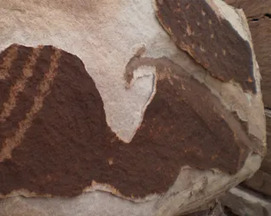
Rock varnish commonly occurs in arid environments. It can coat not only rock surfaces but also any exposed prehistoric stone artifacts and rock art. Thin sections of varnish coatings reveal microlaminations that reflect major changes between wet versus dry paleoclimates. These microlaminations can be used to assign minimum ages to the underlying rock surface, providing dates for otherwise undateable stone artifacts and rock art. This dating approach has provided important information about the peopling of the Americas (North and South America), including how and when the native American populations adapted to changing climatic conditions.

This content is for Registered members only. To subscribe, please
join one of our participating societies or contact the Editorial Team.

Login
Already a member? Log in here

Climate Change, Rock Coatings, and the Archaeological Record Read More »

Marine Ferromanganese Encrustations: Archives of Changing Oceans

Fungi are ubiquitous inhabitants of rock and mineral surfaces and are significant geoactive agents. Capable of numerous transformations of metals and minerals, fungi can prosper in the most adverse of environments, their activities underpinned by growth form and metabolism. Free-living filamentous species, microcolonial fungi and lichens can significantly change a rock’s surficial structure and appearance, ranging from discolouration and staining to biodeterioration and the formation of new biogenic minerals and rock coatings. The presence and activity of fungi should be considered in any study of rock and mineral transformations that seeks to understand the biotic and abiotic processes that underpin geochemical change in the biosphere.

This content is for Registered members only. To subscribe, please
join one of our participating societies or contact the Editorial Team.

Login
Already a member? Log in here

Marine Ferromanganese Encrustations: Archives of Changing Oceans Read More »

Fungi, Rocks, and Minerals

Fungi are ubiquitous inhabitants of rock and mineral surfaces and are significant geoactive agents. Capable of numerous transformations of metals and minerals, fungi can prosper in the most adverse of environments, their activities underpinned by growth form and metabolism. Free-living filamentous species, microcolonial fungi and lichens can significantly change a rock’s surficial structure and appearance, ranging from discolouration and staining to biodeterioration and the formation of new biogenic minerals and rock coatings. The presence and activity of fungi should be considered in any study of rock and mineral transformations that seeks to understand the biotic and abiotic processes that underpin geochemical change in the biosphere.

This content is for Registered members only. To subscribe, please
join one of our participating societies or contact the Editorial Team.

Login
Already a member? Log in here

Fungi, Rocks, and Minerals Read More »

Case Hardening: Turning Weathering Rinds into Protective Shells

Case hardening is the process by which the outer shell of an exposed rock surface hardens due to near-surface diagenesis. Rock coatings and weathering rinds are distinct phenomena: rock coatings accrete on surfaces; weathering rinds derive from mineral dissolution and mechanical fracturing of the outer millimeters of a rock to create porosity. Ongoing reaction with rain, dew, or melted snow results in the downward migration of rock-coating components into weathering-rind pores. Initially, pore infilling protects the outer surface of the rock from flaking. As case hardening progresses, however, ongoing mineral dissolution underneath the case-hardened zone eventually leads to detachment. This sudden loss can destroy rock art, the surfaces of stone monuments, and facing stones of buildings.

This content is for Registered members only. To subscribe, please
join one of our participating societies or contact the Editorial Team.

Login
Already a member? Log in here

Case Hardening: Turning Weathering Rinds into Protective Shells Read More »

Mineral Surface Coatings: Environmental Records at the Nanoscale

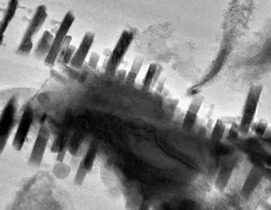
Past and present (a)biotic soil processes can be preserved by mineral surface coatings, which can sequester contaminants in soils and sediments. The coatings can contain complex assemblages of nanometer-size minerals and organic components. The formation, composition, and morphology of these complex mineral assemblages depend on, and hence reflect, the mineralogical and chemical composition of the substrate they develop on and the environmental factors in the surrounding soils and sediments. Mineral surface coatings typically contain complex and variable porosities, many with regions of limited fluid flow. Low-flow conditions, combined with different nanometer-size phases in the interior of mineral surface coatings, allow coatings to sequester contaminant-bearing solutes, complexes, and nanoparticles.

This content is for Registered members only. To subscribe, please
join one of our participating societies or contact the Editorial Team.

Login
Already a member? Log in here

Mineral Surface Coatings: Environmental Records at the Nanoscale Read More »

Scroll to Top

December 2025 --The Variscan Orogeny in Europe – Understanding Supercontinent Formation

The Variscan orogen formed between 380 and 300 million years ago through several accretionary and collisional cycles, culminating with the construction of the Pangea supercontinent. This process occurred via sequential opening and closure of oceanic basins, synchronous detachment of Gondwana derived continental ribbons, and their outboard amalgamation onto the Laurussia margin. The Variscan orogen is rather unique compared with other orogenic belts on Earth: its overthickened and dominantly magmatic crust in the central belt, surprisingly minor mantle involvement in the magmatic and geodynamic processes, coherent and pulsed magmatism along the collision suture, and its complex accretionary history. Because its final product, Pangea, is the youngest and best-understood supercontinent on Earth, the Variscan orogeny offers clues for understanding the mechanisms of supercontinent formation.