Thematic Articles

Halogen Record of Fluid Activity in the Solar System

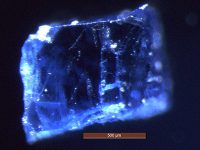
Halogens are mobile in geological fluids, making them excellent tracers of volatile activity. Halogen-bearing minerals in diverse planetary materials, coupled with chlorine isotope compositions of bulk samples and minerals, can be used to infer the presence of fluids on planetary surfaces, crusts, and interiors. Halogen element and isotopic evidence helps define the role that halogens play in diverse planetary environments (e.g., asteroids, the Moon, and Mars), which offers insights into fluid activity in the early Solar System and in the role such fluids have played in volatile transport, alteration processes, and habitability throughout geological history.

This content is for Registered members only. To subscribe, please
join one of our participating societies or contact the Editorial Team.

Login
Already a member? Log in here

Halogen Record of Fluid Activity in the Solar System Read More »
Halogens: Salts of the Earth

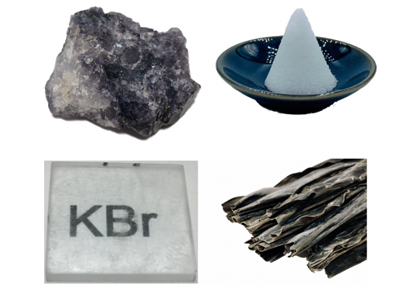
The halogen group elements (F, Cl, Br, and I) and the stable isotopes of
Cl and Br collectively are powerful tracers of terrestrial volatile cycling.
Individually, their distinct geochemical affinities inform on a variety of fluid-mediated and magmatic processes. They form a wide-range of halogenbearing minerals whose composition reflects the source fluids from which they evaporated or crystallized. Fluorine’s geochemical cycle is generally decoupled from that of the heavier Cl, Br, and I, which are concentrated into Earth’s surface reservoirs. Throughout history, the salt-forming halogens have been integral to human health and are key constituents of many industries. These common elements have an important role in tracing geochemical processes across many geologic environments – from the surface to the deep planetary interior.

This content is for Registered members only. To subscribe, please
join one of our participating societies or contact the Editorial Team.

Login
Already a member? Log in here

Halogens: Salts of the Earth Read More »

Scroll to Top

December 2025 --The Variscan Orogeny in Europe – Understanding Supercontinent Formation

The Variscan orogen formed between 380 and 300 million years ago through several accretionary and collisional cycles, culminating with the construction of the Pangea supercontinent. This process occurred via sequential opening and closure of oceanic basins, synchronous detachment of Gondwana derived continental ribbons, and their outboard amalgamation onto the Laurussia margin. The Variscan orogen is rather unique compared with other orogenic belts on Earth: its overthickened and dominantly magmatic crust in the central belt, surprisingly minor mantle involvement in the magmatic and geodynamic processes, coherent and pulsed magmatism along the collision suture, and its complex accretionary history. Because its final product, Pangea, is the youngest and best-understood supercontinent on Earth, the Variscan orogeny offers clues for understanding the mechanisms of supercontinent formation.