Thematic Articles

Serpentinite Carbonation for CO2 Sequestration

Serpentinites offer a highly reactive feedstock for carbonation reactions and the capacity to sequester carbon dioxide (CO2) on a global scale. CO2 can be sequestered in mined serpentinite using high-temperature carbonation reactors, by carbonating alkaline mine wastes, or by subsurface reaction through CO2 injection into serpentinite-hosted aquifers and serpentinized peridotites. Natural analogues to serpentinite carbonation, such as exhumed hydrothermal systems, alkaline travertines, and hydromagnesite– magnesite playas, provide insights into geochemical controls on carbonation rates that can guide industrial CO2 sequestration. The upscaling of existing technologies that accelerate serpentinite carbonation may prove sufficient for offsetting local industrial emissions, but global-scale implementation will require considerable incentives and further research and development.

This content is for Registered members only. To subscribe, please
join one of our participating societies or contact the Editorial Team.

Login
Already a member? Log in here

Serpentinite Carbonation for CO2 Sequestration Read More »
Rheology and Tectonic Significance of Serpentinite

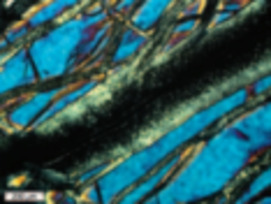
Serpentinites occur in many active geologic settings and control the rheology of the lithosphere where aqueous fluids interact with ultramafic rocks. The crystal structure of serpentine-group minerals results in diagnostic physical properties that are important for interpreting a wide range of geophysical data and impart unique rheological behaviors. Serpentinites play an important role during continental rifting and oceanic spreading, in strain localization along lithospheric strike-slip faults, and in subduction zone processes. The rheology of serpentine is key for understanding the nucleation and propagation of earthquakes, and the relative weakness of serpentinite can significantly affect geodynamic processes at tectonic plate boundaries.

This content is for Registered members only. To subscribe, please
join one of our participating societies or contact the Editorial Team.

Login
Already a member? Log in here

Rheology and Tectonic Significance of Serpentinite Read More »

Serpentinite: What, Why, Where?

Rock-forming serpentine minerals form flat, cylindrical, and corrugated crystal microstructures, which reflect energetically efficient layering of alternate tetrahedral and octahedral sheets. Serpentinization of peridotite involves internal buffering of the pore fluid, reduction of oxygen fugacity, and partial oxidation of Fe2+ to Fe3+. Sluggish MgFe diffusion in olivine causes precipitation of magnetite and release of H2. The tectonic environment of the serpentinization process dictates the abundance of fluidmobile elements in serpentinites. Similar enrichment patterns of fluid-mobile elements in mantle-wedge serpentinites and arc magmas suggest a linkage between the dehydration of serpentinite and arc magmatism.

This content is for Registered members only. To subscribe, please
join one of our participating societies or contact the Editorial Team.

Login
Already a member? Log in here

Serpentinite: What, Why, Where? Read More »

Serpentinites: Essential Roles in Geodynamics, Arc Volcanism, Sustainable Development, and the Origin of Life

Serpentinites are rocks consisting mostly of the serpentine-group minerals chrysotile, lizardite and antigorite. They are formed by the hydration of olivine-rich ultramafi c rocks and they contain up to ~13 wt% H2O. They have long been used by many cultures as building and carving stones. Serpentinites play essential roles in numerous geological settings. They act as a lubricant along plate boundaries during aseismic creep and contribute to the geochemical cycle of subduction zones. In the mantle, they are a reservoir of water and fluid-mobile elements. Serpentinites can produce nickel ore where weathered, and they can sequester CO2 where carbonated. They may have provided an environment for the abiotic generation of amino acids on the early Earth and other planets, potentially leading to the development of life.

This content is for Registered members only. To subscribe, please
join one of our participating societies or contact the Editorial Team.

Login
Already a member? Log in here

Serpentinites: Essential Roles in Geodynamics, Arc Volcanism, Sustainable Development, and the Origin of Life Read More »

Emerging Frontiers in Geomicrobiology

The interdisciplinary field of geomicrobiology and microbial geochemistry (GMG) has provided surprising insights into microbial function and preservation in diverse environments. The emerging frontiers in GMG are driven by recent discoveries in material sciences, economic geology, human health, and paleontology. The length-scales and mechanisms by which organisms can transfer electrons are being redefined, which have implications ranging from the formation of ore deposits to microbial function in the human body. Pathways of biomineralization are a critical control for many fossilization processes. Microbiologically produced materials also exhibit great potential for technological and medical applications.

This content is for Registered members only. To subscribe, please
join one of our participating societies or contact the Editorial Team.

Login
Already a member? Log in here

Emerging Frontiers in Geomicrobiology Read More »

Emerging Biogeochemical Views of Earth’s Ancient Microbial Worlds

Microbial processes dominate geochemical cycles at and near the Earth’s surface today. Their role was even greater in the past, with microbes being the dominant life form for the first 90% of Earth’s history. Most of their metabolic pathways originated billions of years ago as both causes and effects of environmental changes of the highest order, such as the first accumulation of oxygen in the oceans and atmosphere. Microbial processes leave behind diverse geochemical fingerprints that can remain intact for billions of years. These rock-bound signatures are now steering our understanding of how life coevolved with the environments on early Earth and are guiding our search for life elsewhere in the universe.

This content is for Registered members only. To subscribe, please
join one of our participating societies or contact the Editorial Team.

Login
Already a member? Log in here

Emerging Biogeochemical Views of Earth’s Ancient Microbial Worlds Read More »

Cryptic Cross-Linkages Among Biogeochemical Cycles: Novel Insights from Reactive Intermediates

The biogeochemical cycling of major and minor elements in the ocean has direct bearing on the health of the planet and its inhabitants. Reactive intermediates, of both chemical and biological origin, are emerging as important players in these biogeochemical cycles. Due to their rapid production and consumption, these reactive intermediates are short-lived and typically in low concentration. Involvement of these “invisible” species in biogeochemistry may therefore be hidden, or cryptic, with no obvious lingering chemical signature. Here, we highlight reactive intermediates of the oxygen, manganese, and sulfur cycles and how these intermediates are involved in cryptic cross-linkages between marine biogeochemical cycles of global importance.

This content is for Registered members only. To subscribe, please
join one of our participating societies or contact the Editorial Team.

Login
Already a member? Log in here

Cryptic Cross-Linkages Among Biogeochemical Cycles: Novel Insights from Reactive Intermediates Read More »

Omic Approaches to Microbial Geochemistry

The past two decades have witnessed an explosion of DNA sequencing technologies that provide unprecedented insights into genome sequences­—the blueprints of life on Earth. Although initially driven by biomedical research, this revolution offers exciting opportunities in Earth sciences. Analyzing genomes and other biomolecules (“omic” methods) within environmental samples provides new vistas of microbial geochemistry. However, the massive amount of data produced can be hard to decipher, and the resources and infrastructure to train and support geoscientists in omics approaches are lacking. This article summarizes some of the opportunities and challenges in the applications of omic approaches to geochemical problems.

This content is for Registered members only. To subscribe, please
join one of our participating societies or contact the Editorial Team.

Login
Already a member? Log in here

Omic Approaches to Microbial Geochemistry Read More »

Principles of Geobiochemistry

The basic premise of geobiochemistry is that life emerged on Earth where there were opportunities for catalysis to expedite the release of chemical energy in water–rock–organic systems. In this framework, life is a planetary response to the dilemma that cooling decreases the rates of abiotic processes to the point that chemical energy becomes trapped. Catalysis via metabolism releases the trapped energy, and life benefits by capturing some of the energy released. Out of necessity, biochemical processes have geochemical origins, and geobiochemistry asserts that these origins can be revealed by mapping reaction mechanisms onto deep time. We propose five principles that should help guide research in the emerging field of geobiochemistry.

This content is for Registered members only. To subscribe, please
join one of our participating societies or contact the Editorial Team.

Login
Already a member? Log in here

Principles of Geobiochemistry Read More »

Geomicrobiology and Microbial Geochemistry

Geomicrobiology and microbial geochemistry (GMG) investigates the interaction between Earth, environmental systems, and microbial life. Microbes shape their geochemical surroundings through their metabolic and growth needs and thereby exert significant geochemical and mineralogical control on their local environments. In turn, local geochemical conditions dictate what metabolic processes are possible. These mutual influences mean that microbial evolution has occurred in concert with changing geosphere conditions and that microbes have driven major shifts in ocean, continent and atmospheric chemistry. If one wishes to understand element cycling in any system containing water, one must realize that microbes are critical to the story.

This content is for Registered members only. To subscribe, please
join one of our participating societies or contact the Editorial Team.

Login
Already a member? Log in here

Geomicrobiology and Microbial Geochemistry Read More »

Scroll to Top

December 2025 --The Variscan Orogeny in Europe – Understanding Supercontinent Formation

The Variscan orogen formed between 380 and 300 million years ago through several accretionary and collisional cycles, culminating with the construction of the Pangea supercontinent. This process occurred via sequential opening and closure of oceanic basins, synchronous detachment of Gondwana derived continental ribbons, and their outboard amalgamation onto the Laurussia margin. The Variscan orogen is rather unique compared with other orogenic belts on Earth: its overthickened and dominantly magmatic crust in the central belt, surprisingly minor mantle involvement in the magmatic and geodynamic processes, coherent and pulsed magmatism along the collision suture, and its complex accretionary history. Because its final product, Pangea, is the youngest and best-understood supercontinent on Earth, the Variscan orogeny offers clues for understanding the mechanisms of supercontinent formation.