Thematic Articles

Hydrothermal Mobilisation of the Rare Earth Elements – a Tale of “Ceria” and “Yttria”

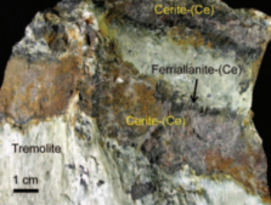
Although the rare earth elements have been thought by many to be immobile in hydrothermal fluids, we have known since the first attempts to separate them in the early nineteenth century that they are soluble in aqueous solutions. Driven by a need to isolate individual REEs for industrial applications, and more recently to explore for them, we have started to develop an understanding of their solubility and speciation in hydrothermal fluids. This knowledge is allowing us to understand the processes that promote their transport in the Earth’s crust, their concentration, and their fractionation.

This content is for Registered members only. To subscribe, please
join one of our participating societies or contact the Editorial Team.

Login
Already a member? Log in here

Hydrothermal Mobilisation of the Rare Earth Elements – a Tale of “Ceria” and “Yttria” Read More »

Rare Earth Mineralization in Igneous Rocks: Sources and Processes

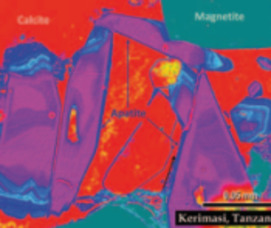
Deposits of rare earth elements (REEs) in igneous rocks have played an instrumental role in meeting the growing industrial demand for these elements since the 1960s. Among the many different igneous rocks containing appreciable concentrations of REEs, carbonatites and peralkaline silicate rocks are the most important sources of these elements, both historically and for meeting the anticipated growth in REE demand. The contrasting geochemical and mineralogical characteristics of REE mineralization in carbonatites, peralkaline feldspathoid rocks, and peralkaline granites reflect different sources and evolutionary pathways of their parental magmas, as well as differences in the extent of postmagmatic reworking of primary REE minerals by hydrothermal fluids.

This content is for Registered members only. To subscribe, please
join one of our participating societies or contact the Editorial Team.

Login
Already a member? Log in here

Rare Earth Mineralization in Igneous Rocks: Sources and Processes Read More »

Dynamics in the Global Market for Rare Earths

The long-term growth of numerous industries will depend on the ability to secure stable and diverse sources of rare earths. Recent years have seen unprecedented volatility in this sector, with the rare earths being increasingly considered as strategic and critical to a wide range of technologies. During the next few years, demand for some of the rare earths is expected to exceed supply. Chinese export-quota policies have had a severe impact on the market. Worldwide exploration efforts are now leading to the deployment of a rare earth supply chain based outside China.

This content is for Registered members only. To subscribe, please
join one of our participating societies or contact the Editorial Team.

Login
Already a member? Log in here

Dynamics in the Global Market for Rare Earths Read More »

Rare Earth Elements: Minerals, Mines, Magnets (and More)

The rare earth elements (REEs) are all around us, not only in nature but in our everyday lives. They are in every car, computer, smartphone, energy-efficient fluorescent lamp, and color TV, as well as in lasers, lenses, ceramics, and more. Scientific applications of these elements range from tracing the provenance of magmas and sediments to studying body structures with magnetic resonance imaging. The realization that we need rare earths for so many applications, but that their supply is effectively restricted to several mining districts in China, has brought these elements to the headlines and created a critical-metals agenda. Here we introduce the REE family: their properties, minerals, practical uses, and deposits. Potential sources of these elements are diverse and abundant if we can overcome the technical challenges of rare earth mining and extraction in an environmentally and socially responsible way.

This content is for Registered members only. To subscribe, please
join one of our participating societies or contact the Editorial Team.

Login
Already a member? Log in here

Rare Earth Elements: Minerals, Mines, Magnets (and More) Read More »

A Technological Gem: Materials, Medical, and Environmental Mineralogy of Apatite

Apatite has numerous applications that benefit society. The atomic arrangement of the apatite crystal structure and its rich and variable chemistry impart unique properties, which permit a wide range of technological and scientific applications in an array of disciplines outside of the traditional Earth sciences, including ecology, agronomy, biology, medicine, archeology, environmental remediation, and materials science. In our daily lives, apatite is essential for sustaining and enhancing human life through agricultural amendments, through bone replacements, through fluorescent lights, and through environmental remediation of contaminated soils. Apatite is truly a technological gem.

This content is for Registered members only. To subscribe, please
join one of our participating societies or contact the Editorial Team.

Login
Already a member? Log in here

A Technological Gem: Materials, Medical, and Environmental Mineralogy of Apatite Read More »

Geochronology and Thermochronology Using Apatite: Time and Temperature, Lower Crust to Surface

Apatite can provide geologists with an exceptionally wide range of ages and temperatures to investigate processes that operate from Earth’s surface right down to the lower crust. Apatite is a widespread accessory mineral in igneous, metamorphic, and clastic sedimentary rocks and can be dated using four radioactive decay schemes, each with a different temperature window for isotopic closure: Lu–Hf (675–750 °C); U–Pb (350–550 °C); apatite fission track (60–110 °C); (U–Th)/He (40–80 °C). The fission-track and (U–Th)/He methods are popular for studying upper-crustal and near-surface processes, whereas the U–Pb and Lu–Hf systems are used to investigate the thermal, tectonic, and magmatic histories of the deeper crust.

This content is for Registered members only. To subscribe, please
join one of our participating societies or contact the Editorial Team.

Login
Already a member? Log in here

Geochronology and Thermochronology Using Apatite: Time and Temperature, Lower Crust to Surface Read More »

Extraterrestrial Apatite: Planetary Geochemistry to Astrobiology

The distribution and abundances of H2O and other volatiles in our Solar System are of fundamental interest because of the important roles volatiles play in geological and biological processes. Apatite, Ca5(PO4)3(F,Cl,OH), is a ubiquitous accessory mineral and provides a consistent window into volatile abundances and processes across the Solar System and throughout its history. Consequently, the chemical composition of apatite can be used as a tool for exploring such diverse topics as the compositions and roles of the Solar System’s earliest fluids on asteroids, the volatile abundances of planetary bodies, and the habitability of past environments (e.g. on Mars) for life as we know it.

This content is for Registered members only. To subscribe, please
join one of our participating societies or contact the Editorial Team.

Login
Already a member? Log in here

Extraterrestrial Apatite: Planetary Geochemistry to Astrobiology Read More »

Magmatic Apatite: A Powerful, Yet Deceptive, Mineral

Apatite may be a minor constituent in magmatic rocks but it is a powerful research tool because it is ubiquitous and it incorporates magmatic water, halogens, S, C, and trace elements including Sr, U, Th, and the rare earth elements. Recent advances in experimental and analytical methodologies allow geologists to analyze apatite textures and compositions in great detail. This information improves understanding of the behavior of volatiles and trace elements both in terrestrial igneous melts and their related fluids and in extraterrestrial bodies, such as the Moon and Mars. With more research, the petrological power of apatite can only increase with respect to understanding eruptive, pluton-building, and mineralizing magmatic systems.

This content is for Registered members only. To subscribe, please
join one of our participating societies or contact the Editorial Team.

Login
Already a member? Log in here

Magmatic Apatite: A Powerful, Yet Deceptive, Mineral Read More »

Apatite: A Fingerprint for Metasomatic Processes

Apatite is a superb mineral by which to investigate the nature of fluids that have passed through and altered a rock (metasomatic processes). Its ubiquity allows it to act as a reservoir for P, F, Cl, OH, CO2, and the rare earth elements. It is also a powerful thermochronometer and can be chemically altered by aqueous brines (NaCl–KCl–CaCl2–H2O), pure H2O, and aqueous fluids containing CO2, HCl, H2SO4, and/or F. Thus, apatite is the perfect tracker of metasomatic fluids, providing information on the timing and duration of metasomatism, the temperature of the fluids, and the composition of the fluids, all of which can feed back into the history of the host rock itself.

This content is for Registered members only. To subscribe, please
join one of our participating societies or contact the Editorial Team.

Login
Already a member? Log in here

Apatite: A Fingerprint for Metasomatic Processes Read More »

Structurally Robust, Chemically Diverse: Apatite and Apatite Supergroup Minerals

Apatite is ubiquitous in igneous, metamorphic, and sedimentary rocks and is significant to more field of study than perhaps any other mineral. To help understand why, one needs to know apatite’s structure, composition, and crystal chemistry. Apatite has a robust hexagonal atomic framework based on two distinct metal-cation sites (M1, M2), a tetrahedral-cation site (T), and an anion column along four edges of the unit cell. These cation and anion sites can, among them, incorporate more than half of the long-lived elements in the periodic table, giving rise to the “apatite supergroup,” which contains over 40 mineral species. The structure and composition impart properties that can be technologically, medically, and geologically very useful.

This content is for Registered members only. To subscribe, please
join one of our participating societies or contact the Editorial Team.

Login
Already a member? Log in here

Structurally Robust, Chemically Diverse: Apatite and Apatite Supergroup Minerals Read More »

Scroll to Top

December 2025 --The Variscan Orogeny in Europe – Understanding Supercontinent Formation

The Variscan orogen formed between 380 and 300 million years ago through several accretionary and collisional cycles, culminating with the construction of the Pangea supercontinent. This process occurred via sequential opening and closure of oceanic basins, synchronous detachment of Gondwana derived continental ribbons, and their outboard amalgamation onto the Laurussia margin. The Variscan orogen is rather unique compared with other orogenic belts on Earth: its overthickened and dominantly magmatic crust in the central belt, surprisingly minor mantle involvement in the magmatic and geodynamic processes, coherent and pulsed magmatism along the collision suture, and its complex accretionary history. Because its final product, Pangea, is the youngest and best-understood supercontinent on Earth, the Variscan orogeny offers clues for understanding the mechanisms of supercontinent formation.