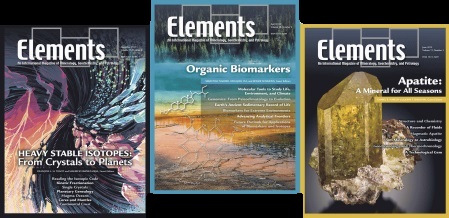
Thematic Articles

Ironing Out Isotopic Differences Among Rocky Bodies

T he variability of iron isotopes among rocky bodies in the inner Solar System provides a window onto the diversity of materials and mechanisms from which they formed. The magnitude of isotopic variation in mantle-derived rocks within a given body is similar to that between different planetary bodies. Isotopic signatures arising from primordial events, namely, evaporation/condensation, core formation and melting/crystallization, may be progressively diluted, modified, and redistributed over time by global recycling processes such as plate tectonics. Here, we assess the relative influence of these primordial mechanisms on the iron isotope compositions of igneous rocks and their implications for the structure and accretion histories of rocky planets.

This content is for Registered members only. To subscribe, please
join one of our participating societies or contact the Editorial Team.

Login
Already a member? Log in here

Ironing Out Isotopic Differences Among Rocky Bodies Read More »
Planetary Evaporation

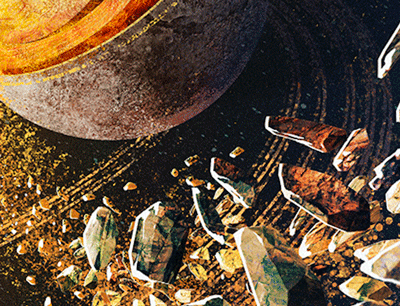
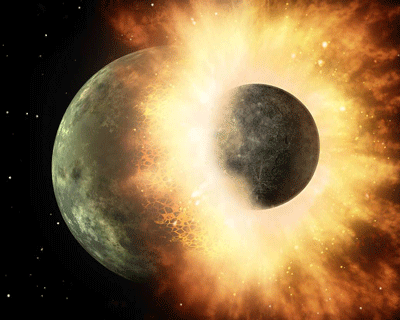
Evaporation of magma oceans exposed to space may have played a role in the chemical and isotopic compositions of rocky planets in our Solar System (e.g., Earth, Moon, Mars) and their protoplanetary antecedents. Chemical depletion of moderately volatile elements and the enrichment of these elements’ heavier isotopes in the Moon and Vesta relative to chondrites are clear examples. Evaporation is also thought to be an important process
in some exoplanetary systems. Identification of evaporation signatures among the rock-forming elements could elucidate important reactions between melts and vapors during planet formation in general, but the process is more complicated than is often assumed.

This content is for Registered members only. To subscribe, please
join one of our participating societies or contact the Editorial Team.

Login
Already a member? Log in here

Planetary Evaporation Read More »

Planetary Genealogy

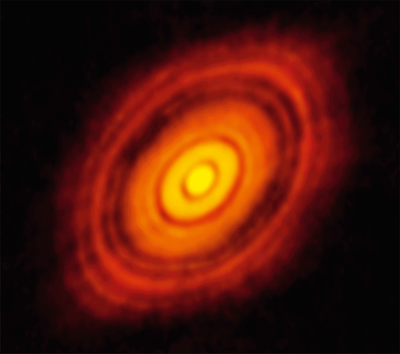
The detection of exoplanets and accretion disks around newborn stars has spawned new ideas and models of how our Solar System formed and evolved. Meteorites as probes of geologic deep time can provide ground truth to these models. In particular, stable isotope anomalies in meteorites have recently emerged as key tracers of material flow in the early Solar System, allowing cosmochemists to establish a “planetary isotopic genealogy”. Although not complete, this concept has substantially advanced our understanding of Solar System evolution, from the collapse of the Sun’s parental molecular cloud to the accretion of the planets.

This content is for Registered members only. To subscribe, please
join one of our participating societies or contact the Editorial Team.

Login
Already a member? Log in here

Planetary Genealogy Read More »

Unlocking the Single-Crystal Record of Heavy Stable Isotopes

Stable isotopes provide deep insights into processes across a wide range of scales, from micron- to cosmic-size systems. Here, we review how continued advances in mass-spectrometry have enabled the analysis of ever-smaller samples and brought the field of heavy stable isotope geochemistry to its next frontier: the single-crystal scale. Accessing this record can be as enlightening as it is challenging. Drawing on novel systematics at different stages of development (from well-established to nascent), we discuss how the isotopes of heavy elements, such as magnesium, iron, zirconium, or uranium, can be used at the single-crystal and subcrystal scales to reconstruct magma thermal histories, crystal growth timescales, or, possibly, magma redox conditions.

This content is for Registered members only. To subscribe, please
join one of our participating societies or contact the Editorial Team.

Login
Already a member? Log in here

Unlocking the Single-Crystal Record of Heavy Stable Isotopes Read More »

Beyond Equilibrium: Kinetic Isotope Fractionation in High-Temperature Environments

Igneous and metamorphic rocks exhibit greater isotopic heterogeneity than expected from equilibrium. Large nonequilibrium isotope effects can arise from diffusion and chemical reactions, such as crystal growth and dissolution. The effects are time-dependent and can, therefore, be used to probe timescales of igneous and metamorphic processes that are inaccessible to direct observation. New discoveries of isotopic variability in nature, informed by diffusion and reaction modeling, can provide unique insights into the formation of rocks in the interiors of planetary bodies.

This content is for Registered members only. To subscribe, please
join one of our participating societies or contact the Editorial Team.

Login
Already a member? Log in here

Beyond Equilibrium: Kinetic Isotope Fractionation in High-Temperature Environments Read More »

Reading the Isotopic Code of Heavy Elements

The isotopic variability of the elements in our planet and Solar System is the end result of a complex mixture of processes, including variable production of isotopes in stars, ingrowth of daughter nuclides due to decay of radioactive parents, and selective incorporation of isotopes into solids, liquids, or gases as a function of their mass and/or nuclear volume. Interpreting the isotopic imprints that planetary formation and evolution have left in the rock and mineral record requires not only precise and accurate measurements but also an understanding of the drivers behind isotopic variability. Here, we introduce fundamental concepts needed to “read” the isotopic code, with particular emphasis on heavy stable isotope systems.

This content is for Registered members only. To subscribe, please
join one of our participating societies or contact the Editorial Team.

Login
Already a member? Log in here

Reading the Isotopic Code of Heavy Elements Read More »

Developments in Halogen Abundance and Isotope Measurements

The four stable halogens (F, Cl, Br, and I) are low-abundance elements that are widely distributed in nature. Two of the halogens, Cl and Br, each have two stable isotopes showing a range in natural isotope variation of up to a few parts per thousand. A variety of analytical techniques have been developed to determine the abundance and isotopic ratios of the halogens: these include in situ techniques for high spatial resolution studies and bulk determinations, and they have been applied to a range of materials, including whole rocks, minerals, glasses, and fluid inclusions. Here, we summarise some of the established methods for determining halogen abundances and isotopes and highlight key advances.

This content is for Registered members only. To subscribe, please
join one of our participating societies or contact the Editorial Team.

Login
Already a member? Log in here

Developments in Halogen Abundance and Isotope Measurements Read More »

Experimental and Observational Constraints on Halogen Behavior at Depth

Halogens are volatile elements present in trace amounts in the Earth’s crust, mantle, and core. They show volatile behavior and tend to be incompatible except for fluorine, which makes them key tracers of fluid-mediated and/or melt-mediated chemical transport processes. Even small quantities of halogens can profoundly affect many physicochemical processes such as melt viscosity, the temperature stability of mineral phases, the behavior of trace elements in aqueous fluids, or the composition of the atmosphere through magma degassing. Experiments allow us to simulate deep-Earth conditions. A comparison of experimental results with natural rocks helps us to unravel the role and behavior of halogens in the Earth’s interior.

This content is for Registered members only. To subscribe, please
join one of our participating societies or contact the Editorial Team.

Login
Already a member? Log in here

Experimental and Observational Constraints on Halogen Behavior at Depth Read More »

Natural Halogen Emissions to the Atmosphere: Sources, Flux, and Environmental Impact

Understanding the atmospheric geochemical cycle of both natural and anthropogenic halogens is important because of the detrimental effect halogens have on the environment, notably on tropospheric and stratospheric ozone. Oceans are the primary natural source for atmospheric Cl, F, Br, and I, but anthropogenic emissions are still important, especially for Cl. While emissions of human-made halocarbons (e.g., chlorofluorocarbons or CFCs) are expected to continue to decrease allowing progressive stratospheric ozone recovery, volcanic activity (e.g., clusters of mid-scale explosive eruptions or large-scale explosive eruptions) might disturb this recovery over the next decades. This review provides a synthesis of natural halogen fluxes from oceanic, terrestrial, and volcanic sources, and discusses the role of natural halogen species on atmosphere chemistry and their environmental impact.

This content is for Registered members only. To subscribe, please
join one of our participating societies or contact the Editorial Team.

Login
Already a member? Log in here

Natural Halogen Emissions to the Atmosphere: Sources, Flux, and Environmental Impact Read More »

Sediments, Serpentinites, and Subduction: Halogen Recycling from the Surface to the Deep Earth

Halogens are important elements that participate in a variety of biogeochemical processes and influence the solubility of metals in subduction-zone fluids. Halogens are powerful tracers of subducted volatiles in the Earth’s mantle because they have high abundances in seawater, sediments, and altered oceanic lithosphere but low concentrations in the mantle. Additionally, Br/Cl and I/Cl ratios, as well as Cl-isotope ratios, have characteristic ranges in different surface reservoirs that are not easily fractionated in the mantle. Current data suggest that subduction of serpentinised lithosphere is a major source of halogens in the Earth’s mantle.

This content is for Registered members only. To subscribe, please
join one of our participating societies or contact the Editorial Team.

Login
Already a member? Log in here

Sediments, Serpentinites, and Subduction: Halogen Recycling from the Surface to the Deep Earth Read More »

Scroll to Top

December 2025 --The Variscan Orogeny in Europe – Understanding Supercontinent Formation

The Variscan orogen formed between 380 and 300 million years ago through several accretionary and collisional cycles, culminating with the construction of the Pangea supercontinent. This process occurred via sequential opening and closure of oceanic basins, synchronous detachment of Gondwana derived continental ribbons, and their outboard amalgamation onto the Laurussia margin. The Variscan orogen is rather unique compared with other orogenic belts on Earth: its overthickened and dominantly magmatic crust in the central belt, surprisingly minor mantle involvement in the magmatic and geodynamic processes, coherent and pulsed magmatism along the collision suture, and its complex accretionary history. Because its final product, Pangea, is the youngest and best-understood supercontinent on Earth, the Variscan orogeny offers clues for understanding the mechanisms of supercontinent formation.