Thematic Articles

Recycling, Reuse and Rehabilitation of Mine Wastes

If we want to ensure a sustainable future for the human race, we must learn to prevent, minimize, reuse and recycle waste. Reuse of mine wastes allows their beneficial application, whereas recycling extracts resource ingredients or converts wastes into valuable products. Yet, today, many of the proposed reuse and recycling concepts for mine wastes are not economic. Consequently, the great majority of mine wastes are still being placed into waste storage facilities. Significant research efforts are required to develop cost-effective reuse and recycling options and to prevent the migration of contaminants from rehabilitated waste repositories in the long term.

This content is for Registered members only. To subscribe, please
join one of our participating societies or contact the Editorial Team.

Login
Already a member? Log in here

Recycling, Reuse and Rehabilitation of Mine Wastes Read More »
Mine Wastes and Human Health

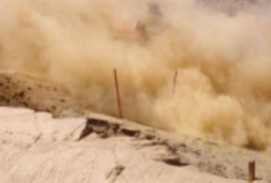
Historical mining and mineral processing have been linked definitively to health problems resulting from occupational and environmental exposures to mine wastes. Modern mining and processing methods, when properly designed and implemented, prevent or greatly reduce potential environmental health impacts. However, particularly in developing countries, there are examples of health problems linked to recent mining. In other cases, recent mining has been blamed for health problems but no clear links have been found. The types and abundances of potential toxicants in mine wastes are predictably influenced by the geologic characteristics of the deposit being mined. Hence, Earth scientists can help understand, anticipate, and mitigate potential health issues associated with mining and mineral processing.

This content is for Registered members only. To subscribe, please
join one of our participating societies or contact the Editorial Team.

Login
Already a member? Log in here

Mine Wastes and Human Health Read More »

Mine Waters: Acidic to Circumneutral

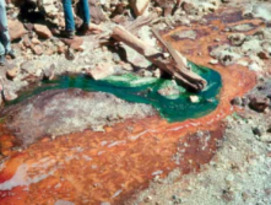
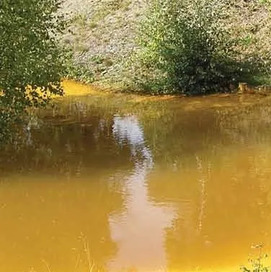
Acid mine waters, often containing toxic concentrations of Fe, Al, Cu, Zn, Cd, Pb, Ni, Co, and Cr, can be produced from the mining of coal and metallic deposits. Values of pH for acid mine waters can range from –3.5 to 5, but even circumneutral (pH ≈ 7) mine waters can have high concentrations of As, Sb, Mo, U, and F. When mine waters are discharged into streams, lakes, and the oceans, serious degradation of water quality and injury to aquatic life can ensue, especially when tailings impoundments break suddenly. The main acid-producing process is the exposure of pyrite to air and water, which promotes oxidative dissolution, a reaction catalyzed by microbes. Current and future mining should plan for the prevention and remediation of these contaminant discharges by the application of hydrogeochemical principles and available technologies, which might include remining and recycling of waste materials.

This content is for Registered members only. To subscribe, please
join one of our participating societies or contact the Editorial Team.

Login
Already a member? Log in here

Mine Waters: Acidic to Circumneutral Read More »

Waste Streams of Mined Oil Sands: Characteristics and Remediation

The bitumen found in the oil sands of northern Alberta, Canada, represents a significant oil resource. This bitumen is extracted either from mined ore or by using in situ methods. The water-based extraction of mined ore creates large volumes of mineral suspensions that are stored in tailings ponds. Remediation of fine tailings has presented challenges. Several new treatment technologies promise to accelerate the remediation process and at the same time recover more water for use in the extraction process. As a world-class oil reserve, and the only commercially developed oil sand deposit, the Alberta oil sands represent an important future oil source, the magnitude of which will depend to some extent on our ability to limit environmental impacts.

This content is for Registered members only. To subscribe, please
join one of our participating societies or contact the Editorial Team.

Login
Already a member? Log in here

Waste Streams of Mined Oil Sands: Characteristics and Remediation Read More »

Geochemistry and Mineralogy of Solid Mine Waste: Essential Knowledge for Predicting Environmental Impact

Large volumes of waste rock and mine tailings are stored at mine sites. Predicting the environmental impact of these wastes requires an understanding of mineral–water interaction and the characterization of the solid materials at the microscopic scale. The tendency of mine wastes to produce acid or neutral drainage containing potentially toxic metals generally reflects the ratio of primary sulfide to carbonate minerals and the trace element concentrations inherited from the ore deposit, as well as any ore processing that may have created new compounds. Whether potentially toxic elements are released to surface water, groundwater, or bodily fluids (in the case of ingestion or inhalation) depends on the host mineral and the possibility of sequestration by secondary minerals.

This content is for Registered members only. To subscribe, please
join one of our participating societies or contact the Editorial Team.

Login
Already a member? Log in here

Geochemistry and Mineralogy of Solid Mine Waste: Essential Knowledge for Predicting Environmental Impact Read More »

Mine Wastes: Past, Present, Future

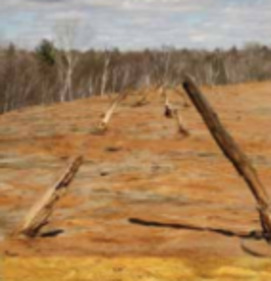
Mine wastes are unwanted, currently uneconomic, solid and liquid materials found at or near mine sites. Volumetrically they are one of the world’s largest waste streams, and they often contain high concentrations of elements and compounds that can have severe effects on ecosystems and humans. Multidisciplinary research on mine wastes focuses on understanding their character, stability, impact, remediation and reuse. This research must continue if we are to understand and sustainably manage the immense quantities of historic, contemporary and future mine wastes, given the trend to exploit larger deposits of lower-grade ores.

This content is for Registered members only. To subscribe, please
join one of our participating societies or contact the Editorial Team.

Login
Already a member? Log in here

Mine Wastes: Past, Present, Future Read More »

Tourmaline: The Kaleidoscopic Gemstone

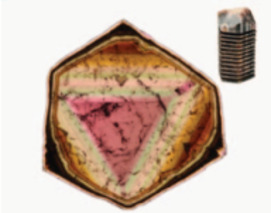
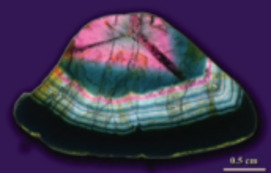
With their multitude of colors, gem tourmalines are among the most popular colored gemstones. Spectacular color-zoned tourmalines are valued as gems and crystal specimens, and some complexly zoned crystals contain nearly the entire spectrum of color variation found in the mineral world. The top-quality “neon” blue-to-green, copper-bearing tourmaline, the Paraíba-type, is one of the highest-priced colored gemstones, with values comparable to those of some diamonds. The wide variety and intensity of colors are related primarily to color-producing ions in the structure and to exposure to natural radiation. Gem tourmalines that form in magmatic, pegmatitic environments are most commonly elbaite and fluorliddicoatite species, and the rarer gem tourmalines that develop in metamorphic rocks are generally dravite–uvite species.

This content is for Registered members only. To subscribe, please
join one of our participating societies or contact the Editorial Team.

Login
Already a member? Log in here

Tourmaline: The Kaleidoscopic Gemstone Read More »

Tourmaline as a Petrologic Forensic Mineral: A Unique Recorder of Its Geologic Past

Tourmaline is nature’s perfect forensic mineral. From a single grain, the full geological past of its host rock can be reconstructed, including the pressure–temperature path it has taken through the Earth and the changing fluid compositions it has encountered. Tourmaline is able to provide this record owing to its compositional and textural sensitivity to the environment in which it grows, and is able to preserve this record because element diffusion in its structure is negligible. Furthermore, tourmaline has an exceptionally broad stability range, allowing it to record conditions in igneous, sedimentary, metamorphic, and hydrothermal settings. As our mineralogical and geochemical tools advance, we are able to interrogate tourmaline’s memory with increasing precision, making tourmaline a truly powerful indicator of conditions in the Earth.

This content is for Registered members only. To subscribe, please
join one of our participating societies or contact the Editorial Team.

Login
Already a member? Log in here

Tourmaline as a Petrologic Forensic Mineral: A Unique Recorder of Its Geologic Past Read More »

Tourmaline as a Recorder of Ore-Forming Processes

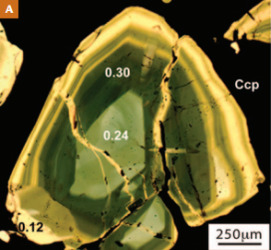
Tourmaline occurs in diverse types of hydrothermal mineral deposits and can be used to constrain the nature and evolution of ore-forming fluids. Because of its broad range in composition and retention of chemical and isotopic signatures, tourmaline may be the only robust recorder of original mineralizing processes in some deposits. Microtextures and in situ analysis of compositional and isotopic variations in ore-related tourmaline provide valuable insights into hydrothermal systems in seafloor, sedimentary, magmatic, and metamorphic environments. Deciphering the hydrothermal record in tourmaline also holds promise for aiding exploration programs in the search for new ore deposits.

This content is for Registered members only. To subscribe, please
join one of our participating societies or contact the Editorial Team.

Login
Already a member? Log in here

Tourmaline as a Recorder of Ore-Forming Processes Read More »

Tourmaline Isotopes: No Element Left Behind

Tourmaline typically forms where crustal rocks interact with migrating hydrous fluids or silicate melts, and its isotopic composition provides a reliable record of the isotopic composition of the fluids and melts from which it crystallized. Minerals of the tourmaline supergroup are exceptional in their physical robustness and chemical variability, and they allow us to extract a uniquely broad range of isotopic information from a single mineral. The chemical variability of tourmaline confronts us with the difficulty of deciphering an extremely complex mineral system, but it also presents us with a geochemical recorder of half the periodic table, a breadth of representation that is unparalleled among minerals. Plate tectonic–scale geochemical cycles, local and regional fluid–rock interactions, magmatic–hydrothermal systems, ore-forming processes, and ages of tourmaline formation have all been reconstructed using this unique isotopic broadband recorder.

This content is for Registered members only. To subscribe, please
join one of our participating societies or contact the Editorial Team.

Login
Already a member? Log in here

Tourmaline Isotopes: No Element Left Behind Read More »

Scroll to Top

December 2025 --The Variscan Orogeny in Europe – Understanding Supercontinent Formation

The Variscan orogen formed between 380 and 300 million years ago through several accretionary and collisional cycles, culminating with the construction of the Pangea supercontinent. This process occurred via sequential opening and closure of oceanic basins, synchronous detachment of Gondwana derived continental ribbons, and their outboard amalgamation onto the Laurussia margin. The Variscan orogen is rather unique compared with other orogenic belts on Earth: its overthickened and dominantly magmatic crust in the central belt, surprisingly minor mantle involvement in the magmatic and geodynamic processes, coherent and pulsed magmatism along the collision suture, and its complex accretionary history. Because its final product, Pangea, is the youngest and best-understood supercontinent on Earth, the Variscan orogeny offers clues for understanding the mechanisms of supercontinent formation.