Thematic Articles

Establishing Asteroid–Meteorite Links

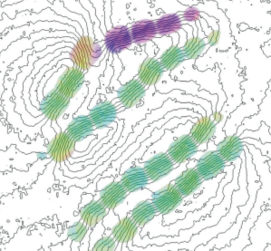
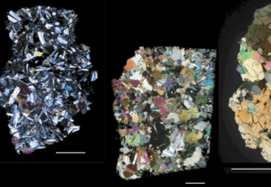
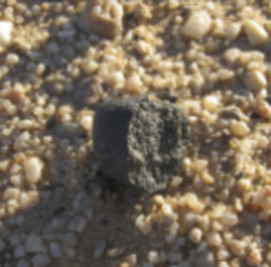
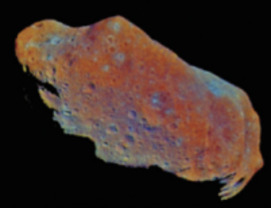
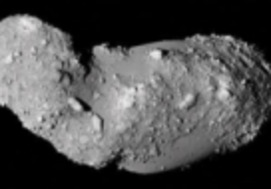
Asteroids are arguably the most accessible remnants of building blocks of the early Solar System and an essential piece of the terrestrial planet–formation puzzle. Determining their compositions and physical properties can provide important and otherwise unobtainable information concerning the origin, structure, and dynamic history of the Solar System, as well as insights into the sources of materials from which the terrestrial planets were constructed. Our understanding of the compositional structure of the asteroid belt and of individual asteroids has advanced significantly since the 1970s. Strong associations between asteroids and meteorites are emerging thanks to multitechnique observations, the synthesis of observations and modeling, in situ measurements, and sample-return missions.

This content is for Registered members only. To subscribe, please
join one of our participating societies or contact the Editorial Team.

Login
Already a member? Log in here

Establishing Asteroid–Meteorite Links Read More »

Formation and Physical Properties of Asteroids

Asteroids are the leftover precursors to the terrestrial planets. Before the first images of them were sent from space, our knowledge of asteroids relied entirely on ground-based observations and meteorite analysis. Spacecraft images revolutionized our knowledge and geological understanding of their physical properties. They also showed us that asteroids are subjected to various kinds of processes and are incredibly diverse in size, shape, structure, composition, and rotational properties. Therefore, space missions remain necessary to enhance our knowledge of the various components of the asteroid population. In addition, numerical modeling is required to interpret spacecraft images and improve our understanding of the physical processes asteroids experience over their lifetime.

This content is for Registered members only. To subscribe, please
join one of our participating societies or contact the Editorial Team.

Login
Already a member? Log in here

Formation and Physical Properties of Asteroids Read More »

Asteroids: New Challenges, New Targets

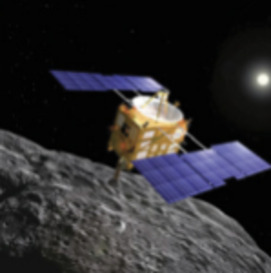
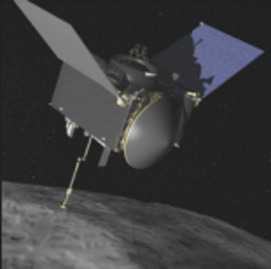
At present, we know of ~600,000 asteroids in the asteroid belt, and there are very likely millions more. Orbiting the Sun between Mars and Jupiter, they are thought to be the shattered remnants of small bodies formed within the young Sun’s solar nebula that never accreted enough material to become planets. These “minor bodies” are therefore keys to understanding how the Solar System formed and evolved. As leftover planetary building blocks, they are of great importance in understanding planetary compositions. They may also provide clues to the origin of life, as similar bodies may have delivered organics and water to the early Earth. For these reasons, several international space agencies have funded sample-return missions to asteroids.

This content is for Registered members only. To subscribe, please
join one of our participating societies or contact the Editorial Team.

Login
Already a member? Log in here

Asteroids: New Challenges, New Targets Read More »

Granitic Pegmatites as Reflections of Their Sources

Pegmatites accentuate the trace element signatures of their granitic sources. Through that signature, the origin of pegmatites can commonly be ascribed to granites whose own source characteristics are known and distinctive. Interactions with host rocks that might modify the composition of pegmatites are limited by the rapid cooling and low heat content of pegmatite-forming magmas. The trace element signatures of most pegmatites clearly align with those of S-type (sedimentary source, mostly postcollisional tectonic environment) and A-type (anorogenic environment, lower continental crust ± mantle source) granites. Pegmatites are not commonly associated with I-type (igneous source) granites. The distinction between granites that spawn pegmatites and those that do not appears to depend on the presence or absence, respectively, of fluxing components, such as B, P, and F, in addition to H2O, at the source.

This content is for Registered members only. To subscribe, please
join one of our participating societies or contact the Editorial Team.

Login
Already a member? Log in here

Granitic Pegmatites as Reflections of Their Sources Read More »

Granitic Pegmatites as Sources of Colored Gemstones

Pegmatites are sources of gem-quality crystals of beryl, tourmaline, topaz, spodumene, and spessartine. Historic localities are found in Brazil, Madagascar, Russia, and the United States, but important deposits have recently been discovered in Africa and Asia. Most high-quality gem minerals occur in miarolitic cavities found near the centers of pegmatite bodies or in reaction zones between pegmatites and ultramafi c host rocks. The most important gem-bearing granitic pegmatites formed at shallow levels in the continental crust during the latest stages of collisional plate tectonic events. Single, spectacular miarolitic cavities in some pegmatites have produced tons of gem crystals valued in excess of $50 million.

This content is for Registered members only. To subscribe, please
join one of our participating societies or contact the Editorial Team.

Login
Already a member? Log in here

Granitic Pegmatites as Sources of Colored Gemstones Read More »

Granitic Pegmatites as Sources of Strategic Metals

Rare-element granitic pegmatites are well recognized for the diversity and concentrations of metal ores that they host. The supply of some of these elements is of concern, and the European Commission recently designated metals such as tantalum and niobium as “critical materials” or “strategic resources.” Field relationships, mineral chemistry, and experimental constraints indicate that these elements are concentrated dominantly by magmatic processes. The granitic melts involved in these processes are very unusual because they contain high concentrations of fluxing compounds, which play a key role at both the primary magmatic and metasomatic stages. In particular, the latter may involve highly fluxed melts rather than aqueous fluids.

This content is for Registered members only. To subscribe, please
join one of our participating societies or contact the Editorial Team.

Login
Already a member? Log in here

Granitic Pegmatites as Sources of Strategic Metals Read More »

Granitic Pegmatites: Storehouses of Industrial Minerals

Granitic pegmatites are mined for feldspar, quartz, mica, lithium aluminosilicate minerals, and kaolin. These industrial minerals have a myriad of uses, some as mundane as glasses, porcelains, and bulk fillers, and others that are critical to the most advanced electronic devices. The chemical fractionation that produces pegmatites refines these industrial minerals to a purity that is not achieved in other geologic environments. The high chemical purity of their constituents and the fact that they contain nearly 100% of minable rock make large granitic pegmatites some of the most valuable sources of industrial minerals.

This content is for Registered members only. To subscribe, please
join one of our participating societies or contact the Editorial Team.

Login
Already a member? Log in here

Granitic Pegmatites: Storehouses of Industrial Minerals Read More »

The Pegmatite Puzzle

Virtually every conceivable model to explain the internal evolution of granitic pegmatites had been proposed by the 1920s. Two of these hypotheses have prevailed: (1) the fractional crystallization of fluxbearing granitic melt inward from the margins of the pegmatite body to the center, and (2) the buoyant separation of an aqueous fluid from the silicate melt and its effects on the redistribution of components. A recent model combining aspects of both concepts invokes the formation of a flux-enriched boundary layer of silicate liquid in advance of a crystallization front. Though most of the internal chemical and textural features of pegmatites can now be reconciled, the puzzle of pegmatites is far from solved.

This content is for Registered members only. To subscribe, please
join one of our participating societies or contact the Editorial Team.

Login
Already a member? Log in here

The Pegmatite Puzzle Read More »

Granitic Pegmatites: Scientific Wonders and Economic Bonanzas

Granitic pegmatites have been a focal point of research by petrologists and mineralogists for over a century. Mineralogical interest stems from the diversity of rare minerals that some pegmatites contain. Petrologic efforts are aimed at resolving the processes or agents that produce the complex textures and spatial heterogeneity that distinguish pegmatites from granites. Much of the scientific study of pegmatites has been motivated by exploration for the economic commodities they provide. Pegmatites yield quartz, feldspars, and micas for industrial uses; strategic rare metals for electronic, aerospace, and energy applications; and many of the world’s finest gem and mineral specimens.

This content is for Registered members only. To subscribe, please
join one of our participating societies or contact the Editorial Team.

Login
Already a member? Log in here

Granitic Pegmatites: Scientific Wonders and Economic Bonanzas Read More »

Interactions between Nuclear Fuel and Water at the Fukushima Daiichi Reactors

Used nuclear fuel is a redox-sensitive semiconductor consisting of uranium dioxide containing a few percent of fission products and up to about one percent transuranium elements, mainly plutonium. The rapid increase in temperature in the cores of the Fukushima reactors was caused by the loss of coolant in the aftermath of the damage from the tsunami. Temperatures probably well above 2000°C caused melting of not only the UO2 in the fuel but also the zircaloy cladding and steel, forming a quenched melt, termed corium. Substantial amounts of volatile fission products, such as Cs and I, were released during melting, but the less volatile fission products and the actinides (probably >99.9%) were incorporated into the corium as the melt cooled and was quenched. The corium still contains these radionuclides, which leads to a very large long-term radiotoxicity of the molten reactor core. The challenge for environmental scientists is to assess the longterm interactions between water and the mixture of corium and potentially still-existing unmelted fuel, particularly if the molten reactor core is left in place and covered with a sarcophagus for hundreds of years. Part of the answer to this question can be found in the knowledge that has been gained from research into the disposal of spent nuclear fuel in a geologic repository.

This content is for Registered members only. To subscribe, please
join one of our participating societies or contact the Editorial Team.

Login
Already a member? Log in here

Interactions between Nuclear Fuel and Water at the Fukushima Daiichi Reactors Read More »

Scroll to Top

December 2025 --The Variscan Orogeny in Europe – Understanding Supercontinent Formation

The Variscan orogen formed between 380 and 300 million years ago through several accretionary and collisional cycles, culminating with the construction of the Pangea supercontinent. This process occurred via sequential opening and closure of oceanic basins, synchronous detachment of Gondwana derived continental ribbons, and their outboard amalgamation onto the Laurussia margin. The Variscan orogen is rather unique compared with other orogenic belts on Earth: its overthickened and dominantly magmatic crust in the central belt, surprisingly minor mantle involvement in the magmatic and geodynamic processes, coherent and pulsed magmatism along the collision suture, and its complex accretionary history. Because its final product, Pangea, is the youngest and best-understood supercontinent on Earth, the Variscan orogeny offers clues for understanding the mechanisms of supercontinent formation.