Thematic Articles

Medical Mineralogy and Geochemistry: An Interfacial Science

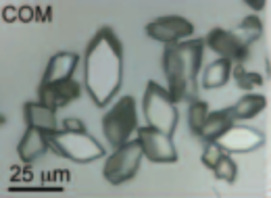
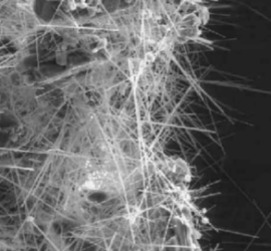
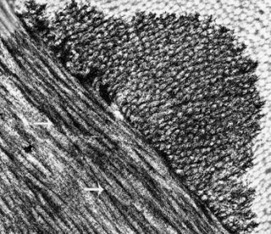
Medical mineralogy and geochemistry is a highly interdisciplinary area of research where the complexity of minerals and mineral surface reactivity in the human body is emphasized. Research in this field will lead to an understanding of the biogeochemical processes responsible for medical conditions, both normal and pathological that involve the interaction of dissolved inorganic species and bioorganic molecules with minerals. In this article, I highlight some fundamental concepts and challenges in this endeavor, and the subsequent articles provide overviews of specific topics.

This content is for Registered members only. To subscribe, please
join one of our participating societies or contact the Editorial Team.

Login
Already a member? Log in here

Medical Mineralogy and Geochemistry: An Interfacial Science Read More »

Contributions from Earth’s Atmosphere to Soil

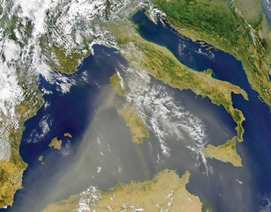
Soils are mixtures of material derived from substrate weathering, plant decomposition, and solute and particulate deposition from the atmosphere. The relative contribution from each source varies widely among soil types and environments. Atmospheric deposition of marine and mineral aerosols can have a major impact on the geochemistry and biogeochemistry of the Critical Zone. Some of the best-studied examples are from ocean islands because of the strong geochemical contrast between bedrock and atmospheric sources, but for the most part continental areas are more severely impacted by atmospheric deposition. With dust flux greater than 10% of the global river sediment flux, deposition from the atmosphere plays an important role in the biogeochemistry of soils worldwide.

This content is for Registered members only. To subscribe, please
join one of our participating societies or contact the Editorial Team.

Login
Already a member? Log in here

Contributions from Earth’s Atmosphere to Soil Read More »

Coupling between Biota and Earth Materials in the Critical Zone

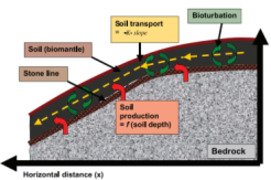
The surface of our planet is the result of billions of years of feedback between biota and Earth materials. The chemical weathering of soils and the resulting stream and ocean chemistry bear the signature of the biological world. Physical shaping of the Earth’s surface in many regions is a biologically mediated process. Given the pervasiveness of life, it is challenging to disentangle abiotic from biotic processes during field observations, yet it is of paramount importance to quantify these interactions and their feedbacks as the human impact on climate and ecosystems becomes more profound. Here we briefly review the fascinating connection between rocks and life and highlight its significance to science and society.

This content is for Registered members only. To subscribe, please
join one of our participating societies or contact the Editorial Team.

Login
Already a member? Log in here

Coupling between Biota and Earth Materials in the Critical Zone Read More »

Soil Biogeochemical Processes within the Critical Zone

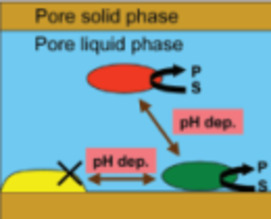
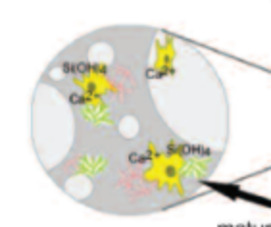
Many processes that affect soil and water quality occur at the water wetted interface of weathering products such as clays, oxides, and organic matter. Especially near the sunlit surface of the Critical Zone, these interfaces associate with plant roots and soil organisms to form porous, aggregated structures. Soil aggregates and intervening pore networks give rise to a patchwork of interconnected microenvironments. The ensuing steep geochemical gradients affect weathering processes, fuel the activities of microbes, and drive interfacial reactions that retain and transform rock- or ecosystem-derived chemicals and anthropogenic pollutants.

This content is for Registered members only. To subscribe, please
join one of our participating societies or contact the Editorial Team.

Login
Already a member? Log in here

Soil Biogeochemical Processes within the Critical Zone Read More »

Physical and Chemical Controls on the Critical Zone

Geochemists have long recognized a correlation between rates of physical denudation and chemical weathering. What underlies this correlation? The Critical Zone can be considered as a feed-through reactor. Downward advance of the weathering front brings unweathered rock into the reactor. Fluids are supplied through precipitation. The reactor is stirred at the top by biological and physical processes. The balance between advance of the weathering front by mechanical and chemical processes and mass loss by denudation fixes the thickness of the Critical Zone reactor. The internal structure of this reactor is controlled by physical processes that create surface area, determine flow paths, and set the residence time of material in the Critical Zone. All of these impact chemical weathering flux.

This content is for Registered members only. To subscribe, please
join one of our participating societies or contact the Editorial Team.

Login
Already a member? Log in here

Physical and Chemical Controls on the Critical Zone Read More »

Crossing Disciplines and Scales to Understand the Critical Zone

The Critical Zone (CZ) is the system of coupled chemical, biological, physical, and geological processes operating together to support life at the Earth’s surface. While our understanding of this zone has increased over the last hundred years, further advance requires scientists to cross disciplines and scales to integrate understanding of processes in the CZ, ranging in scale from the mineral–water interface to the globe. Despite the extreme heterogeneities manifest in the CZ, patterns are observed at all scales. Explanations require the use of new computational and analytical tools, inventive interdisciplinary approaches, and growing networks of sites and people.

This content is for Registered members only. To subscribe, please
join one of our participating societies or contact the Editorial Team.

Login
Already a member? Log in here

Crossing Disciplines and Scales to Understand the Critical Zone Read More »

Measuring Timescales of Magmatic Evolution

Advances in analytical methods have provided new insights into the timescales of magmatic processes. Data on the abundances of U-series isotopes in bulk rocks and crystal separates indicate magma differentiation over thousands of years. Residence and differentiation times of silicic magmas based on single-crystal, in situ age data vary from 10,000 to 100,000 years, with abundant evidence for crystal recycling from previous intrusive episodes. Chemical zoning patterns in single crystals indicate that processes such as mixing and mingling of magmas and crustal assimilation may occur over much shorter timescales of months to decades. Quantifying the rates of magma generation, emplacement and differentiation constrains the processes involved and may contribute to the evaluation of volcanic hazards.

This content is for Registered members only. To subscribe, please
join one of our participating societies or contact the Editorial Team.

Login
Already a member? Log in here

Measuring Timescales of Magmatic Evolution Read More »

Crystal Zoning as an Archive for Magma Evolution

Spatial compositional variations in magmatic minerals record chemical and physical changes in the magma from which they grew. Electron-beam techniques allow high-resolution imaging and quantitative analysis of this compositional archive for major, minor and some trace elements. In this way, magmatic processes such as crystallization, recharge in a magma chamber, decompression during ascent, and convection in the magma chamber can be identified and the history of magmatic systems prior to eruption reconstructed.

This content is for Registered members only. To subscribe, please
join one of our participating societies or contact the Editorial Team.

Login
Already a member? Log in here

Crystal Zoning as an Archive for Magma Evolution Read More »

Isotopic Microsampling of Magmatic Rocks

Radiogenic isotope ratios can be used as a kind of petrogenetic “DNA” to identify the source components of magmas. Technical advances allowing us to measure isotopic compositions at the sub-crystal scale have led to the realisation that many magmatic rocks are isotopically heterogeneous. Crystals traditionally regarded as phenocrysts grown from the host magma have now been shown to be wholly or partly out of isotopic equilibrium with the glass or groundmass in which they are contained. Many of these crystals are likely to be recycled from earlier cumulates. Combining these fingerprinting techniques with the other approaches described in this issue offers an unprecedented opportunity to understand the processes and timescales through which magmas are assembled, differentiated and delivered to sites of eruption or emplacement.

This content is for Registered members only. To subscribe, please
join one of our participating societies or contact the Editorial Team.

Login
Already a member? Log in here

Isotopic Microsampling of Magmatic Rocks Read More »

Igneous Textures: On the Kinetics behind the Words

That igneous textures can be collectively described, classified, and related to magma composition, style of emplacement, and spatial position speaks deeply to the existence of a specific set of fundamental kinetic processes controlling all magma crystallization. Textures record magma life history, telling the most recent, local conditions of cooling and also where the magma has been. Yet it is largely a mystery how silicate melts crystallize, how they become what they are, and, especially, how the final texture relates to the early transient textures more closely linked to the governing kinetics of nucleation and growth. These rich and intriguing processes can be understood by deciphering textures. This is done by first dismantling and quantifying them, then by rebuilding them and simulating magma crystallization and transport, and last by taking the results to the final court of appeal, the rocks themselves.

This content is for Registered members only. To subscribe, please
join one of our participating societies or contact the Editorial Team.

Login
Already a member? Log in here

Igneous Textures: On the Kinetics behind the Words Read More »

Scroll to Top

December 2025 --The Variscan Orogeny in Europe – Understanding Supercontinent Formation

The Variscan orogen formed between 380 and 300 million years ago through several accretionary and collisional cycles, culminating with the construction of the Pangea supercontinent. This process occurred via sequential opening and closure of oceanic basins, synchronous detachment of Gondwana derived continental ribbons, and their outboard amalgamation onto the Laurussia margin. The Variscan orogen is rather unique compared with other orogenic belts on Earth: its overthickened and dominantly magmatic crust in the central belt, surprisingly minor mantle involvement in the magmatic and geodynamic processes, coherent and pulsed magmatism along the collision suture, and its complex accretionary history. Because its final product, Pangea, is the youngest and best-understood supercontinent on Earth, the Variscan orogeny offers clues for understanding the mechanisms of supercontinent formation.