Thematic Articles

Transport Properties of Magmas: Diffusion and Rheology

The transport of magmas in the Earth is a phenomenon of first-order importance to the physical, chemical, and climatological evolution of our planet. Volcanism, in particular, can have dramatic impact on human lives, not only as an immediate environmental hazard but also as a longer-term influence on climate. The transport properties of magma—that is, physical flow in response to stress and diffusion of dissolved components as a result of chemical gradients—have been the subject of intensive study in recent decades. Nevertheless, the complexity of these physical and chemical responses requires an even more generalized picture of magma transport than is currently available. The emerging view of magma transport incorporates melt dynamics, non-Newtonian flow, brittle failure, and the fundamental nature of the glassy and liquid states.

This content is for Registered members only. To subscribe, please
join one of our participating societies or contact the Editorial Team.

Login
Already a member? Log in here

Transport Properties of Magmas: Diffusion and Rheology Read More »

Geochemical Aspects of Melts: Volatiles and Redox Behavior

Dissolved volatiles can have tremendous effects on the physical and chemical properties of silicate melts. The most abundant volatile in terrestrial magmas is H2O. A few weight percent of added H2O can reduce melting temperatures of rocks by several hundred degrees and enhance the fluidity of magmas by orders of magnitude. Carbon dioxide and sulfur, although less abundant in natural magmas than H2O, often control the initial stage of magma degassing. The strong effect of volatiles on melt properties is related to the chemical bonding of the volatiles in the melt, which depends in particular on melt composition, temperature and oxygen fugacity. The oxygen fugacity, although very low at magmatic conditions, nevertheless has a large influence on the magma, determining the abundance and composition of minerals, fluid–melt partitioning and the physical properties of the melt.

This content is for Registered members only. To subscribe, please
join one of our participating societies or contact the Editorial Team.

Login
Already a member? Log in here

Geochemical Aspects of Melts: Volatiles and Redox Behavior Read More »

The Structure of Silicate Glasses and Melts

Much progress has been made in elucidating the complex structures of silicate glasses and melts. X-ray and neutron scattering, spectroscopy, and theoretical calculations now provide a reasonably clear picture of many aspects of the short-range structure of glasses (which approximates the melt structure at the glass transition temperature). Critical effects of redox conditions and volatiles on structure have been clarified. Qualitatively, links between structure and properties such as molar volume, entropy, cation partitioning, and viscosity have been established, but quantitative connections remain challenging. Effects of temperature and pressure on structure have been the subject of much recent work.

This content is for Registered members only. To subscribe, please
join one of our participating societies or contact the Editorial Team.

Login
Already a member? Log in here

The Structure of Silicate Glasses and Melts Read More »

Glasses and Melts: Linking Geochemistry and Materials Science

Silicate melts are major components of magmatic activity and of its most spectacular expression, volcanic eruptions. The “hidden part” is even more fascinating, as silicate melts are directly involved in matter and heat transfer within the Earth and planets. Silicate glasses, often investigated as a frozen picture of their molten counterparts, are also materials of major importance in technology. Despite the difficulties in rationalizing physical and chemical properties of glasses and melts, due to an incomplete knowledge of their structure, major progress has been made recently in synthetic and natural systems. This issue of Elements reviews the properties of silicate glasses and melts from the molecular to the field scale. It includes insights into their technological applications and describes some recent advances this fast-evolving field.

This content is for Registered members only. To subscribe, please
join one of our participating societies or contact the Editorial Team.

Login
Already a member? Log in here

Glasses and Melts: Linking Geochemistry and Materials Science Read More »

Crustal Magnetism, Lamellar Magnetism and Rocks That Remember

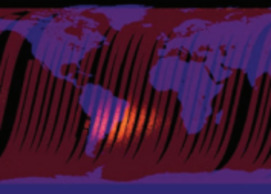
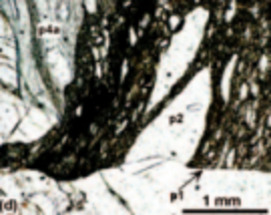
Magnetic anomalies are deviations from an internal planetary magnetic field produced by crustal materials. Crustal anomalies, measured over a wide range of vertical distances, from near-surface to satellites, are caused by magnetic minerals that respond to the changing planetary field. Previously, magnetism of continental crust was described in terms of the bulk ferrimagnetism of crustal minerals, which is mostly due to induced magnetization. The recent discovery of lamellar magnetism, a new interface-based remanence type, has changed our thinking about the contribution of remanent magnetization. Lamellar magnetism may also be an important contributor to deep-seated anomalies in the crust of the Earth and in other planets with highly magnetic crusts, like Mars.

This content is for Registered members only. To subscribe, please
join one of our participating societies or contact the Editorial Team.

Login
Already a member? Log in here

Crustal Magnetism, Lamellar Magnetism and Rocks That Remember Read More »

Magnetic Nanocrystals in Organisms

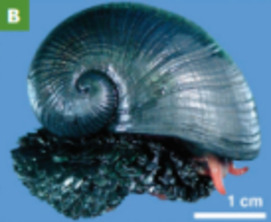
Ferrimagnetic nanocrystals are present in virtually every organism. They are used by bacteria, algae, mollusks, insects, and vertebrates either for navigating in the geomagnetic field or for hardening their tissues. Advanced transmission electron microscopy techniques, including electron holography, reveal the complex interplay between the physical and magnetic properties and biological functions of ferrimagnetic nanocrystals in bacteria. Although some information is now available about magnetic sensory systems in more complex organisms, much further research is required to understand fully the origin and function of biomagnetism.

This content is for Registered members only. To subscribe, please
join one of our participating societies or contact the Editorial Team.

Login
Already a member? Log in here

Magnetic Nanocrystals in Organisms Read More »

Rain and Dust: Magnetic Records of Climate and Pollution

Two contrasting examples of the application of mineral magnetism to environmental problems are discussed. Magnetic susceptibility measurements of sediments from the Chinese Loess Plateau – the biggest accumulation of windblown sediments on Earth – reveal one of the best records of continental climate change available. These records provide a detailed picture of glacial and interglacial cycles and variations in the East Asian summer monsoon stretching back more than 2 million years. In the case of anthropogenic airborne particles, the spread of particulate pollutants can be robustly traced throughout a city environment by measuring the magnetic properties of leaves, which trap magnetic particles released from vehicle exhausts and/or industry emissions.

This content is for Registered members only. To subscribe, please
join one of our participating societies or contact the Editorial Team.

Login
Already a member? Log in here

Rain and Dust: Magnetic Records of Climate and Pollution Read More »

Magnetism of Extraterrestrial Materials

Extraterrestrial materials contain a diversity of ferromagnetic phases, ranging from common terrestrial oxides to exotic metal alloys and silicides. Because of their great age and remote provenance, meteorites provide a unique window on early solar system magnetic fields and the differentiation of other bodies. Interpreting the records of meteorites is complicated by their poorly understood rock magnetic properties and unfamiliar secondary processing by shock and low-temperature phase transformations. Here we review our current understanding of the mineral magnetism of meteorites and the implications for magnetic fields on their parent bodies.

This content is for Registered members only. To subscribe, please
join one of our participating societies or contact the Editorial Team.

Login
Already a member? Log in here

Magnetism of Extraterrestrial Materials Read More »

Geodynamo History Preserved in Single Silicate Crystals: Origins and Long-Term Mantle Control

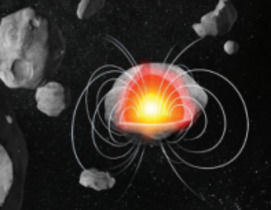
The long-term history of the geodynamo provides insight into how Earth’s innermost and outermost parts formed. The magnetic field is generated in the liquid-iron core as a result of convection driven by heat carried across the core–mantle boundary and freezing of the solid inner core. Earth’s magnetic field acts as a shield against energetic solar radiation, and therefore the geodynamo played an important role in the development and retention of our atmosphere, ultimately setting the stage for the evolution of life. A new analytical approach, using single silicate crystals that host minute magnetic particles, can reveal heretofore hidden aspects of Earth’s magnetic history. This method is being used to address some of the outstanding questions regarding the long-term behavior of the geodynamo.

This content is for Registered members only. To subscribe, please
join one of our participating societies or contact the Editorial Team.

Login
Already a member? Log in here

Geodynamo History Preserved in Single Silicate Crystals: Origins and Long-Term Mantle Control Read More »

Mineral Magnetism: Providing New Insights into Geoscience Processes

Magnetic minerals are ubiquitous in the natural environment, and they are also present in a wide range of biological organisms, from bacteria to human beings. The last ten years have seen a striking improvement in our ability to detect and image the magnetization of minerals in geological and biological samples. These minerals carry a wealth of information encoded in their magnetic properties. Mineral magnetism (together with the related disciplines of rock magnetism, paleomagnetism, environmental magnetism, and biomagnetism) decodes this information and applies it to an ever increasing range of geoscience problems, from the origin of magnetic anomalies on Mars to quantifying variations in Earth’s paleoclimate.

This content is for Registered members only. To subscribe, please
join one of our participating societies or contact the Editorial Team.

Login
Already a member? Log in here

Mineral Magnetism: Providing New Insights into Geoscience Processes Read More »

Scroll to Top

December 2025 --The Variscan Orogeny in Europe – Understanding Supercontinent Formation

The Variscan orogen formed between 380 and 300 million years ago through several accretionary and collisional cycles, culminating with the construction of the Pangea supercontinent. This process occurred via sequential opening and closure of oceanic basins, synchronous detachment of Gondwana derived continental ribbons, and their outboard amalgamation onto the Laurussia margin. The Variscan orogen is rather unique compared with other orogenic belts on Earth: its overthickened and dominantly magmatic crust in the central belt, surprisingly minor mantle involvement in the magmatic and geodynamic processes, coherent and pulsed magmatism along the collision suture, and its complex accretionary history. Because its final product, Pangea, is the youngest and best-understood supercontinent on Earth, the Variscan orogeny offers clues for understanding the mechanisms of supercontinent formation.