Thematic Articles

Visual Communication: Do You See What I See?

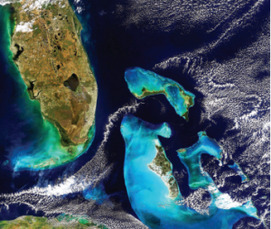
Visual displays of data, images of subatomic to planetary-scale features, and animations of geological processes are widely used to enrich our disciplines. However, their communicative power may be dramatically different to a student and to an expert because of the need for prior knowledge and inference when interpreting visuals. To “see” equivalent visual information, the non-expert must learn the visual language of the expert. Teaching visual literacy is important to instruction at all levels and is as fundamental to a discipline as its vocabulary. The underlying foundations of visual literacy and the recognition of what one “sees” and interprets in a visual depiction are critical for enhancing student learning and for effective communication in our visually rich discipline.

This content is for Registered members only. To subscribe, please
join one of our participating societies or contact the Editorial Team.

Login
Already a member? Log in here

Visual Communication: Do You See What I See? Read More »
Using Alignment and Reflection to Improve Student Learning

Greater participation, and the associated increase in student diversity, has changed university education worldwide. The old ways of teaching a small number of well-qualified committed students do not work as well with large classes and more diverse student needs. This essay documents one approach to this challenge. It involves understanding student needs and preferences better, developing a range of ways to deliver learning and assess the results, and finally reflecting on the outcomes. The annual process of reflection allows changes that improve alignment of course aims with their delivery and assessment, and results in improved student learning and perception of the subject.

This content is for Registered members only. To subscribe, please
join one of our participating societies or contact the Editorial Team.

Login
Already a member? Log in here

Using Alignment and Reflection to Improve Student Learning Read More »

Teaching for Deeper Understanding and Lifelong Learning

A growing body of research confirms that active approaches to learning offer many advantages over traditional instructional methods, including improved retention of information, conceptual understanding, and problem-solving skills. Content coverage in active-learning courses can be facilitated through careful selection and design of activities that guide student learning. Importantly, activities should engage groups of students in cooperative questioning, problem solving, analytical reasoning, and critical thinking. Focused instruction and reflection on thinking and learning help students develop as intentional learners.

This content is for Registered members only. To subscribe, please
join one of our participating societies or contact the Editorial Team.

Login
Already a member? Log in here

Teaching for Deeper Understanding and Lifelong Learning Read More »

What Should Our Students Learn?

Traditionally, college science teachers have focused on delivering content to students. The assumption was that students would learn the information and could recall and use it later. Current research on learning, however, tells us that such an approach to teaching, by itself, is not the best way to promote learning. Learning is not a process that simply involves knowledge transfer. Instead, it is a physiological process that involves changes in the brain. Good teaching, therefore, should focus on helping students develop their cognitive skills, while simultaneously helping them become better learners. Students will learn specific ideas and facts in our classes, but the information learned is of much less importance than the learning and thinking skills acquired. Our overall goal should be to help students become lifelong learners, successful as citizens and professionals. Assessment and self-reflection are keys. Students must learn to reflect on, and assess, their own learning. Instructors must also constantly assess their own efforts to promote student learning.

This content is for Registered members only. To subscribe, please
join one of our participating societies or contact the Editorial Team.

Login
Already a member? Log in here

What Should Our Students Learn? Read More »

Improving Instruction in Mineralogy, Petrology, and Geochemistry— Lessons from Research on Learning

Effective instruction can enhance our ability to retain students in the geoscience major and to raise their level of expertise in mineralogy, petrology, and geochemistry (MPG). Research on learning and education provides a framework for designing learning experiences in our classes. As a community we are well positioned to consider the goals of MPG instruction and to evaluate the materials and methods we currently use in our teaching. This will enhance the ability of faculty members to design and implement courses that meet the needs of their department and capitalize on their strengths as teachers.

This content is for Registered members only. To subscribe, please
join one of our participating societies or contact the Editorial Team.

Login
Already a member? Log in here

Improving Instruction in Mineralogy, Petrology, and Geochemistry— Lessons from Research on Learning Read More »

New Directions at the Intersection of Research about Earth and Research on Learning

New advances in cognitive psychology and learning science provide insights into how people construct knowledge, with important implications for how we learn from, and teach about, the Earth. Research on learning has demonstrated that effective instructional practices require students to construct their own knowledge bases (i.e. a shift in emphasis from teaching to learning), address diverse student learning styles, employ a variety of active-learning strategies, and encourage inquiry and discovery. These emerging principles provide a context for us to reflect collectively on what and how we teach in our mineralogy, petrology, and geochemistry courses. If we are to meet the challenges of the 21st century, our new instructional goal should be to develop students who are lifelong learners and who use the knowledge base, technical skills, and cognitive strategies that are used by “master” geoscientists. As a result, we will help sustain the long-term health and relevance of the mineralogy, petrology, and geochemistry community

This content is for Registered members only. To subscribe, please
join one of our participating societies or contact the Editorial Team.

Login
Already a member? Log in here

New Directions at the Intersection of Research about Earth and Research on Learning Read More »

Gold and Nanotechnology

The properties of gold change dramatically at the nanoscale. Gold nanoparticles and nanoporous gold have remarkable optical and catalytic properties, which are being investigated for applications in biomedicine and manufacturing. Using a variety of synthetic methods, the shape, size and properties of these materials can be optimized, making them a powerful platform for the development of new contrast agents for optical imaging of biological tissues, photothermal destruction of tumours and catalysis of various reactions.

This content is for Registered members only. To subscribe, please
join one of our participating societies or contact the Editorial Team.

Login
Already a member? Log in here

Gold and Nanotechnology Read More »

The Biogeochemistry of Gold

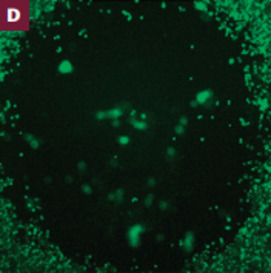
The biosphere catalyzes a variety of biogeochemical reactions that can transform gold. Microbial weathering contributes to the mobilization of gold by releasing elemental gold trapped within minerals and by solubilizing gold via oxidation-promoting complexation. Subsequent microbial destabilization of gold complexes coupled with bioprecipitation and biomineralization can immobilize gold, completing the cycle. Secondary gold can occur as colloidal particles, crystalline gold and bacteriomorphic structures, the latter being a controversial form of ‘biogenic’ gold.

This content is for Registered members only. To subscribe, please
join one of our participating societies or contact the Editorial Team.

Login
Already a member? Log in here

The Biogeochemistry of Gold Read More »

The Crystallography, Metallography and Composition of Gold

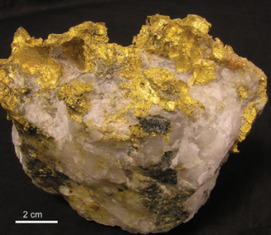
Gold is an element, a metal and a mineral. In nature, gold most commonly occurs as an alloy with silver and, more rarely, with palladium, mercury and copper, and ranges in size from nanoparticles to nuggets weighing 70 kg. Crystallography, metallography and composition control the colour of the alloy, how it will deform, how it will behave at high temperature and how it reacts. These properties offer insights into how gold deposits have formed and been altered, whether under hydrothermal or Earth-surface conditions.

This content is for Registered members only. To subscribe, please
join one of our participating societies or contact the Editorial Team.

Login
Already a member? Log in here

The Crystallography, Metallography and Composition of Gold Read More »

From Source to Sinks in Auriferous Magmatic-Hydrothermal Porphyry and Epithermal Deposits

Auriferous porphyry Cu deposits are restricted to convergent plate settings, whereas epithermal precious metal deposits form at extending convergent plate settings and in rifts. Both deposit types are linked to magma carrying metals and ligands that rises to form an upper-crustal magma chamber. Magma convection and fractionation lead to volatile exsolution and collection in the apical parts of the chamber, from which exsolved hydrothermal fluid ascends to form either a porphyry Cu–Au deposit associated with stocks and dykes generally at 2–5 km depth, or an epithermal deposit associated with coeval volcanic rocks at depths of

This content is for Registered members only. To subscribe, please
join one of our participating societies or contact the Editorial Team.

Login
Already a member? Log in here

From Source to Sinks in Auriferous Magmatic-Hydrothermal Porphyry and Epithermal Deposits Read More »

Scroll to Top

December 2025 --The Variscan Orogeny in Europe – Understanding Supercontinent Formation

The Variscan orogen formed between 380 and 300 million years ago through several accretionary and collisional cycles, culminating with the construction of the Pangea supercontinent. This process occurred via sequential opening and closure of oceanic basins, synchronous detachment of Gondwana derived continental ribbons, and their outboard amalgamation onto the Laurussia margin. The Variscan orogen is rather unique compared with other orogenic belts on Earth: its overthickened and dominantly magmatic crust in the central belt, surprisingly minor mantle involvement in the magmatic and geodynamic processes, coherent and pulsed magmatism along the collision suture, and its complex accretionary history. Because its final product, Pangea, is the youngest and best-understood supercontinent on Earth, the Variscan orogeny offers clues for understanding the mechanisms of supercontinent formation.